


Six lifelong friends — mothers, wives, and experienced backcountry skiers — are among nine people confirmed or presumed dead after a massive avalanche swept through a guided tour near Lake Tahoe earlier this week.
According to Daljoog News analysis, the disaster marks the deadliest avalanche in the United States in decades and raises urgent questions about mountain safety, guiding practices, and escalating weather volatility across the West.
The group had gathered for a long-planned three-day ski tour in California’s Sierra Nevada when disaster struck Tuesday morning near Castle Peak, a remote area north of Interstate 80.
What Happened?
The 15-person tour, organized by Blackbird Mountain Guides, included four professional guides and experienced skiers from Idaho, the Bay Area, and the Truckee-Tahoe region.
As the group made its final descent back toward the trailhead, a cry of “Avalanche” rang out. Within seconds, a massive wall of snow — roughly the size of a football field — tore down the slope.
Nevada County authorities later classified the avalanche as a 2.5 on a five-level destructive scale. That rating places it between an event capable of burying a person and one powerful enough to damage a structure.
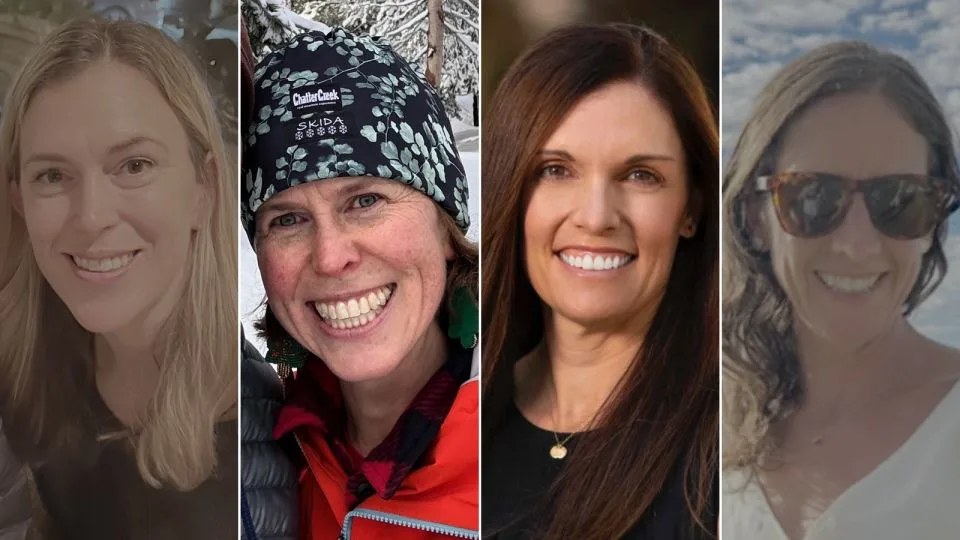
Nine people were confirmed or presumed dead. Six of them were close friends: sisters Liz Clabaugh and Caroline Sekar, along with Carrie Atkin, Danielle Keatley, Kate Morse, and Kate Vitt.
Survivors began digging immediately, locating three victims who had already died. Others remained buried beneath unstable snow.
Emergency responders from the Nevada County Sheriff’s Office reached the remote site hours later, navigating gale-force winds, whiteout conditions, and deep drifts. With no road access, crews traveled by snowcat before skiing into the final stretch.
Rescuers extracted injured survivors across more than two miles of snow. However, deteriorating conditions forced officials to leave the bodies of the deceased on the mountainside temporarily.
One individual remains missing and is presumed dead.
Why This Matters
This avalanche is the deadliest recorded in California history and the worst in the United States since 1981, when 11 climbers died on Mount Rainier.
The tragedy underscores the risks of backcountry recreation, even for highly trained and well-equipped groups.
The Sierra Nevada has seen volatile weather patterns this winter, with weak snow layers buried beneath fresh accumulation. On Tuesday, avalanche danger was rated four out of five — one of the highest threat levels before automatic closures.
Backcountry skiing has surged in popularity in recent years, especially in terrain once closed to public access. Castle Peak, near Donner Summit, reopened to broader use only in 2020 after decades of restricted entry.
While guided trips offer expertise and safety training, they cannot eliminate environmental unpredictability.
The disaster also reverberates through tight-knit mountain communities in Truckee, Marin County, and Idaho, where several victims lived and raised families.
What Analysts or Officials Are Saying
Gavin Newsom expressed condolences, noting personal connections to some of the victims through family ties in Marin County.
The Tahoe National Forest has closed the Castle Peak area through March 15, citing unstable snowpack and the need to prioritize recovery operations.
Officials confirmed that controlled explosions began Friday to trigger smaller slides and stabilize the slope before recovery crews re-enter the area.
Blackbird Mountain Guides stated that all four guides were certified or trained through the American Mountain Guides Association and had been communicating with senior staff regarding route decisions and snow conditions.
The company has suspended operations while investigations proceed.
The Nevada County Sheriff’s Office has launched a preliminary inquiry into whether criminal negligence contributed to the incident. The California Division of Occupational Safety and Health has also opened its own review.
Authorities caution that it is too early to determine whether any violations occurred.
Daljoog News Analysis
This tragedy sits at the intersection of skill, preparation, and forces beyond human control.
The six friends who died were described as seasoned skiers who respected mountain risks. They carried avalanche beacons and safety gear. They hired professional guides. They trained.
Yet the mountain prevailed.
Avalanche forecasting relies on probabilities, not guarantees. A four-out-of-five risk rating signals serious danger, but it does not automatically halt all travel. In the backcountry, decisions rest on layered assessments of snow stability, terrain, and timing.
Investigators will likely examine route selection, slope angle, snowpack tests, and group spacing at the time of the slide. Those findings could influence guiding protocols nationwide.
At the same time, this disaster highlights a broader pattern. Climate variability is intensifying freeze-thaw cycles and destabilizing snow layers in western ranges. Warmer winters followed by heavy dumps create fragile stratification.
Backcountry recreation is expanding. Social media exposure and improved gear make remote terrain more accessible. But access does not equal predictability.
The mountain communities now grieving face both personal loss and a renewed reckoning with risk culture.
What Happens Next
Recovery operations remain weather-dependent.
Sheriff’s officials are using aerial surveys and controlled detonations to reduce secondary avalanche threats before crews retrieve remaining victims.
Investigations by county authorities and workplace safety regulators could take months. If negligence is identified, potential charges or citations may follow.
Community vigils are scheduled in Truckee, including an interfaith service at Church of the Mountains.
For families, the focus now shifts to supporting children and honoring lives cut short.
For the broader outdoor community, the coming weeks may prompt renewed scrutiny of avalanche forecasting thresholds, guide decision-making protocols, and public education around backcountry travel.
The Sierra Nevada will draw skiers again. It always does.
But this week’s loss ensures that Castle Peak will be remembered not for its powder lines — but for a moment when seconds changed everything.