

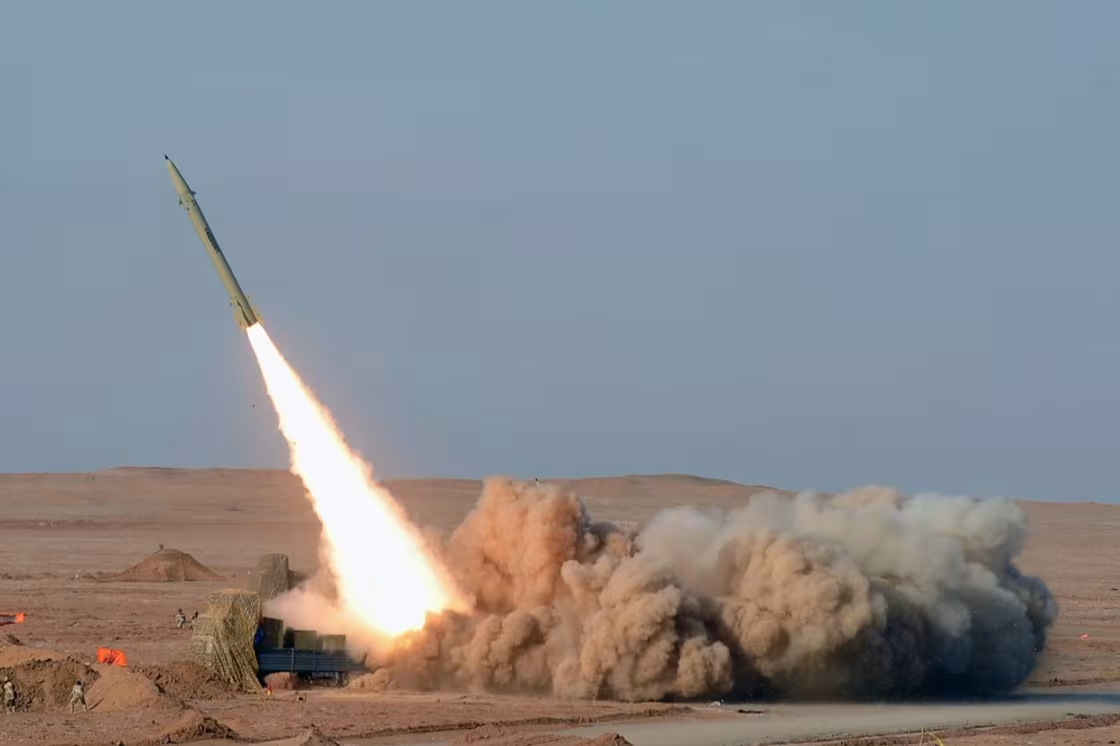
Iran has warned it could target American military bases across the Middle East if Washington launches military action over its nuclear program. The threat follows a new 10-day ultimatum from US President Donald Trump demanding progress on a nuclear agreement.
According to Daljoog News analysis, the exchange marks one of the most volatile moments in recent US-Iran tensions, with both sides signaling readiness while leaving limited space for compromise.
The confrontation comes after renewed talks in Geneva and a visible US military buildup near Iranian waters. With energy routes and regional stability at stake, even a limited clash could carry global consequences.
What Happened?
US President Donald Trump issued a fresh warning to Tehran, giving it roughly 10 days to reach what he called a meaningful agreement on uranium enrichment and nuclear transparency.
Washington argues that Iran must accept stricter limits on its nuclear activities. Failure to comply, Trump warned, would lead to serious consequences.
In response, Tehran sent a formal letter to António Guterres stating that Iran does not seek war but will respond decisively to any aggression. Iranian officials said US bases and installations in the Middle East would be considered legitimate targets if attacked.
The warning came shortly after a second round of indirect talks in Geneva, mediated in part by Oman. US officials described the discussions as incomplete, with significant gaps remaining.
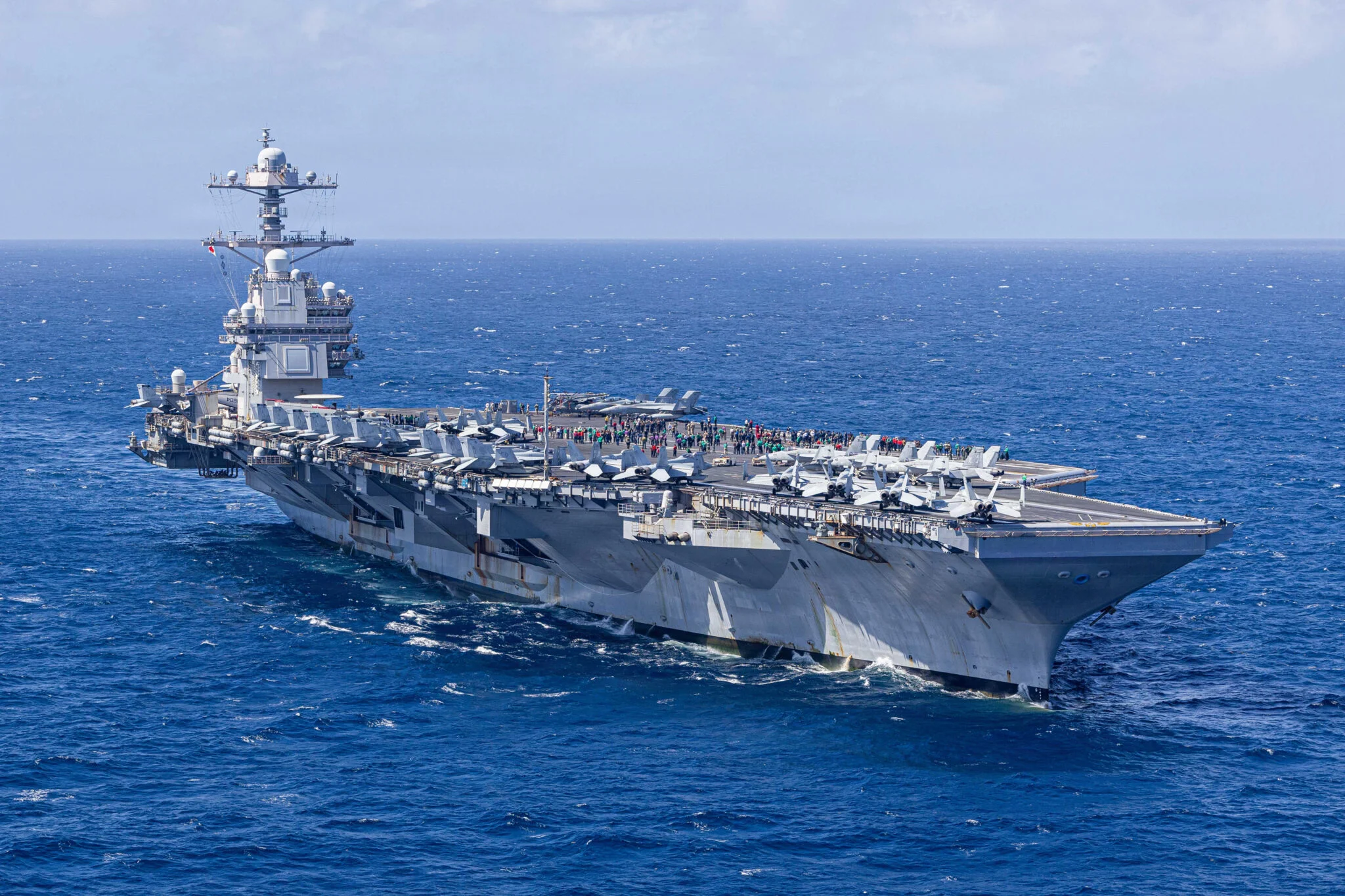
Meanwhile, the United States has reinforced its regional posture. The aircraft carrier USS Abraham Lincoln and additional aircraft have been deployed closer to Iranian waters. Refueling planes and surveillance assets are also operating in the region.
Iran has responded with military drills near the Strait of Hormuz, signaling readiness without initiating confrontation.
Why This Matters
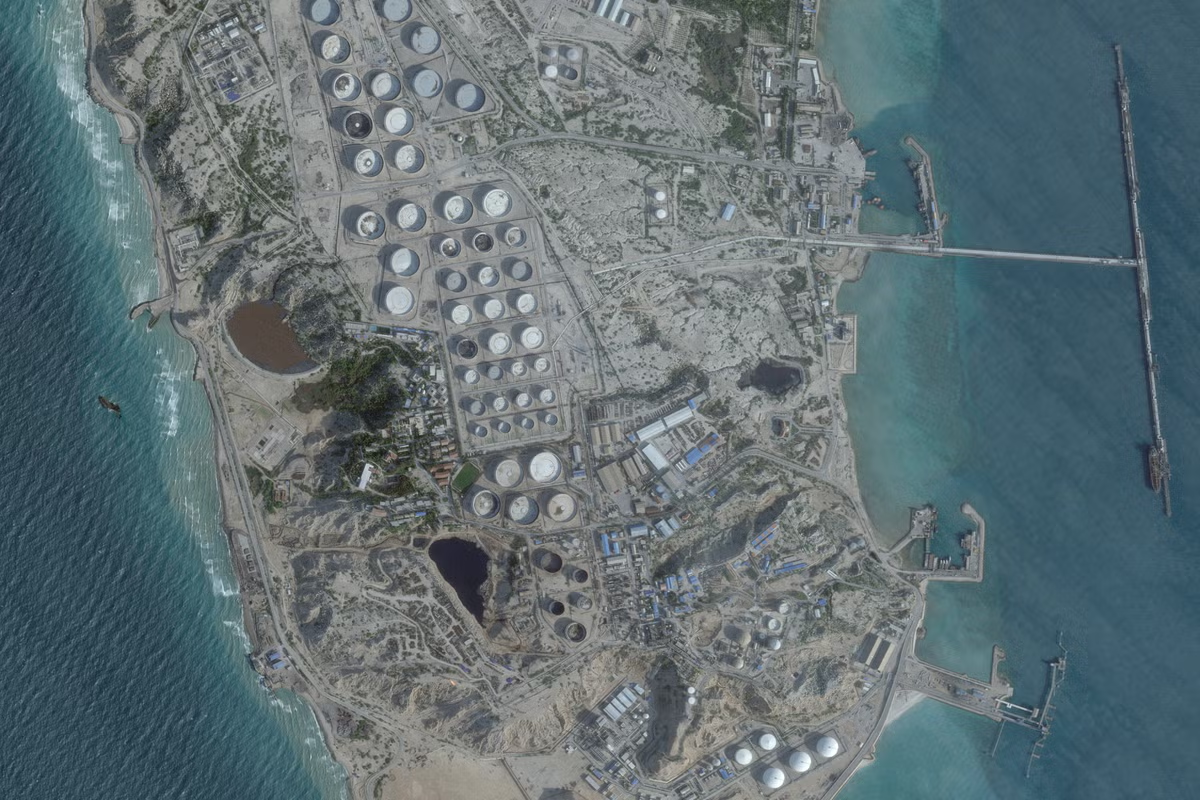
The Strait of Hormuz remains one of the world’s most critical energy chokepoints. A significant portion of global oil shipments passes through this narrow waterway.
Iran’s geographic position gives it strategic leverage. Even without matching US conventional strength, Tehran can threaten shipping lanes and disrupt supply chains.
A military clash would not stay confined to two countries. US bases in Iraq, Syria, and the Gulf could face risk. Regional actors aligned with Iran, including groups in Lebanon and Yemen, could become involved.
Global markets would react immediately. Oil prices could spike. Shipping insurance costs would rise. Economic uncertainty would spread beyond the Middle East.
The stakes extend beyond military calculations. The dispute tests whether diplomacy can still function under escalating public ultimatums.
What Analysts or Officials Are Saying
US defense officials maintain that a visible military presence strengthens deterrence. They argue that readiness prevents miscalculation and reinforces negotiation leverage.
Iranian leaders counter that sanctions relief remains their primary demand. They insist their nuclear program is not designed to produce weapons but to secure technological independence.
Security analysts note that Iran’s strategy relies on asymmetric tools. Tehran possesses ballistic and cruise missiles, advanced drones, and a network of allied groups across Iraq, Syria, Lebanon, and Yemen.
Military experts suggest the United States could launch air and naval strikes if talks collapse. However, they caution that Iran’s likely response would not be conventional warfare. Instead, Tehran could opt for targeted missile strikes, maritime disruption, and prolonged regional pressure.
Observers also emphasize the psychological dimension. Iran’s leadership often frames external pressure as an existential challenge, which can reinforce domestic unity rather than weaken it.
Daljoog News Analysis
The current escalation reflects competing approaches to leverage.
Washington believes deadlines and military visibility increase bargaining power. Tehran believes resilience and indirect pressure can offset US superiority.
Iran’s strength does not lie in matching American firepower. It lies in geography, endurance, and layered deterrence. The ability to threaten the Strait of Hormuz remains a powerful card.
At the same time, the United States retains overwhelming conventional capabilities. Air superiority and naval reach give Washington options that Iran cannot ignore.
The real danger is misjudgment. Public ultimatums compress timelines. Military movements raise suspicion. Each side may interpret defensive actions as offensive preparation.
Diplomacy still exists, but it now operates under heightened risk. If negotiations stall, both capitals may feel compelled to act rather than appear weak.
What Happens Next
The coming days are decisive.
If negotiators narrow differences on uranium enrichment and sanctions relief, tensions may ease. A provisional framework could delay military escalation.
If talks collapse, Washington may expand sanctions or prepare limited strikes. Iran would likely respond through calibrated but forceful retaliation.
Regional governments are watching closely. Gulf states fear becoming battlegrounds. Energy markets remain sensitive to every military signal.
Neither side publicly seeks full-scale war. Yet history shows that crises in the Gulf can spiral quickly.
For now, deterrence and diplomacy move in parallel. Whether they converge toward agreement or collision will define the region’s immediate future.