


Pakistan’s military conducted air strikes in Afghanistan’s border provinces over the weekend, targeting camps allegedly used by the Tehrik-e-Taliban Pakistan (TTP) and affiliated groups. Officials claim the operations were in response to a series of deadly attacks inside Pakistan, including a mosque bombing in Islamabad.
According to Daljoog News analysis, the strikes mark a renewed escalation in a fragile bilateral security situation, highlighting the challenges of enforcing cross-border counterterrorism measures while avoiding civilian harm.
The operations come amid mounting public concern in Pakistan and Afghanistan, where repeated violence threatens regional stability and tests the enforcement of previously negotiated ceasefire agreements.
What Happened?
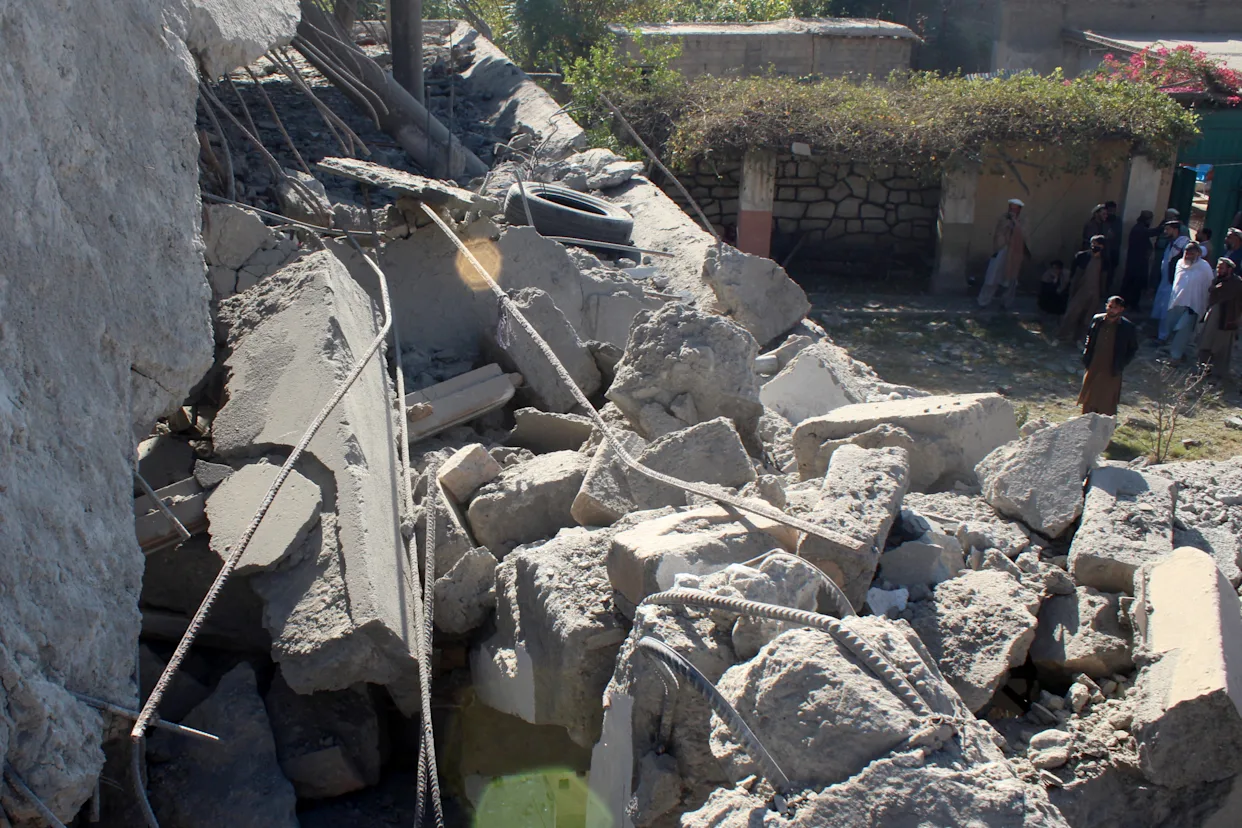
The air strikes targeted locations in Nangahar and Paktika provinces, reportedly hitting camps and hideouts linked to Pakistan-based militants. Afghan authorities said the attacks struck residential areas and a religious school, resulting in dozens of casualties, including women and children. Local sources in Nangahar reported at least 17 fatalities.
Pakistan’s Ministry of Information and Broadcasting described the operations as “intelligence-based and selective,” asserting that fighters responsible for recent assaults, including in Islamabad, Bajaur, and Bannu, were directed from Afghanistan. The ministry also stated that an Islamic State affiliate was among the targets.
The strikes followed a series of recent attacks inside Pakistan. On Saturday, a suicide bombing in Bannu killed two soldiers. The previous day, a combined vehicle-borne and gun attack in Bajaur killed 11 soldiers and a child. Earlier, on February 6, a suicide bombing at the Khadija Tul Kubra mosque in Islamabad killed at least 31 worshippers and injured 170, with the Islamic State claiming responsibility.
Why This Matters
The air strikes exacerbate already tense Pakistan-Afghanistan relations, where border security and counterterrorism coordination have been persistent challenges. The October border clashes had previously killed dozens of soldiers, civilians, and suspected militants, and while a ceasefire mediated by Qatar largely held, full reconciliation remains elusive.
For Pakistan, the operations are framed as protecting citizens and deterring attacks from Afghan-based militants. For Afghanistan, the strikes are viewed as a violation of sovereignty and international law, with promises of a measured response signaling potential escalation.
The strikes also underscore the difficulty of distinguishing between militant camps and civilian areas in border provinces, raising international concern over the humanitarian impact.
What Analysts or Officials Are Saying
Afghan Defense Ministry officials condemned the strikes as a breach of good-neighbour principles and warned that Pakistan would be held responsible for civilian casualties. They emphasized that cross-border attacks undermine trust and risk renewed conflict.
Pakistani authorities, however, stressed repeated diplomatic efforts to persuade the Taliban government to act against armed groups using Afghan territory for attacks. Islamabad has also called on the international community to pressure Kabul to honor its commitments under the 2020 Doha agreement with the United States.
Analysts note that the TTP and IS affiliates continue to pose complex security threats across the border, with both countries accusing each other of failing to prevent militant operations. These dynamics create a volatile environment in which isolated incidents can quickly escalate into wider confrontations.
Daljoog News Analysis
The air strikes highlight the delicate balance between national security imperatives and regional stability. Pakistan’s focus on immediate threat mitigation risks deepening mistrust with Kabul, even as militants exploit the border’s porous terrain.
For Afghanistan, the strikes intensify domestic and international pressure to manage armed groups while maintaining its official position against hosting anti-Pakistan militants. The situation reflects the broader challenge of counterterrorism in South Asia, where overlapping jurisdictions, militant networks, and civilian populations complicate operational decisions.
Long-term, repeated strikes and counterclaims may undermine diplomatic avenues, emphasizing the importance of sustained dialogue, neutral monitoring, and regional cooperation to prevent further escalation.
What Happens Next
Pakistan and Afghanistan face critical choices: Pakistan will likely continue selective strikes if cross-border attacks persist, while Afghanistan may pursue diplomatic and military responses to assert sovereignty.
Observers expect renewed negotiations, potentially mediated by Qatar or other international partners, to stabilize the border and formalize agreements on preventing militant use of Afghan territory. The humanitarian impact, particularly on civilians in border provinces, will also influence international engagement and aid strategies.
Meanwhile, security agencies in Pakistan are likely to remain on high alert, anticipating further attacks as regional tensions continue to simmer. The border provinces and major urban centers in Pakistan, including Islamabad, remain vulnerable to sporadic militant incidents, keeping the situation unpredictable.