

Pakistan carried out targeted air raids inside Afghanistan over the weekend following a series of deadly attacks by militants on its soil.
The strikes targeted camps in Nangarhar and Paktika provinces, which Islamabad claims were being used by the Tehrik-e-Taliban Pakistan (TTP) and affiliated groups. According to Pakistani authorities, at least 80 militants were killed in intelligence-led operations along the border.
According to Daljoog News analysis, the raids reflect Pakistan’s growing impatience with the Taliban’s perceived unwillingness to rein in anti-Pakistan groups, while also highlighting Islamabad’s anxiety over New Delhi’s expanding presence in Taliban-led Afghanistan.
The latest attacks follow a string of incidents in Pakistan, including a February 6 suicide bombing at a Shia mosque in Islamabad that killed 36 worshippers, a vehicle-borne attack in Bajaur that left 11 soldiers dead, and a February 21 bombing in Bannu that killed two more military personnel.
What Happened?
Pakistan’s military said it conducted precision airstrikes early Sunday on what it described as “camps and hideouts” of TTP fighters inside Afghan territory. The Ministry of Information and Broadcasting said the attacks were in response to repeated cross-border assaults and failures by Afghan authorities to act on Pakistan’s warnings.
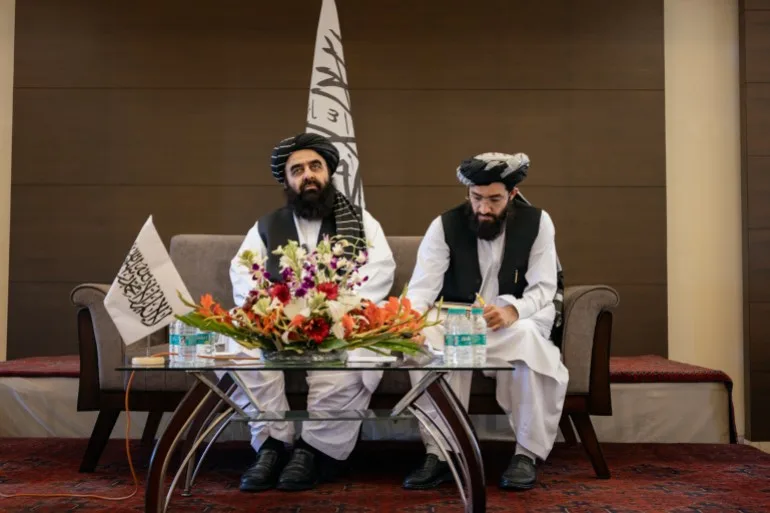
Kabul has rejected these claims, stating that the strikes hit residential homes and a religious school, killing and wounding civilians, including women and children. Afghan officials pledged a “measured and appropriate response,” and local reports indicated at least 17 casualties in Nangarhar alone.
India also condemned Pakistan’s air raids, emphasizing Afghanistan’s sovereignty and the civilian toll. The Ministry of External Affairs highlighted the raids as an effort by Pakistan to deflect attention from its domestic security challenges, signaling Delhi’s growing alignment with Taliban authorities.
Why This Matters
The airstrikes mark a significant escalation along the Pakistan-Afghanistan frontier, threatening to undo fragile peace initiatives brokered last year by Qatar and Turkiye. Border violence had temporarily eased following talks in October and November 2025, but the ceasefire was never formalized.
The operation underscores Pakistan’s dilemma: it faces mounting internal pressure to respond to frequent attacks by the TTP, which shares ideological and linguistic ties with the Afghan Taliban but is legally and operationally distinct. Meanwhile, India’s growing presence in Afghanistan complicates Pakistan’s strategic calculations, as Islamabad perceives New Delhi’s engagement as empowering the Taliban to resist pressure against the TTP.
The human cost of terrorism in Pakistan has been severe. The Pak Institute for Peace Studies reported 699 attacks in 2025, marking a 34 percent increase from the previous year, and 1,034 fatalities—a 21 percent rise from 2024—highlighting the urgency Islamabad feels in taking action.
What Analysts or Officials Are Saying
Experts say the raids reflect Pakistan’s narrow options. Abdul Basit, a terrorism scholar at Singapore’s S Rajaratnam School of International Studies, noted that the strikes confirm the collapse of the temporary ceasefire. He warned that military action could inadvertently push the Taliban closer to India while failing to neutralize the TTP threat.
Fahad Nabeel of Geopolitical Insights emphasized that Islamabad also needs non-military measures, including reopening trade and engaging regional partners such as China, Qatar, Saudi Arabia, and Turkiye, to pressure the Taliban against militant groups.
Pakistan’s officials have consistently framed the strikes as defensive, citing “conclusive evidence” of TTP involvement in cross-border attacks. Defence Minister Khawaja Asif accused India of influencing the Taliban, a claim that experts note lacks public proof but heightens Islamabad’s strategic anxiety.
Daljoog News Analysis
The air raids illustrate a broader security tension in South Asia, where overlapping crises along Pakistan’s eastern and western borders limit strategic maneuverability. Pakistan is caught between responding to repeated militant attacks and avoiding escalation with Afghanistan or India.
While military strikes aim to project strength, analysts suggest they are unlikely to provide a long-term solution without diplomatic engagement and regional cooperation. India’s humanitarian and diplomatic outreach in Kabul further complicates Pakistan’s calculus, creating a scenario where retaliatory measures risk strengthening ties between New Delhi and the Taliban.
This dynamic highlights a cyclical dilemma: as Pakistan strikes Afghan territory to secure its borders, Kabul’s public legitimacy grows, and India’s involvement deepens, leaving Islamabad constrained in both strategic and political options.
What Happens Next
Tensions along the Pakistan-Afghanistan border are likely to persist. Analysts expect continued military operations, diplomatic protests, and potential retaliatory strikes from the Taliban.
Regional diplomacy may intensify, with Pakistan seeking support from allies to pressure Kabul while balancing complex relations with India and internal security demands. Observers warn that without a coordinated strategy combining military, diplomatic, and economic tools, the frontier risks further escalation, threatening regional stability.
For now, Islamabad’s latest strikes underscore a fraught security environment, where the intersection of domestic terrorism, cross-border militancy, and international rivalries leaves few easy solutions.