

North Carolina Republicans are heading into a closely watched U.S. Senate primary where the central question is whether President Donald Trump can once again shape the outcome with his endorsement power.
According to Daljoog News analysis, the March 3 primary has quickly evolved into a test of Trump’s influence inside a competitive southern battleground state, as challengers attempt to disrupt the early advantage held by party insider Michael Whatley.
The seat opened after two-term Sen. Thom Tillis announced he would not seek reelection. The winner of the Republican primary is expected to face Democrat Roy Cooper, the former governor and the most prominent Democratic contender, in November.
What Happened?
After Tillis revealed he would step aside, attention shifted almost immediately to Trump’s anticipated endorsement.
Within weeks, Trump backed Whatley, a former chair of the North Carolina Republican Party who was serving as chair of the Republican National Committee at the time.
That early endorsement positioned Whatley as the perceived front-runner before he formally entered the race.
A January survey conducted by Carolina Forward showed Whatley holding a significant lead among registered Republican voters. In that poll, 46 percent indicated support for Whatley, while retired Navy JAG officer Don Brown and activist Michele Morrow each registered 4 percent.
Seven Republicans appear on the March 3 primary ballot, though most attention centers on Whatley and the two candidates seeking to consolidate voters skeptical of establishment figures.
Why This Matters
North Carolina remains one of the most competitive states in national elections. Control of this Senate seat could prove decisive in determining which party holds the upper chamber.
Trump’s endorsement has historically carried weight in Republican primaries. However, North Carolina Republicans have occasionally demonstrated an independent streak, especially in statewide contests.
If Whatley secures a decisive primary victory, it would reinforce Trump’s continuing dominance in shaping GOP nominations. A closer result would suggest space remains for grassroots or outsider campaigns, even in Trump-aligned states.
The stakes extend beyond the primary. Roy Cooper, who served two terms as governor, enters the general election with strong name recognition and a record of winning statewide races.
What Analysts or Officials Are Saying
Political observers describe the race less as a contest over ideology and more as a test of consolidation.
Western Carolina University policy analysts note that no recent polling shows another candidate approaching Whatley’s early numbers. That suggests the primary may hinge more on the margin of victory than on the identity of the nominee.
Brown has positioned himself as a grassroots conservative alternative. He previously ran for Congress and has represented individuals connected to the January 6 Capitol riot cases, securing at least one pardon for a client. He has earned endorsements from prominent right-wing figures including former Lt. Gov. Mark Robinson, attorney Sidney Powell and former national security adviser Michael Flynn.
Morrow, the 2024 Republican nominee for state superintendent, entered the Senate race late. She previously unseated incumbent Catherine Truitt in a primary before losing the general election to Democrat Mo Green.
Morrow has built a reputation as a vocal critic of public school policies and federal disaster management programs. Some of her past remarks targeting Democratic leaders have generated controversy, potentially energizing supporters while alienating moderate voters.
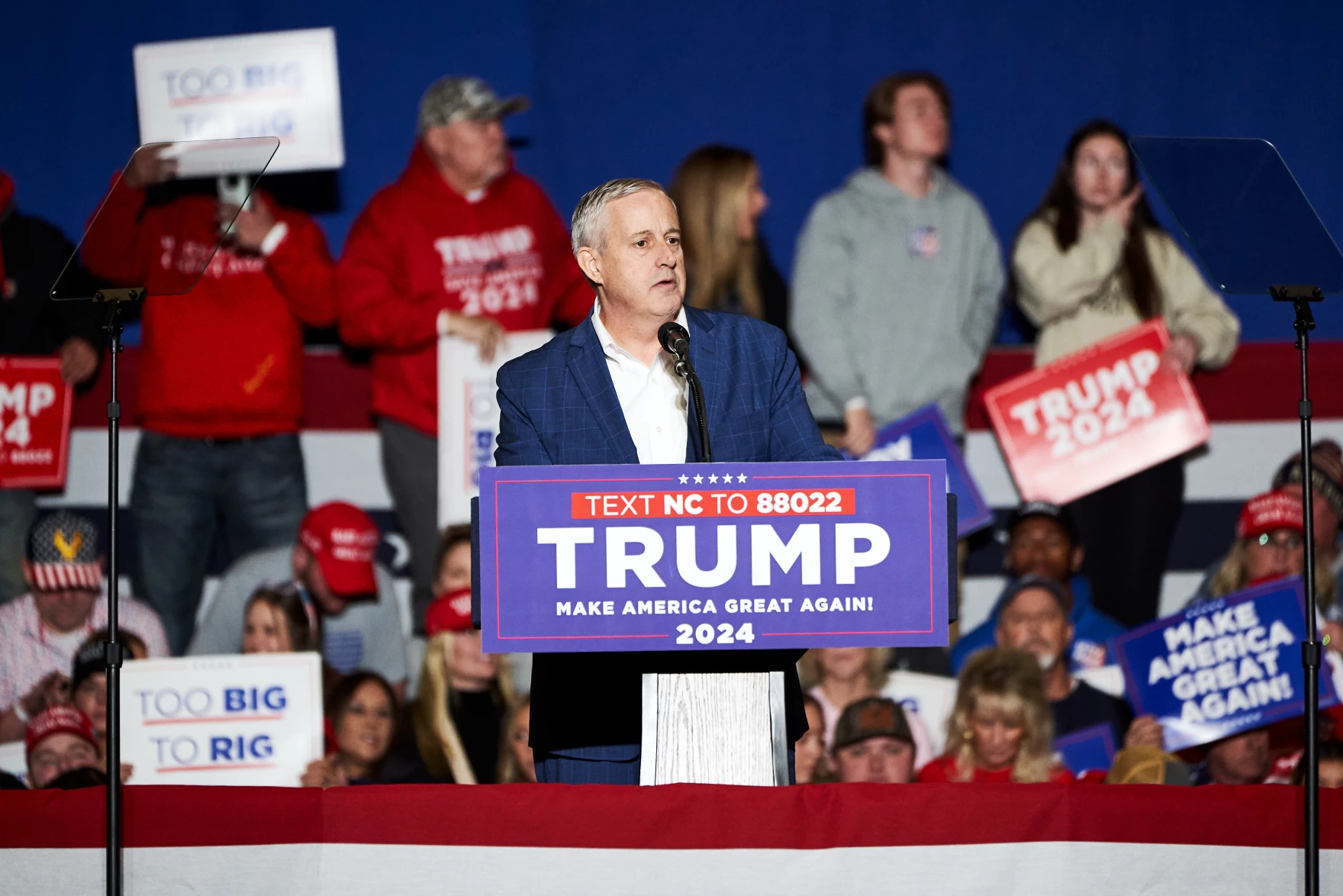
Whatley, meanwhile, frames himself as the only candidate with both Trump’s backing and the organizational strength to defeat Cooper in November. He has appeared alongside Trump at rallies in Rocky Mount and Fort Bragg, emphasizing economic growth, lower prices and public safety.
Daljoog News Analysis
This primary represents more than a routine nomination contest. It highlights the tension between party infrastructure and insurgent activism within the GOP.
Whatley embodies institutional Republican leadership. His tenure with the state party and the Republican National Committee gives him access to national fundraising networks and campaign operations.
Brown and Morrow appeal to voters who prefer candidates positioned outside party leadership structures. Their campaigns rely heavily on ideological alignment and anti-establishment messaging.
The key variable is turnout. Primary elections often attract the most committed voters. If turnout remains modest, Trump’s endorsement could prove decisive. If participation expands, the race dynamics could shift.
Another factor is electability. With Roy Cooper likely to mount a strong general election campaign, some Republican voters may prioritize perceived viability over ideological purity.
The broader Senate map adds urgency. National Republican strategists view North Carolina as a critical hold. Any sign of division or weakened unity after the primary could benefit Democrats.
What Happens Next
Campaigning will intensify as the March 3 primary approaches. Candidates are increasing appearances across the state, focusing on fundraising and grassroots outreach.
Polling will remain under scrutiny. If Whatley’s lead holds, attention will shift quickly to framing the general election contrast with Cooper.
If the margin narrows, however, the final weeks could see sharper messaging and heightened national attention.
Ultimately, Republican voters in North Carolina will determine whether Trump’s endorsement once again proves decisive — or whether the state’s GOP primary electorate charts a more unpredictable course.