

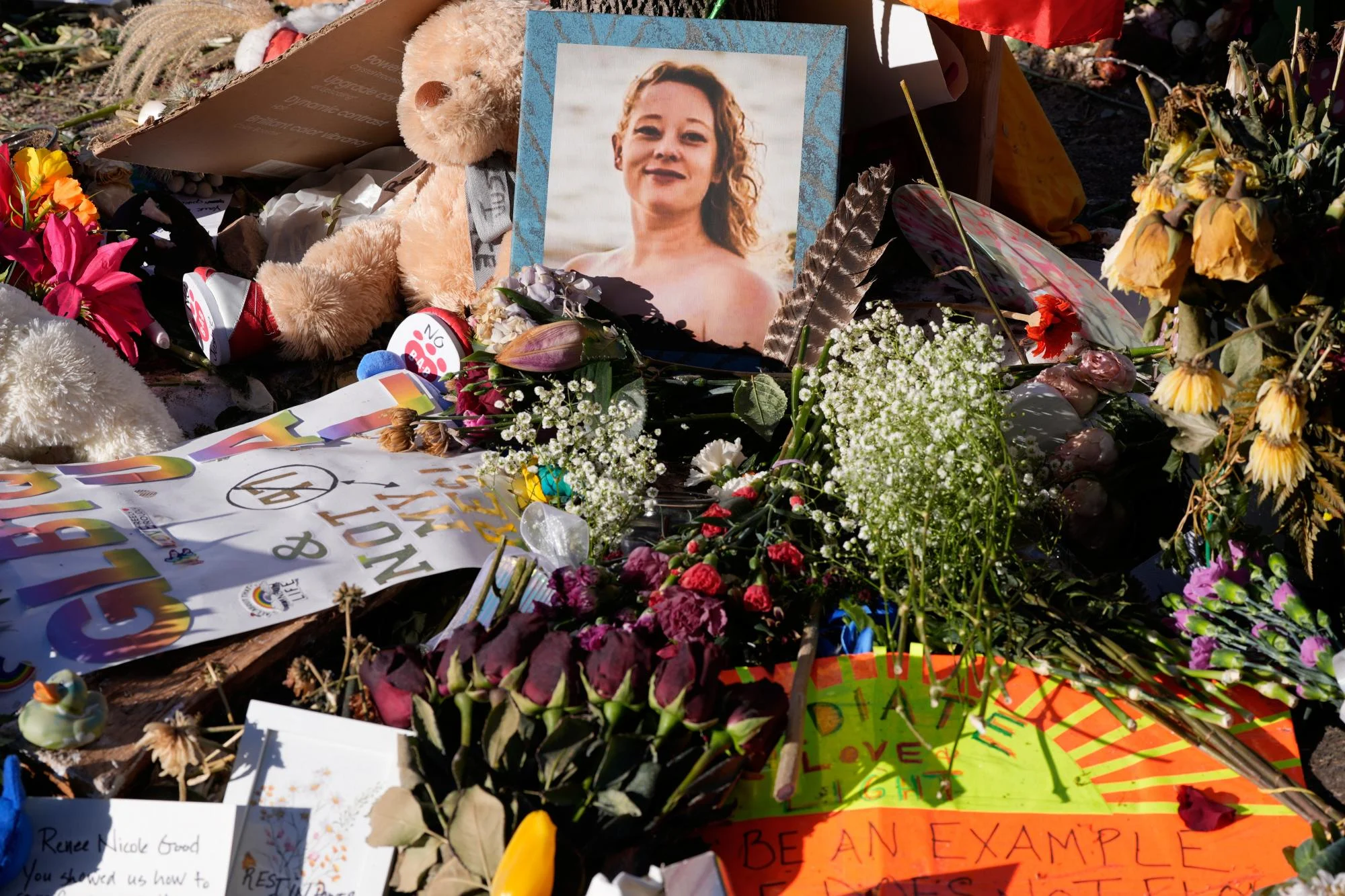
The family of Renee Good, a 37-year-old mother of three who was fatally shot by a federal immigration agent in Minneapolis last month, said they have not received any contact from President Donald Trump or his administration. The family described a sense of abandonment amid widespread media coverage and conflicting official narratives.
According to Daljoog News analysis, the lack of outreach underscores growing tensions between families of victims of federal enforcement actions and the previous administration’s public messaging. It also highlights the emotional toll on families navigating both grief and political scrutiny.
Good’s death on January 7 has drawn national attention, not only because of the circumstances of the shooting but also due to false claims circulated by Trump administration officials, including then-Homeland Security Secretary Kristi Noem, who inaccurately labeled Good as a domestic terrorist.
What Happened?
Renee Good, an unarmed U.S. citizen, was shot by a federal immigration officer in Minneapolis. The family has stated they have not watched the videos of the incident, citing the emotional difficulty of confronting the moment of her death.
A private autopsy commissioned by the family confirmed that Good was shot three times: in the forearm, breast, and head. Incident reports from the day similarly noted two gunshot wounds to the right chest and a possible head wound with protruding tissue.
Brent Ganger, Good’s brother, said the family hired independent investigators to ensure transparency and accountability. “There’s a reason that we hired our own investigators – to make sure that the truth is transparent and available,” he said.
Despite the lack of federal outreach, Good’s family has received support from the community and expressions of sympathy nationwide. Her mother, Donna Ganger, described feeling comfort in faith and gratitude for having her daughter in her life.
Why This Matters
The absence of communication from Trump and his administration underscores a broader debate over accountability and the role of federal agencies in civil enforcement. Families like Good’s are often left to navigate legal, investigative, and emotional challenges on their own.
The shooting has also sparked renewed scrutiny of federal immigration enforcement policies, particularly in Minnesota, where two fatal shootings by federal agents occurred within weeks. Following Good’s death, Alex Pretti, a 37-year-old ICU nurse, was also killed in a separate incident. Both cases have fueled public debate over law enforcement practices, community safety, and oversight.
What Analysts or Officials Are Saying
Family members emphasized that Good’s character is being misrepresented by officials who promoted false narratives. “We’re the ones who know Renee,” said her brother Luke Ganger. “No one else knows Renee.”
Experts in civil rights and immigration law note that families often confront a disconnect between government statements and the lived reality of victims. Independent investigations, private autopsies, and public advocacy have become critical tools for families seeking justice and transparency.
Community leaders have highlighted the broader implications of such incidents. They warn that without accountability, public trust in federal enforcement actions erodes, and families are left vulnerable to misrepresentation in the media.
Daljoog News Analysis
Renee Good’s death and the subsequent lack of outreach from Trump’s administration illustrate a persistent challenge for families affected by federal enforcement: the intersection of personal tragedy and political narrative.
The circulation of false claims about Good’s character demonstrates how misinformation can exacerbate grief while shaping public perception. The family’s independent investigation reflects a growing trend of citizens taking control of fact-finding when federal oversight is questioned.
These incidents also have implications for policy discussions. Minnesota’s recent shootings may prompt calls for clearer federal oversight, reforms in training and use-of-force protocols, and stronger communication channels with affected families.
Daljoog News observes that the personal stories of victims, when amplified, can influence public discourse and legislation. Families like the Gangers play a key role in humanizing broader policy debates.
What Happens Next
Good’s family continues to pursue transparency and accountability through private investigations and public advocacy.
Legal proceedings, potential federal reviews, and media scrutiny are expected to continue as investigators and advocacy groups press for answers.
Community leaders may also push for policy changes to prevent future incidents, including stricter oversight of federal agents, clearer engagement protocols with affected families, and reforms to public communication strategies following critical incidents.
Meanwhile, national conversations over federal immigration enforcement, civil rights protections, and public trust remain central to understanding the implications of these tragedies.