

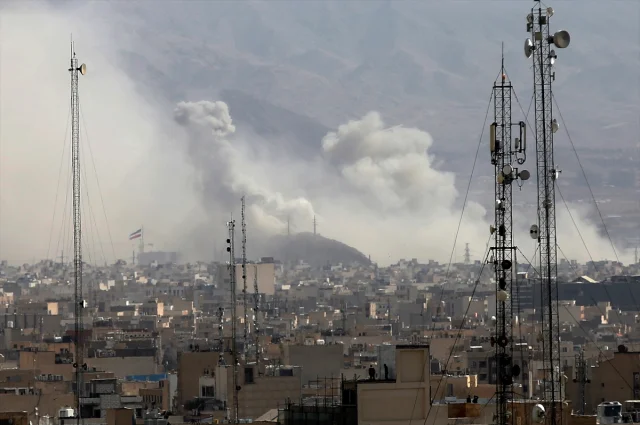
Iran launched coordinated missile and drone strikes across the Gulf region, targeting sites it claims are linked to the United States. The attacks followed large-scale Israeli and American operations against Iranian positions earlier in the day. Explosions were reported in the United Arab Emirates, Qatar, Kuwait, and Bahrain, with air defenses activated across multiple capitals.
According to Daljoog News analysis, Tehran’s response appears calibrated to strike American military infrastructure while avoiding direct attacks on Gulf governments themselves. Yet the geographic spread of the strikes has placed regional states at the center of a widening confrontation.
The escalation comes at a moment of already high tension in the Middle East, where U.S.-Iran hostilities and Israeli military pressure have been intensifying. With energy routes and major American bases involved, the situation now carries global implications.
What Happened?
Iran’s Islamic Revolutionary Guard Corps said it carried out the operation under the name “Truthful Promise Four,” targeting U.S. military assets stationed across the Gulf.
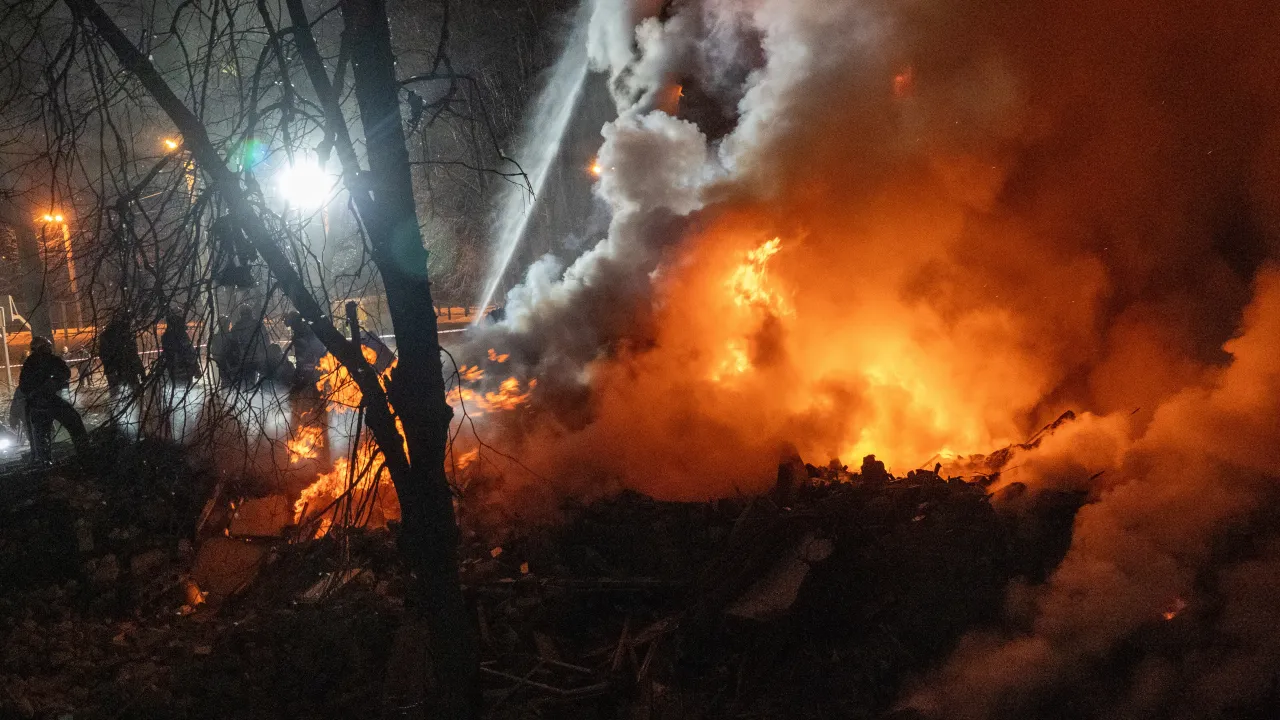
In Dubai, a fire broke out at the Fairmont The Palm hotel on Palm Jumeirah after debris from intercepted projectiles fell nearby. Emirati authorities confirmed four people were injured and said emergency teams brought the fire under control.
The UAE Ministry of Defense stated that several missiles and drones were intercepted. It described the Iranian strikes as a violation of sovereignty and international law. In Abu Dhabi, falling debris struck a residential area, causing material damage and killing one civilian.
In Qatar, the Ministry of Defense said it intercepted multiple missiles aimed at Al Udeid Air Base, the largest American air base in the region. Qatar confirmed no major casualties.
In Bahrain’s capital, Manama, smoke was seen near areas close to the headquarters of the U.S. Navy’s Fifth Fleet. Bahraini authorities acknowledged that a naval facility had been targeted but did not immediately clarify the extent of damage.
Kuwait reported that a drone struck near its international airport, slightly injuring several workers and causing limited structural damage to a terminal area. Jordan said it intercepted two ballistic missiles headed toward its territory, reporting no casualties.
The United Kingdom Maritime Trade Operations issued warnings to ships operating near the Strait of Hormuz, citing potential disruption. Roughly one-fifth of the world’s oil and gas supply passes through the narrow waterway.
Meanwhile, Israel reported multiple waves of Iranian missile launches throughout Saturday. Sirens sounded nationwide as Israeli air defenses responded.
Earlier, joint U.S.-Israeli strikes reportedly hit Iranian-linked targets, prompting Tehran’s retaliation.
Why This Matters
The Gulf hosts approximately 13 U.S. military bases, with an estimated 30,000 to 40,000 American personnel stationed across the region. Countries such as Qatar, Kuwait, Bahrain, and the UAE serve as logistical and operational hubs.
By targeting these locations, Iran signaled that it views American infrastructure in the Gulf as a direct extension of Washington’s military pressure.
This shift carries major risks. Gulf governments have long tried to balance ties between Washington and Tehran. Now they face direct exposure to confrontation.
Energy markets are watching closely. Any closure or disruption of the Strait of Hormuz could trigger sharp oil price spikes. Even temporary shipping delays could affect global supply chains.
Airspace restrictions are already in place. Flights have been canceled, and travel advisories issued across the region.
What Analysts or Officials Are Saying
Iran’s Foreign Minister Abbas Araghchi described the earlier U.S.-Israeli strikes as unjustified and unacceptable. He stated that Iran’s armed forces were prepared for such a scenario and would respond proportionately.
U.S. President Donald Trump released a video message urging the Iranian public to oppose their government, though Washington did not immediately confirm damage assessments from the Gulf strikes.
Gulf officials have focused their statements on sovereignty and defense rather than alignment with either side. Regional defense ministries emphasized interception success and civilian protection.
Security analysts say Iran appears to have aimed at American military assets rather than Gulf leadership targets. However, the involvement of civilian infrastructure — including hotels and residential buildings — complicates diplomatic positioning for Gulf states.
Daljoog News Analysis
Iran’s strategy reflects a calculated escalation. Instead of limiting retaliation to Israel, Tehran widened the battlefield to include U.S. regional infrastructure. This increases pressure on Washington without directly declaring war on Gulf governments.
Yet this approach carries a dangerous gamble. Gulf states may now demand stronger U.S. security guarantees or expand air defense cooperation. That could further entrench American military presence, the opposite of Iran’s long-term objective.
The incident in Dubai illustrates the risk of spillover. Even if missiles were aimed at military assets, debris and interceptions can cause civilian harm. Each unintended casualty increases political pressure.
Energy vulnerability adds another layer. Tehran knows that even signaling potential Hormuz disruption rattles markets. It does not need a full blockade to create economic shock.
At the same time, Israel remains under active threat. Sustained missile exchanges increase the likelihood of broader regional engagement.
The Middle East now stands at a volatile crossroads. The conflict has moved beyond shadow warfare into overt, cross-border strikes affecting multiple sovereign states.
What Happens Next
Several scenarios are possible.
The United States could respond directly to attacks on its bases, escalating the cycle further. Alternatively, Washington may focus on reinforcing regional defenses while avoiding deeper confrontation.
Gulf governments may increase diplomatic outreach to prevent further strikes on their territory. Emergency consultations within regional security frameworks are likely.
Energy markets will remain sensitive. Any confirmed threat to shipping lanes could trigger rapid price shifts.
Air defense systems across the Gulf remain on high alert. Regional airspace restrictions may continue if missile launches persist.
The coming days will determine whether this confrontation stabilizes into controlled deterrence or expands into a broader regional conflict. For now, the strategic center of gravity has shifted from isolated clashes to a multi-country security crisis with global economic stakes.