

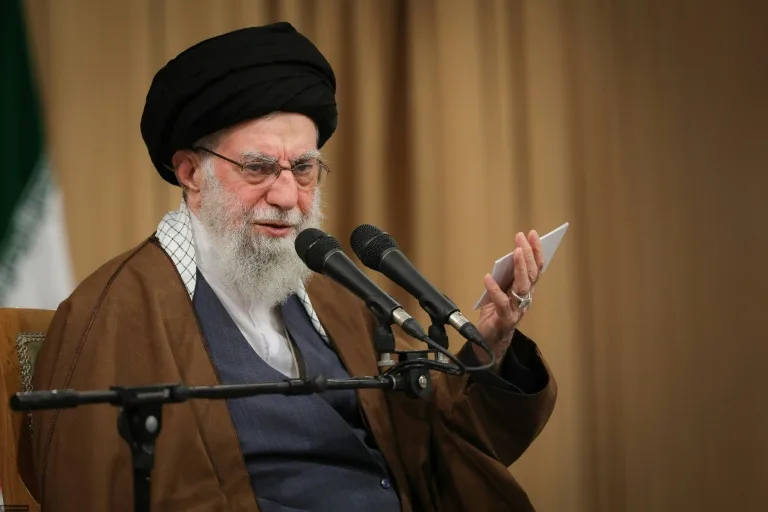
Iran has officially confirmed the death of Supreme Leader Ayatollah Ali Khamenei, a central figure in the country’s political and religious life for more than three decades. State media announced his passing on Sunday, marking the end of an era that saw Iran through war, protests, and international isolation.
According to Daljoog News analysis, Khamenei’s death signals both a symbolic and strategic shift for the Islamic Republic. As the nation grapples with his absence, questions about leadership succession, regional policy, and domestic stability are taking center stage.
Khamenei, 86, had survived multiple crises—from mass protests and internal dissent to external military threats—emerging repeatedly as the unyielding face of Iran’s revolutionary government. His death closes a chapter on a highly centralized theocratic system that has resisted reform and Western influence.
What Happened?
Ali Khamenei rose to the top of Iran’s political hierarchy in 1989 following the death of revolutionary founder Ayatollah Ruhollah Khomeini. Initially reluctant to accept the role, Khamenei’s nomination was sealed by Iran’s clerical elite, establishing a lifelong grip on power.
Throughout his tenure, he maintained authority over the military, judiciary, and political institutions. His presidency in the 1980s, following the assassination of Mohammad Ali Rajai, positioned him as a trusted revolutionary figure before he assumed the supreme leadership.
Khamenei’s personal security was among the tightest in the world. Public appearances were rare, unscheduled, and tightly controlled. He never traveled abroad as supreme leader, with his last foreign visit dating to 1989 as president in North Korea. He also survived an assassination attempt in 1981, which partially paralyzed his right arm and was blamed on the People’s Mujahedin of Iran (MEK).
Over decades, he weathered student protests in 1999, mass demonstrations after disputed elections in 2009, and the “Woman, Life, Freedom” movement of 2022-2023 sparked by Mahsa Amini’s death. He also went into hiding during the 12-day war with Israel in June, after Israeli airstrikes killed key Iranian security officials, yet he returned to public life defiant as ever.
Why This Matters
Khamenei’s death creates an unprecedented political and strategic vacuum in Iran. The Assembly of Experts, the clerical body responsible for choosing a successor, now faces immense pressure to maintain continuity while ensuring stability.
Domestically, hardliners who have dominated Iran’s decision-making will seek to consolidate power, while reformists and opposition figures may attempt to leverage the transitional period. Internationally, Tehran’s foreign policy, particularly toward the United States, Israel, and Gulf states, could shift depending on the new leadership’s approach.
Khamenei’s long-standing influence over six Iranian presidents—ranging from moderates like Mohammad Khatami to hardliners—illustrates how his position effectively shaped all executive and diplomatic decisions in the country.
What Analysts or Officials Are Saying
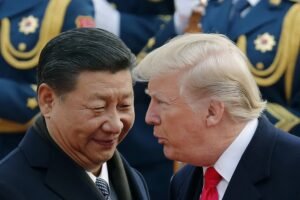
Trump described Khamenei as “one of the most evil people in history” and framed the alleged U.S.-Israeli operation that preceded the announcement as a decisive strike. Iranian state media, however, emphasized Khamenei’s prior resilience and framed the narrative around continuity and national stability, even as the country mourns.
Exiled Iranian figures, including Reza Pahlavi, heralded the event as the end of the Islamic Republic era. Analysts caution that such declarations could fuel both domestic unrest and regional instability, particularly given ongoing tensions with U.S. and Israeli forces.
Experts note that Khamenei’s passing does not necessarily dismantle Iran’s institutions. The Islamic Revolutionary Guard Corps, conservative clerics, and other entrenched actors maintain operational and political control, suggesting continuity amid leadership transition.
Daljoog News Analysis
Khamenei’s death represents both a political and symbolic rupture. While his successors may inherit his formal titles, replicating his influence over Iran’s revolutionary ideology and entrenched institutions is a formidable challenge.
His personal legacy—control over military, political, and religious levers—allowed him to suppress opposition, direct foreign policy, and maintain hardline dominance. Any successor will confront similar pressures from competing factions, the military, and a citizenry increasingly aware of the country’s economic and social strains.
Family dynamics also highlight the complexity of his private and public life. While some children, including Mojtaba, played visible political roles, others, such as relatives who fled to Iraq and France, became critics, reflecting divisions within his extended network.
The passing of Khamenei may prompt reassessment of Iran’s trajectory, particularly regarding nuclear policy, regional engagement, and domestic governance. For the global community, it is a pivotal moment requiring careful monitoring.
What Happens Next
The Assembly of Experts will convene to name an interim or permanent successor. The selection process is expected to be highly secretive and politically charged.
Internally, Iran may see short-term consolidation of hardliners to stabilize governance. At the same time, protests or opposition activity could flare if citizens perceive opportunities for reform.
Regionally, Gulf states, Israel, and U.S. forces will likely adjust security postures. Any miscalculation in the transition period could escalate conflict, especially along Iranian borders or at U.S.-aligned installations.
Globally, governments and intelligence agencies are analyzing signals to gauge Iran’s next moves. Khamenei’s death marks a turning poi