



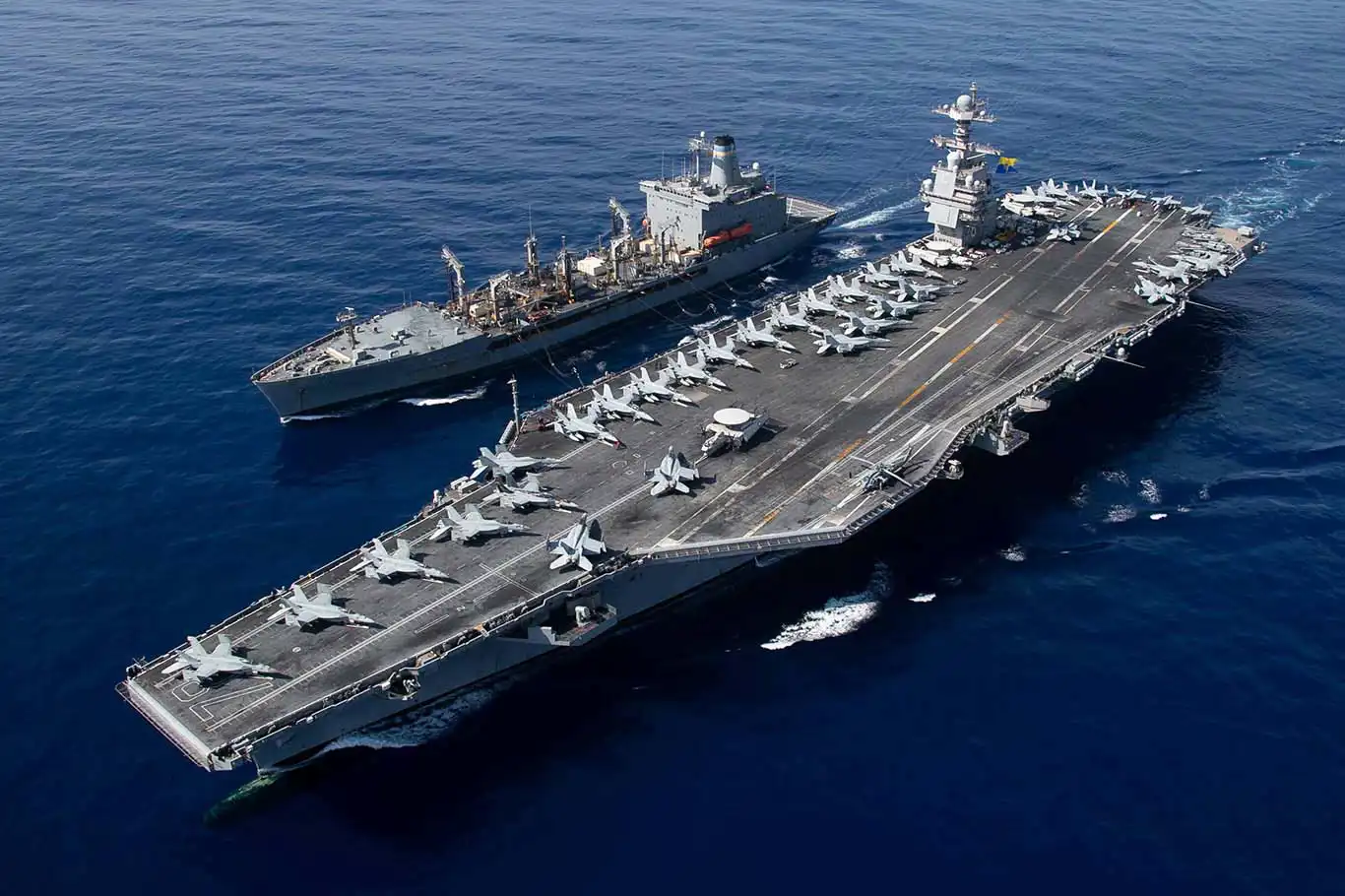
The USS Gerald R. Ford, the United States’ largest and most advanced aircraft carrier, is now at the center of controversy rather than a symbol of naval supremacy. The vessel, docked in Greece for repairs after operations in the Middle East, has sparked questions about the readiness and resilience of US naval power.
According to Daljoog News analysis, the recent onboard fire and prolonged deployments have exposed vulnerabilities in both technology and crew morale, raising concerns over operational capability in active conflict zones.
The situation comes amid escalating tensions with Iran and Israel, creating a high-pressure environment for American forces and further complicating strategic planning in the region.
What Happened?
Earlier this month, a sudden fire broke out in the laundry area of the USS Gerald R. Ford, exposing weaknesses in the ship’s internal safety systems. Over 600 sailors were displaced, and onboard operations descended into chaos.
While US officials initially described the incident as a non-combat accident, Iranian sources, including the Khatam al-Anbiya Central Headquarters, have suggested that panic over potential Iranian attacks may have prompted an intentional onboard fire to abort missions.
Adding to the controversy, a leaked document from the Pentagon’s testing office reported by Bloomberg described the Gerald R. Ford as “incomplete.” Despite over a decade of service, key systems—including jet launch mechanisms, radar, and weapon elevators—remain only partially combat-ready.
The carrier has been deployed at sea continuously since June 2025, exceeding the planned seven-month deployment by two months. Frequent route changes—from Venezuela toward Iran as part of US operations—have worsened stress among personnel, leading to fatigue and morale issues.
Why This Matters
The Gerald R. Ford is meant to project American power globally. Technical shortcomings and crew exhaustion undermine its effectiveness in high-stakes regions like the Middle East.
Extended deployments without full operational readiness risk not only mission failure but also endanger sailors. Repeated shifts in mission routes and exposure to regional threats further amplify the pressure on personnel.
The broader implication is strategic: if the United States cannot fully leverage its most advanced naval assets, adversaries may perceive a weakening of American deterrence, potentially emboldening regional actors like Iran.
What Analysts or Officials Are Saying
Military experts point out that modern aircraft carriers are highly complex systems where mechanical reliability and human endurance are equally critical. Delays in system readiness, combined with operational fatigue, reduce combat efficiency.
Analysts also note that public perception plays a key role. Reports of onboard incidents, leaks of internal assessments, and Iranian claims may erode confidence in US naval power, both domestically and internationally.
Officials acknowledge the strain on personnel and highlight the need for strategic reassessment of deployment duration and readiness protocols.
Daljoog News Analysis
The Gerald R. Ford episode illustrates the growing gap between technological ambition and operational reality. Even the most advanced vessels cannot substitute for well-prepared, rested, and adequately supported crews.
Iran’s messaging adds psychological pressure, reinforcing the perception that US forces are overextended. The interplay of actual technical failures and strategic signaling by adversaries complicates decision-making for commanders.
This scenario underlines a broader lesson: technological sophistication must be matched with logistical planning and human resilience to maintain strategic credibility.
What Happens Next
The United States Navy is expected to accelerate repairs in Greece and reassess deployment schedules for the Gerald R. Ford. Efforts to bolster crew readiness and morale will likely be prioritized.
Regional monitoring will remain intense as tensions with Iran continue, with potential for further escalatory signals or limited engagements.
The outcome of these developments could influence US naval strategy and deployment planning in other contested regions, highlighting the delicate balance between force projection and operational sustainability.