

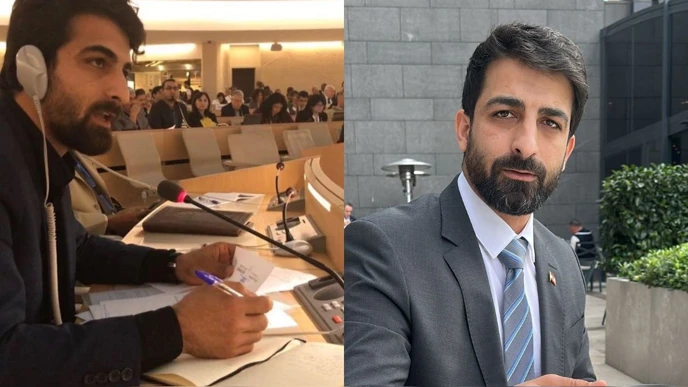
A long-serving representative at the United Nations has stepped down, warning of what he described as a looming humanitarian catastrophe tied to escalating tensions involving Iran. মোহাম্মদ সাফা, who served for years as a permanent representative of the Patriotic Vision Organization, announced his resignation through a social media statement.
According to Daljoog News analysis, the resignation appears to be more than a personal decision, reflecting deeper frustrations with how global narratives around Iran are being shaped within influential diplomatic circles.
The timing is critical, as geopolitical tensions in the Middle East continue to intensify, raising fears of miscalculation and the potential for large-scale consequences.
What Happened?
Mohamad Safa publicly declared that he could no longer remain part of what he called a system complicit in enabling a potential crime against humanity. In his statement, he alleged that senior figures within the United Nations are aligning with the interests of a powerful group, rather than acting in the interest of global peace.
He argued that Iran is being portrayed as an imminent threat to international stability, but claimed this narrative is deliberately constructed. According to him, the portrayal is part of a broader effort to justify actions that could trigger a wider regional conflict.
Safa also warned about the devastating consequences of any potential military escalation involving Tehran. He emphasized that the Iranian capital is home to millions of civilians, and any use of nuclear weapons would result in catastrophic humanitarian fallout.
In addition to his claims, he revealed that he has received threats following his decision to speak out. He described his resignation not simply as a departure, but as an act of exposing information that he believes the public should be aware of.
Why This Matters
The resignation raises serious questions about internal dynamics within international institutions and how geopolitical narratives are shaped. Allegations of bias, especially at a global body like the United Nations, can have far-reaching implications for trust and credibility.
If such claims gain traction, they could influence how countries interpret official positions and decisions coming from multilateral organizations. This, in turn, may complicate diplomatic efforts at a time when coordination is already under strain.
The warning about a potential nuclear scenario also adds urgency. Even if hypothetical, the consequences described highlight the scale of risk associated with escalating tensions involving major powers and densely populated regions.
For the global public, such statements can act as a wake-up call, drawing attention to risks that may otherwise remain confined to diplomatic discussions.
What Analysts or Officials Are Saying
Experts remain cautious in assessing the claims made by Safa. While some acknowledge that internal disagreements and political pressures are not uncommon within international organizations, they stress the need for independent verification of such serious allegations.
Diplomatic observers suggest that public resignations accompanied by strong accusations often reflect deeper institutional tensions. However, they also warn that such statements can sometimes amplify existing geopolitical narratives rather than clarify them.
Officials have not widely responded in detail to the claims, but there is an expectation that the issue may draw attention in diplomatic circles. Monitoring how international bodies address or respond to such allegations will be important in the coming days.
Some analysts also note that warnings about nuclear risks, while alarming, must be understood within the broader context of deterrence and strategic signaling among states.
Daljoog News Analysis
This resignation highlights a growing challenge in global diplomacy: the erosion of trust in institutions meant to act as neutral arbiters. Whether Safa’s claims are fully substantiated or not, the fact that such concerns are being voiced publicly is itself significant.
The narrative around Iran has long been contested, with different actors framing the country as either a destabilizing force or a target of external pressure. Safa’s statement adds another layer to this debate, suggesting that information and perception are being actively shaped for strategic purposes.
At the same time, the warning about a nuclear scenario underscores the stakes involved. Even the suggestion of such an outcome reflects how fragile the current situation has become. In regions where tensions are already high, rhetoric alone can contribute to escalation.
However, caution is necessary. Strong claims without clear evidence can deepen divisions and fuel misinformation. The international community must balance openness to whistleblower concerns with rigorous verification to avoid unintended consequences.
What Happens Next
Attention will likely turn to how international institutions respond to the allegations. Calls for transparency or internal review processes may emerge if the issue gains wider attention.
At the same time, geopolitical tensions involving Iran will continue to shape the broader context. Any escalation or de-escalation will influence how Safa’s warnings are interpreted.
There may also be increased scrutiny of narratives surrounding nuclear risk and regional security. Governments and analysts will be watching closely for any signs that rhetoric is translating into concrete action.
Ultimately, the situation remains uncertain. The resignation adds a new voice to an already complex debate, but whether it leads to meaningful change or fades into the background will depend on how global actors respond in the days ahead.