

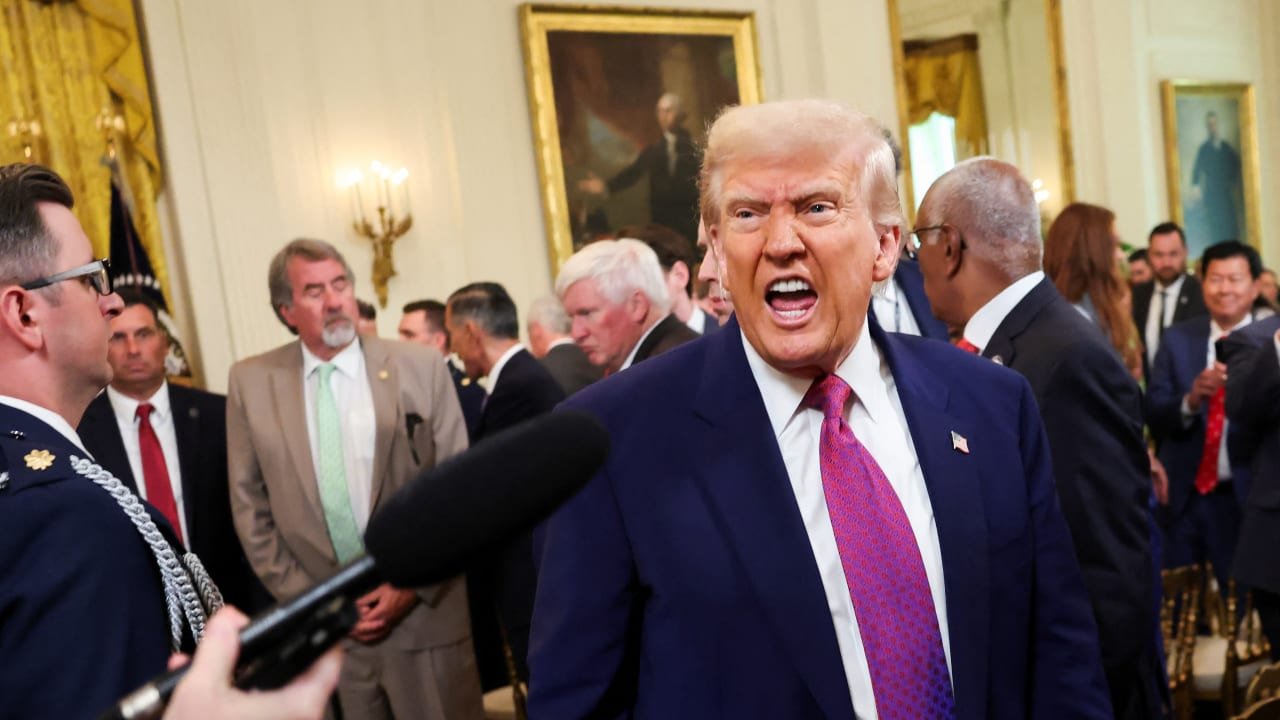
U.S. President Donald Trump’s decision to launch strikes in Iran has triggered a serious rift with European NATO allies. As tensions rise, many member countries are withholding support, leaving Washington increasingly isolated.
According to Daljoog News analysis, the episode underscores growing mistrust between the U.S. and its traditional European partners. NATO cohesion is now under scrutiny, and the alliance’s unity faces one of its toughest tests in decades.
The timing comes at a critical moment for transatlantic security, as the Iran conflict highlights strategic disagreements over military cooperation, regional stability, and international law.
What Happened?
Following Trump’s aggressive posture toward Iran, several NATO members began limiting their cooperation. France blocked airspace access for weapons destined for Israel, while Italy initially denied U.S. bombers landing permission in Sicily for the Iran operation. Spain formally closed its airspace to U.S. and Israeli military aircraft, citing opposition to the strikes.
Even long-standing partners like the United Kingdom expressed reluctance to participate directly, instead relying on NATO frameworks. Germany, which initially allowed U.S. access to its Ramstein base, saw growing internal criticism of military support, with President Frank-Walter Steinmeier citing international law concerns.
The Trump administration has publicly criticized these European responses. On social media, Trump called France’s actions deliberate obstruction and labeled European leaders as “cowards” for limiting operational support.
Why This Matters
The growing division within NATO has significant geopolitical implications. Without full European cooperation, U.S. and Israeli operations in the Middle East face logistical hurdles, including restricted air routes, limited bases, and supply chain delays.
Strategically, the split undermines the credibility of NATO as a unified alliance. Analysts warn that repeated fractures could embolden adversaries, weaken deterrence, and force the U.S. to reconsider its reliance on European partners for regional security.
The situation also raises questions about the sustainability of multilateral military commitments when national governments prioritize domestic law or political considerations over alliance obligations.
What Analysts or Officials Are Saying
Experts point out that Europe’s cautious stance is partly motivated by legal and political risks. Nations like Spain and Germany seek to avoid complicity in what they view as potentially unlawful military actions.
U.S. officials acknowledge the strain. Secretary of State Marco Rubio indicated that the conflict may force Washington to reassess NATO relationships, emphasizing that past trust and operational readiness cannot be assumed under the current climate.
Observers note that while Trump aims to project power, his unilateral approach has deepened skepticism among allies, creating an unusual transatlantic impasse.
Daljoog News Analysis
Trump’s Iran strikes reveal the limits of American unilateralism in a tightly integrated alliance system. Europe’s selective support illustrates how legal, strategic, and political calculations can override automatic cooperation, even in wartime scenarios.
The episode highlights a long-term challenge for NATO: maintaining cohesion when key members perceive U.S. actions as destabilizing or legally questionable. It also exposes vulnerabilities in operational logistics, particularly regarding airspace, basing rights, and rapid deployment of military assets.
Ultimately, Trump’s approach risks isolating the U.S. and forcing NATO to function as a conditional coalition rather than a fully integrated alliance.
What Happens Next
Washington will need to negotiate renewed cooperation with hesitant European states to sustain operations against Iran. Potential diplomatic measures include offering reassurances on international law compliance, revising operational plans, and providing incentives for logistical support.
If tensions persist, the U.S. may be compelled to act unilaterally or rely more heavily on regional partners like Israel. Meanwhile, NATO’s internal cohesion could be permanently affected, influencing alliance responses to future crises and shifting the balance of transatlantic security dynamics.
The unfolding situation will remain critical for European-U.S. relations, Middle East policy, and the credibility of NATO as a deterrent alliance.