

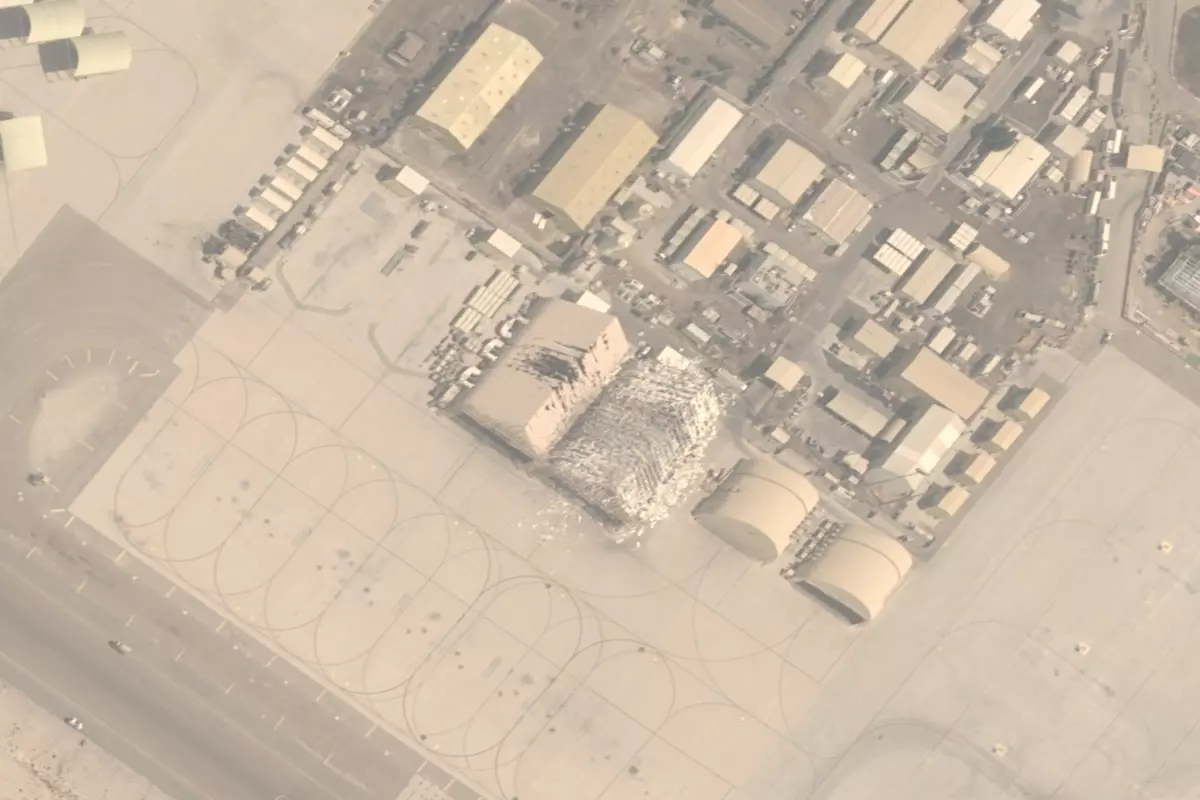
The United States has moved to restrict access to high-resolution satellite imagery as tensions around Iran continue to escalate, limiting the flow of real-time visuals from key conflict zones in the Middle East. The decision affects how quickly journalists, analysts, and researchers can verify developments on the ground.
According to Daljoog News analysis, the move reflects a calculated effort to control sensitive information during an active conflict. While framed as a security measure, it also introduces new challenges for independent verification and public transparency.
The restrictions come at a critical moment, as military exchanges involving Iran, Israel, and U.S. interests intensify across the region. Accurate imagery has become essential not only for reporting but also for global understanding of the conflict’s scale.
What Happened?
The U.S. government has requested commercial satellite firms to limit the release of high-quality imagery related to Iran and surrounding conflict zones. In response, major providers, including Planet Labs, have implemented new access controls on their data.
Under the updated policy, real-time or near-real-time satellite images of sensitive areas are no longer widely available. Instead, access is being restricted through a “managed access” system, meaning only select users or specific cases tied to public interest will be granted visibility.
The scope of these restrictions is broad. It covers not only Iranian territory but also U.S. military installations in the Middle East, allied bases, and strategic areas across the Persian Gulf region.
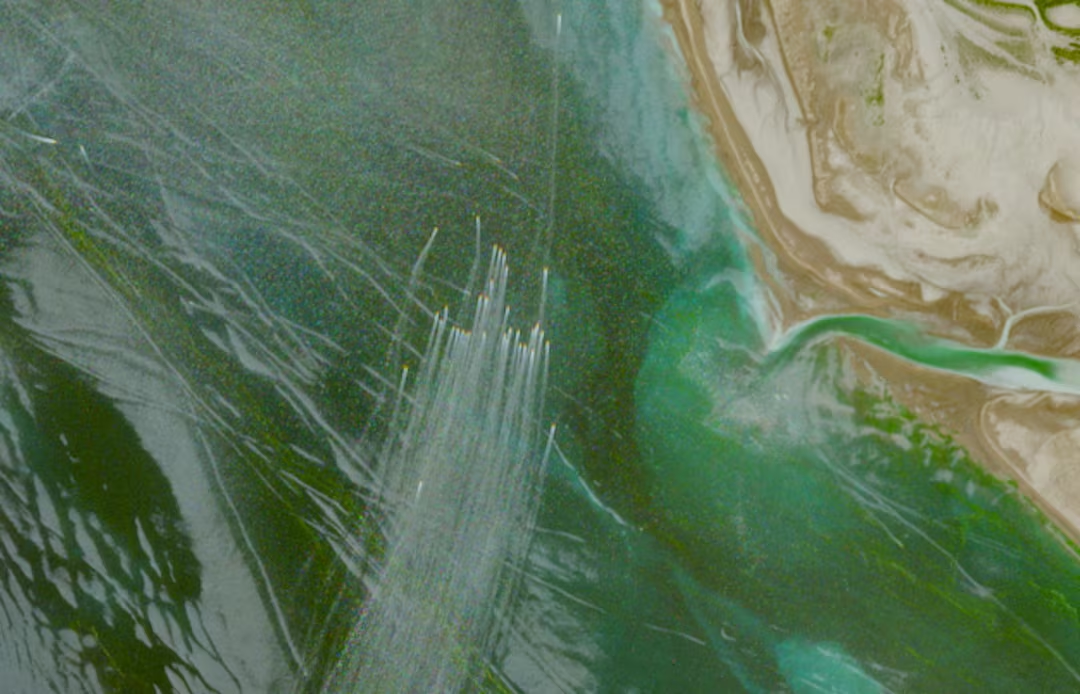
Previously, satellite imagery from companies like Planet Labs was often available within hours, allowing news organizations and researchers to track military movements and verify claims. That rapid access has now been significantly reduced.
Other satellite service providers are reportedly adopting similar measures, signaling a wider industry shift under U.S. regulatory influence. American law allows such restrictions when national security or foreign policy interests are at stake.
Why This Matters
Limiting satellite imagery access has immediate consequences for transparency. In modern conflicts, open-source intelligence plays a major role in verifying events, countering misinformation, and informing the global public.
Without timely visuals, independent confirmation of military actions becomes more difficult. This creates a heavier reliance on official statements, which may not always provide a complete picture.
For journalists, the restrictions present a serious obstacle. Satellite images have become a key tool for reporting from inaccessible or dangerous areas. Reduced access slows down reporting and increases uncertainty.
From a military perspective, however, the rationale is clear. High-resolution imagery can reveal sensitive details about troop movements, defense systems, and strategic infrastructure. Limiting access helps prevent adversaries from exploiting this information.
The move highlights the growing tension between security and transparency in modern warfare, where information itself is a critical battlefield.
What Analysts or Officials Are Saying
Security experts suggest that the restrictions are designed to deny adversaries a tactical advantage. By controlling imagery, the U.S. aims to reduce the risk of sensitive locations being identified and targeted.
Some analysts note that commercial satellite data has become increasingly powerful, often rivaling government capabilities. This makes it both a valuable tool and a potential vulnerability during active conflicts.
Media and research communities, however, have raised concerns. They argue that limiting access undermines independent verification and could lead to greater uncertainty or misinformation.
Policy observers also point out that this is not the first time such measures have been used. Governments have previously intervened in commercial data flows during periods of heightened security risk, though the scale and speed of current restrictions stand out.
Daljoog News Analysis
The decision to restrict satellite imagery underscores how modern conflicts extend beyond physical battlefields into the realm of information control. Visibility has become a strategic asset, and limiting it can shape both perception and reality.
While the security justification is understandable, the broader implications are complex. Reduced transparency can weaken public trust, especially in conflicts where competing narratives are already in play.
There is also a long-term concern. If such restrictions become more common, they could redefine how wars are documented and understood. Open-source intelligence has democratized access to information, but increased controls may reverse that trend.
Daljoog News analysis suggests that the balance between operational security and public accountability is becoming harder to maintain. Governments are likely to continue prioritizing immediate security needs, even if it comes at the cost of reduced openness.
What Happens Next
The restrictions on satellite imagery are expected to remain in place as long as tensions persist. Companies like Planet Labs have indicated that their managed access policies will continue until the situation stabilizes.
In the meantime, journalists and analysts will need to rely more on alternative sources, including ground reports, official briefings, and limited-access data. This could slow the pace of verification and reporting.
There may also be calls for clearer guidelines on when and how such restrictions are applied. Transparency advocates are likely to push for safeguards that ensure public access is not unnecessarily limited.
As the conflict evolves, the role of information control will remain central. How governments and companies navigate this space could shape not only this crisis but also the future of conflict reporting worldwide.