


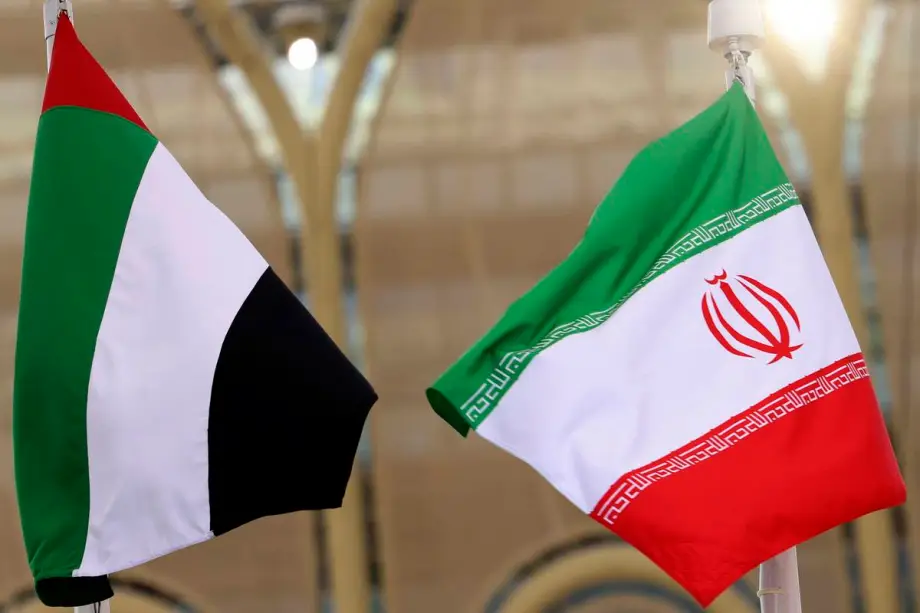
The Middle East is entering a new phase of tension as Iran claims that the United Arab Emirates has entered the battlefield. The region’s already volatile dynamics are becoming increasingly complex with additional actors now involved.
According to Daljoog News analysis, the UAE’s alleged engagement signals that the Iran-US-Israel conflict is no longer limited to traditional adversaries. Involving Gulf powers could dramatically raise the stakes, with broader implications for regional security and energy flows.
The reported incidents include both airspace and drone confrontations, highlighting the potential for miscalculations that could escalate beyond localized strikes. How Gulf states choose to act may determine whether the conflict expands further.
What Happened?
Iran’s state broadcaster, Islamic Republic of Iran Broadcasting, reports two incidents suggesting UAE involvement. On March 22, an Emirati Mirage 2000 fighter jet was intercepted over Iran’s Jask Island. On April 1, Iran claims to have destroyed a Chinese Wing Loong II drone that it asserts is only possessed by Saudi Arabia and the UAE.
No official comment has been issued by the UAE regarding these claims. Tehran maintains that any direct engagement by Gulf powers would be met with decisive retaliation. Iranian military capabilities include long-range missiles, advanced drones, and regional allied groups prepared to counter such threats.
The current escalation follows a series of joint strikes by the U.S.-Israel coalition that began on February 28. Iranian leadership and key infrastructure have been targeted, prompting Tehran to respond with drone and missile strikes that have affected neighboring regions and critical shipping lanes.
Why This Matters
The entry of the UAE, if confirmed, significantly raises the risk of a broader conflict in the Persian Gulf. Direct involvement of Gulf states could transform the confrontation into a regional war, threatening international shipping, oil production, and economic stability.
Iran’s missile and drone capabilities pose a serious threat to urban centers and energy infrastructure. Any strike could disrupt not only the Gulf states but also global oil markets, which depend heavily on uninterrupted flows from the region.
Even a limited engagement could have cascading effects on regional alliances, trade routes, and military deployments, making the conflict far more unpredictable and dangerous.
What Analysts or Officials Are Saying
Security experts note that Iran’s warnings reflect both strategic signaling and operational readiness. Tehran is demonstrating that it can respond quickly and with precision to any direct threat.
Analysts caution that Gulf states, particularly Saudi Arabia and the UAE, will act cautiously. Their economies are highly dependent on oil exports, making any open confrontation a high-stakes gamble. Yet, their presence on the battlefield would shift regional calculations and could force other nations to reconsider their security posture.
Observers also highlight that the current escalation illustrates how local conflicts can quickly draw in multiple players, making containment difficult without robust diplomacy and international mediation.
Daljoog News Analysis
This reported involvement of the UAE is a potential game-changer for the Middle East. It underscores the complexity of modern regional conflicts, where multiple actors, advanced technology, and high-value infrastructure converge.
Even without formal confirmation from the UAE, the perception of Gulf involvement already heightens tensions. Iran’s history of asymmetric warfare—leveraging missiles, drones, and regional allies—means that any misstep could provoke disproportionate retaliation.
Daljoog News assesses that the conflict’s trajectory will depend on how Gulf powers balance economic interests against military ambitions. The risk is that a localized confrontation could spiral into a full-scale regional crisis, affecting security, trade, and diplomacy far beyond the immediate combat zones.
What Happens Next
If the UAE or other Gulf states take direct military action, Tehran is expected to respond forcefully, potentially targeting oil infrastructure, ports, and shipping lanes. Such a scenario would have immediate regional and global repercussions.
Diplomatic efforts will likely intensify to prevent escalation, but the absence of formal statements from Gulf capitals leaves significant uncertainty. Analysts predict that monitoring missile and drone movements, as well as maritime activity, will be key indicators of the conflict’s next phase.
The Middle East remains a volatile theater. Any new entrant in this confrontation could amplify existing tensions, making regional de-escalation a highly challenging task. This conflict is shaping not only the present security landscape but also the long-term strategic balance across the Gulf and beyond.