



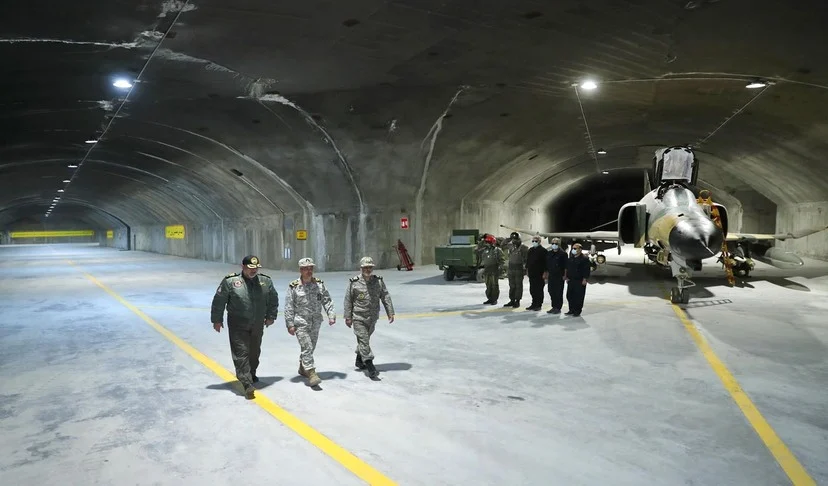
Tensions in the Middle East are intensifying as Iran’s underground missile network emerges as a major strategic challenge for the United States. Despite weeks of U.S. and Israeli airstrikes, Iran’s missile capabilities remain largely intact.
According to Daljoog News analysis, the subterranean facilities, constructed deep beneath granite formations, allow Iran to maintain a resilient and highly mobile missile force, complicating any potential military campaign.
The developments come amid heightened regional volatility, with Iran asserting control over the Strait of Hormuz and signaling that it will not compromise on strategic leverage.
What Happened?
Intelligence reports reveal that Iran has built extensive missile installations nearly 1,600 feet below the surface in solid granite. These “missile cities” house a complex network of tunnels and automated rail systems that allow rapid deployment of missiles from hidden positions.
From above, the sites appear as ordinary mountains, but beneath the surface lies a fortified infrastructure capable of withstanding significant attacks, including the U.S. GBU-57 bunker-buster bomb. Satellite imagery confirms the presence of hundreds of kilometers of interconnected tunnels, launch points, and storage areas.
Recent attacks on targets such as Kuwait’s oil refinery and Abu Dhabi’s gas complex have demonstrated Iran’s continued ability to project power, even under pressure from U.S.-led operations. The Iranian military has rapidly repaired damaged access points, rendering strikes largely temporary.
Why This Matters
These underground facilities give Iran a strategic edge, enabling it to respond quickly while keeping its missile arsenal protected. For the United States, the existence of such resilient infrastructure limits the effectiveness of conventional airstrikes and presents significant operational challenges.
The situation also escalates the stakes for regional security. Control over the Strait of Hormuz, through which a significant portion of the world’s oil supply passes, gives Iran leverage to influence global energy markets and political negotiations.
What Analysts or Officials Are Saying
Military experts note that Iran’s subterranean missile network is among the most sophisticated in the world. The combination of natural granite protection, automated deployment systems, and rapid repair capabilities makes it highly resilient to conventional attacks.
Analysts emphasize that as long as these facilities remain active, achieving a decisive U.S. military victory in the region would be extremely difficult. They also point to the potential for escalation if any strike threatens the integrity of these underground bases.
Regional intelligence officials have highlighted that even limited U.S. attempts to neutralize the sites could provoke wider conflict, reinforcing Iran’s strategic position.
Daljoog News Analysis
The existence of Iran’s underground missile network illustrates a shift in modern military strategy, where survivability and mobility outweigh sheer firepower. By embedding its arsenal deep underground, Iran ensures that conventional strikes are unlikely to neutralize its strategic capabilities.
This subterranean fortification also serves as a deterrent, signaling to the United States and its allies that any confrontation could be costly and unpredictable. The ongoing tensions highlight the broader challenge of balancing military action with regional stability and energy security.
What Happens Next
Monitoring of these underground sites is expected to intensify, with the U.S. relying on satellite reconnaissance and intelligence gathering to assess vulnerabilities. Diplomatic pressure, sanctions, and contingency planning for energy disruptions are likely to continue in parallel.
Analysts anticipate that Iran will maintain its missile readiness while exploring further fortifications, making any military escalation a complex and high-risk endeavor. The coming months will reveal whether diplomacy or confrontation will shape the trajectory of this high-stakes standoff.