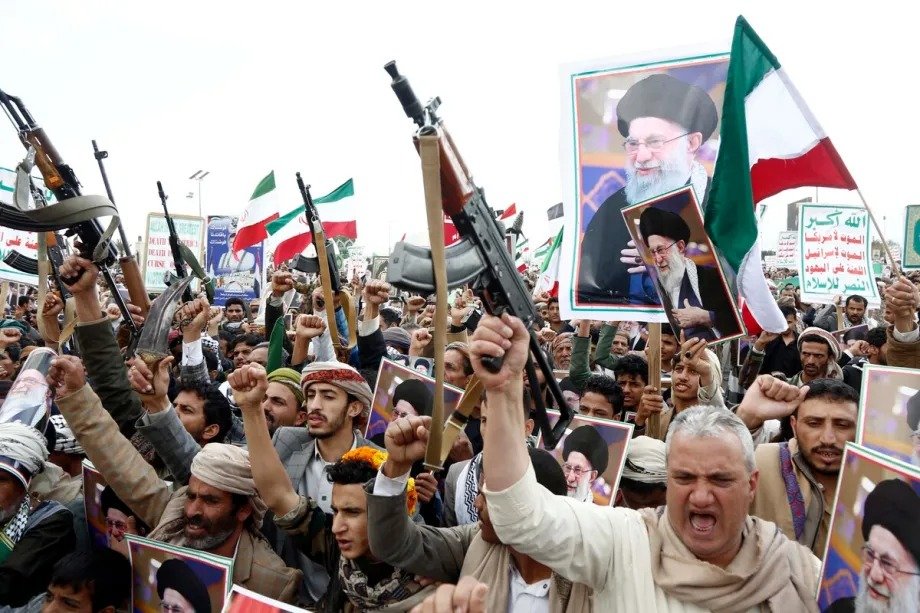


Tensions between the United States and Iran have intensified following renewed unrest involving American positions in the Middle East and growing pressure around the Strait of Hormuz. The developments have triggered global concern over energy security and military stability in one of the world’s most sensitive regions.
According to Daljojo News analysis, the situation reflects more than a simple military escalation. It exposes rising uncertainty in U.S. foreign policy messaging at a time when global actors are watching Washington’s decisions closely. Mixed signals from the American leadership have added confusion to an already volatile crisis.
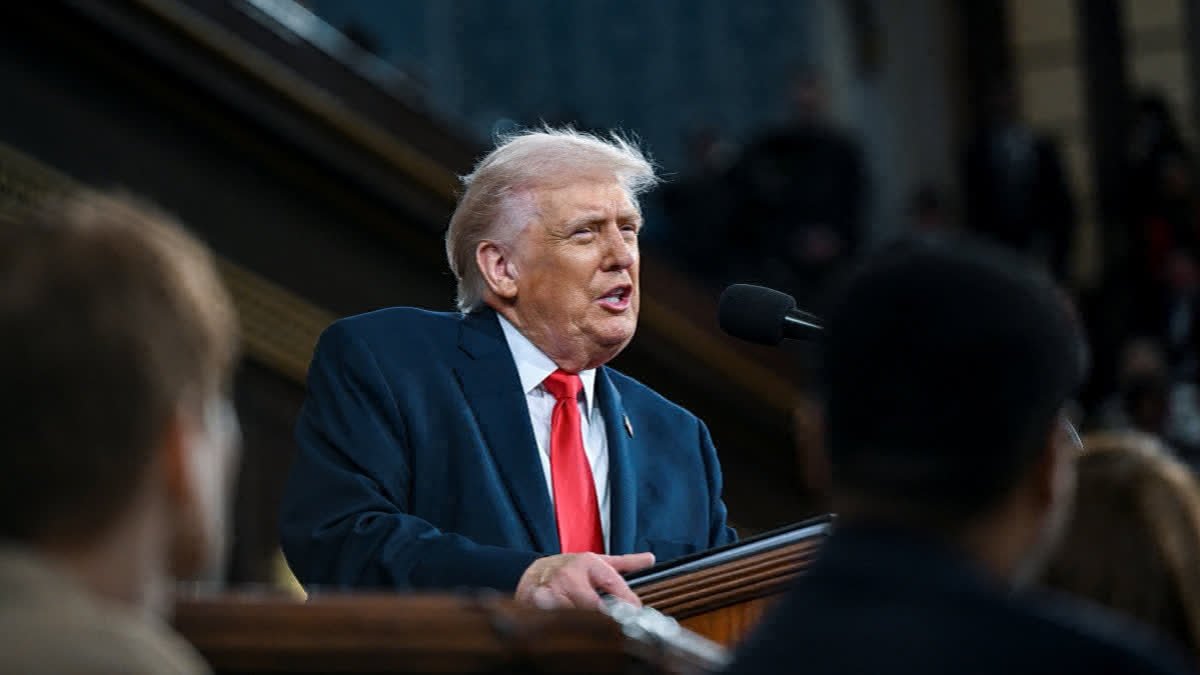
The timing has increased scrutiny on President Donald Trump, whose second term continues to draw attention due to both geopolitical challenges and domestic debates over leadership style, age, and long-term political direction.
What Happened?
Recent reports indicate a series of escalating incidents involving Iranian-linked actions near U.S. military interests in the Middle East. The Strait of Hormuz, a vital global oil passage, has become a central pressure point in the latest phase of tensions.
President Donald Trump’s public remarks have varied significantly during the crisis. At one point, he warned of severe military retaliation against Iran, while at another, he suggested that the conflict could be contained quickly through diplomatic engagement. These contrasting messages have created uncertainty among international observers and policy analysts.
The situation became more complicated after reports suggested a temporary pause in escalation following diplomatic conditions linked to Tehran. However, subsequent developments pointed to renewed activity in the region, raising questions about the stability of any short-term understanding between the two sides.
In Washington, the shifting tone has drawn attention from lawmakers and policy experts. Some argue that inconsistent messaging weakens deterrence, while others believe it reflects a deliberate pressure strategy aimed at influencing Iranian decisions.
Why This Matters
The Strait of Hormuz plays a critical role in global energy supply, with a large share of international oil shipments passing through its waters. Any disruption in this corridor can quickly impact global fuel prices and trade stability.
Beyond economic risks, the political implications for the United States are also significant. Foreign policy credibility often depends on clear and consistent communication, and critics argue that mixed signals during a crisis can undermine strategic trust among allies.
The situation also highlights the fragile nature of U.S.-Iran relations, where even limited exchanges can escalate into wider regional instability. This creates additional pressure on diplomatic channels already struggling to maintain balance in the Middle East.
For global partners, unpredictability in Washington’s approach adds another layer of complexity to ongoing efforts aimed at preventing broader conflict in the region.
What Analysts or Officials Are Saying
Security experts suggest that the current escalation is being shaped as much by communication strategy as by military developments on the ground. Some believe the United States is attempting to balance deterrence with diplomacy, while others argue that the approach appears inconsistent.
Officials from allied countries have reportedly expressed concern over unclear signals coming from Washington. Diplomatic discussions are believed to be ongoing to prevent miscalculations that could further escalate tensions in the region.
Political commentators in the United States have also pointed to increased scrutiny of Trump’s leadership during high-pressure international crises. Discussions around decision-making stability, age, and long-term governance capacity have become part of the wider debate surrounding the administration.
Daljojo News Analysis
This crisis highlights how modern geopolitical conflicts are no longer shaped only by military action, but also by communication speed and political perception. In this environment, every statement from leadership carries immediate global consequences.
Trump’s second term is increasingly being judged not just on policy outcomes, but on the consistency of messaging during international emergencies. Rapid and sometimes conflicting statements create space for confusion among allies and adversaries alike.
At the same time, renewed public attention to Trump’s personal history, including past relationships and earlier controversies, shows how political narratives often expand beyond policy into character judgment. While such factors do not directly influence state decisions, they significantly shape public interpretation during moments of crisis.
The combination of military pressure, economic risk, and leadership scrutiny creates a highly sensitive environment where perception can be as influential as action. For global observers, the key issue is not only what decisions are made, but how clearly and consistently they are communicated.
What Happens Next
In the coming days, diplomatic efforts are expected to intensify as global powers attempt to stabilize tensions around the Strait of Hormuz. Any breakthrough in communication between Washington and Tehran could help reduce immediate risks.
Markets will remain highly sensitive to developments in the region, especially any signals of escalation that could affect global oil supply routes. Energy prices are likely to respond quickly to even minor shifts in stability.
Within the United States, political pressure is expected to grow for clearer and more unified messaging from the administration. Lawmakers are likely to continue questioning strategic consistency if contradictory statements persist.