

Hormuz Strait blockade US Iran talks have entered a critical phase of uncertainty after fresh maritime restrictions disrupted an already fragile diplomatic process led by Pakistan.
According to Daljoog News analysis, the timing of the blockade has significantly weakened early progress made during the first round of negotiations and introduced new pressure on all involved parties, especially the mediators in Islamabad.
The situation now reflects a widening gap between diplomatic engagement and military signaling, raising doubts about whether the next round of talks can proceed as planned amid rising regional tension.
What Happened?
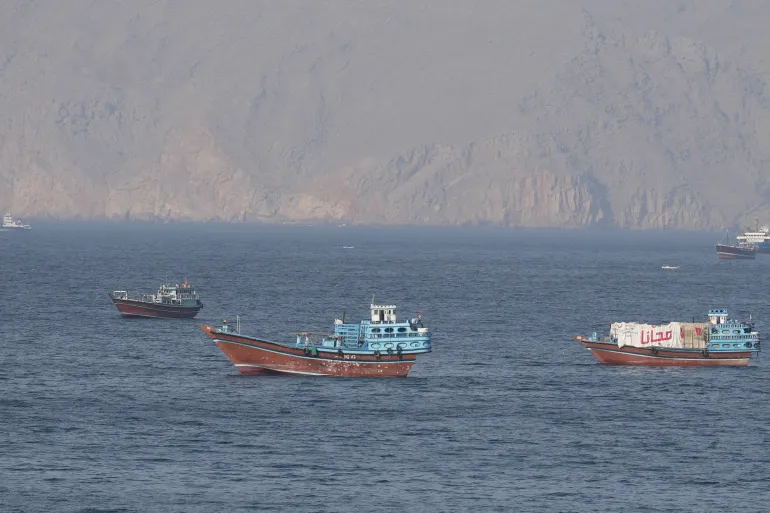
Hormuz Strait blockade US Iran talks faced disruption after reports emerged that a naval restriction was imposed in the strategic waterway shortly after the first round of negotiations ended without agreement.
US President Donald Trump is reported to have announced the maritime measure, triggering immediate concern across diplomatic and economic circles due to the Strait of Hormuz’s importance in global energy transport.
Turkish state-linked Anadolu Agency reported that the blockade has already begun affecting preparations for the next round of discussions scheduled in Islamabad under Pakistan’s mediation.
Pakistan’s military leadership, including Chief of Army Staff General Asim Munir, has reportedly engaged in direct communication with US representatives in an effort to manage the fallout and keep dialogue alive.
Iran, meanwhile, has not formally confirmed its participation in the upcoming talks, although indirect diplomatic signals suggest continued interest under revised conditions.
Why This Matters
The Hormuz Strait blockade US Iran talks framework sits at the center of one of the world’s most sensitive geopolitical flashpoints, where even limited disruptions can have global consequences.
The Strait of Hormuz handles a substantial portion of global oil exports, making it a critical route for energy security. Any restriction in this corridor immediately raises concerns about supply stability and price volatility.
For Pakistan, the situation adds pressure to its role as a neutral facilitator. Islamabad’s mediation effort is now caught between strategic rivalries and maritime tensions that it cannot directly control.
International markets are also watching closely, as prolonged uncertainty could impact shipping insurance rates, trade flows, and investor confidence across the broader Middle East region.
What Analysts or Officials Are Saying
Officials involved in the Hormuz Strait blockade US Iran talks process have maintained cautious messaging, emphasizing that diplomatic channels remain open despite growing complications.
Iranian Foreign Ministry spokesperson Esmail Baghaei has reiterated that Tehran will not accept externally imposed deadlines or conditions, particularly while restrictions on its maritime trade remain in place.
President Masoud Pezeshkian has supported continued diplomatic engagement, arguing that military pressure cannot deliver lasting stability in the region.
On the US side, officials are reportedly balancing maritime enforcement with ongoing diplomatic outreach, a dual approach that analysts say increases complexity in trust-building between both sides.
Pakistani sources suggest that efforts are ongoing to preserve the negotiation framework, although no clear breakthrough has been achieved so far.
Daljoog News Analysis
The Hormuz Strait blockade US Iran talks episode highlights a recurring pattern in high-stakes diplomacy: escalation often runs parallel to negotiation, weakening both at the same time.
Pakistan’s mediation role is important but structurally limited. While it can host and facilitate dialogue, it cannot control military decisions or maritime strategy taken by larger powers.
The Strait of Hormuz adds another layer of strategic leverage that directly influences negotiating behavior. Control or restriction of this passage effectively becomes a bargaining tool, whether intentionally or as a consequence of broader security policy.
What is becoming clear is that diplomatic trust is fragile when military signaling intensifies during negotiations. This reduces the space for compromise and increases the risk of repeated breakdowns in talks.
If this pattern continues, the region risks entering a cycle where every negotiation phase is matched by a new escalation, making long-term resolution increasingly difficult.
What Happens Next
The immediate future of the Hormuz Strait blockade US Iran talks depends on whether maritime restrictions are adjusted or maintained in the coming days.
An Iranian delegation is expected to travel to Islamabad, which could provide an opportunity to restart structured discussions if conditions are acceptable to both sides.
Pakistan is likely to intensify diplomatic outreach in an attempt to preserve the negotiation track, but success will depend heavily on external military and political decisions.
Markets and policymakers will closely monitor developments in the Strait of Hormuz, as any further escalation could quickly reshape both the diplomatic and economic landscape of the region.