


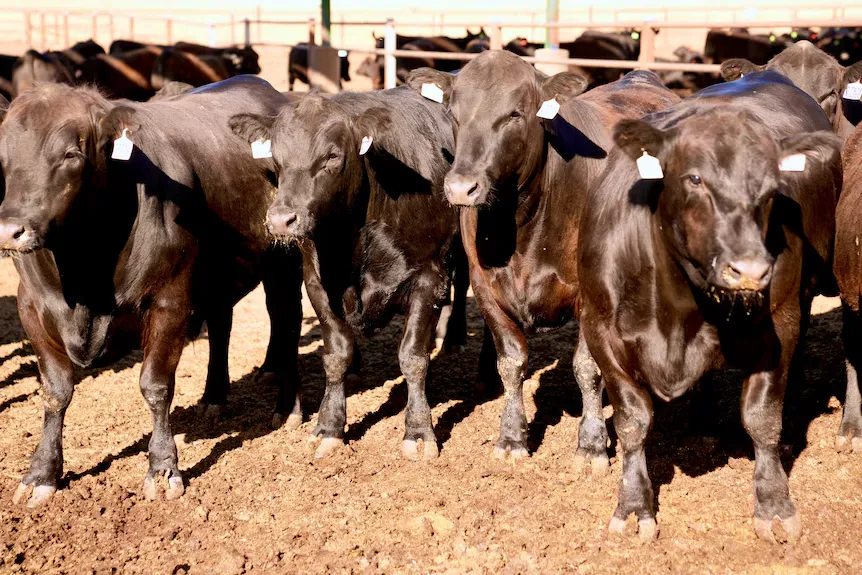
Australia’s beef industry is undergoing a major change as more cattle are being raised in feedlots before being processed for meat. New industry figures show that more than 1.6 million cattle are now held in feedlots across the country, marking a record level. Almost half of the beef processed in Australia now comes from animals finished in these facilities, where cattle are kept in managed groups and fed a grain-based diet to increase their weight before slaughter.
Feedlot production has expanded because it allows businesses to manage the timing and consistency of cattle supplies. Animals are given a planned diet and monitored closely, helping producers prepare cattle for processing at a more predictable weight. This can support meat processors and retailers that need a steady supply of beef throughout the year. The system also gives producers greater control over production schedules, especially when seasonal conditions make pasture-based farming more difficult.
The sector has become an important part of Australia’s agricultural economy, with lot feeding now valued at approximately 4.5 billion Australian dollars. Its growth reflects changes in consumer demand, export markets and the way meat businesses organise their supply chains. Feedlots can help producers maintain output when rainfall is limited or pasture conditions are poor. However, the expansion also raises questions about feed costs, water use, animal welfare and the environmental impact of large-scale livestock operations.
Industry data suggests the growth of feedlot production is likely to remain important as Australia responds to changing conditions in the global meat market. Producers must balance the benefits of reliable supply with the cost of grain, labour, transport and infrastructure. The record number of cattle in feedlots shows how much the industry has changed, but it also highlights the growing importance of efficient management. As businesses continue investing in the sector, the long-term success of Australian beef production will depend on maintaining quality while addressing economic and environmental pressures.