

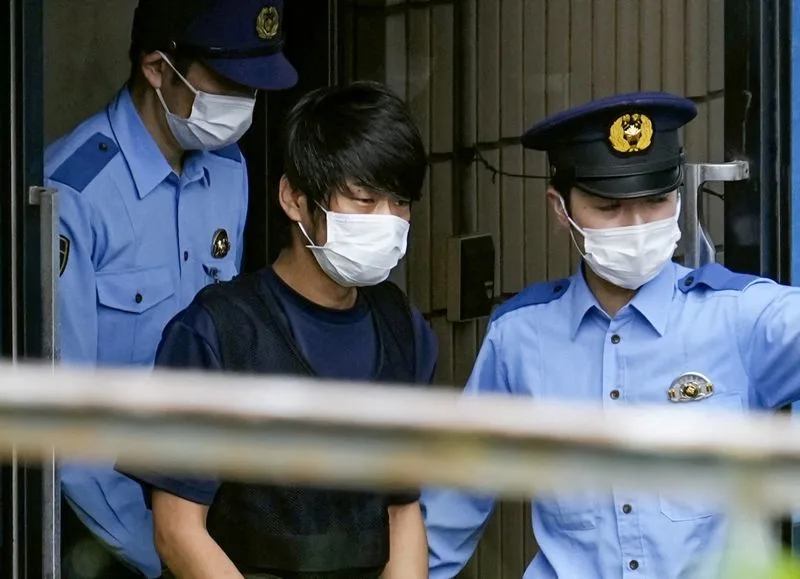
Tetsuya Yamagami, 45, the man who fatally shot former Japanese Prime Minister Shinzo Abe, was sentenced to life in prison on Wednesday, more than three years after the attack that shocked Japan.
Yamagami killed Abe in July 2022 while the former prime minister was giving a campaign speech in Nara, using a homemade firearm. Abe, Japan’s longest-serving leader, was 67 at the time.
From the start, a guilty verdict was almost certain. Yamagami admitted to the killing in the first court hearing in October 2025. Attention during the trial focused on how severe the sentence should be.
Judge Shinichi Tanaka called the crime “despicable” and said, “Using a gun in a large crowd is an extremely dangerous and malicious crime,” according to NHK. Prosecutors described the attack as “an extremely grave incident that is unprecedented in post-war history.” The defense sought a lighter sentence, citing family difficulties linked to the Unification Church, which influenced Yamagami’s motives.
Yamagami’s lawyers said they will consult him on whether to appeal the life sentence.
Although Abe had stepped down in September 2020 due to health reasons, he remained a powerful figure within the ruling Liberal Democratic Party (LDP). His death left a leadership vacuum, with the party now led by Sanae Takaichi and facing diminished public support.
The case highlighted ties between the LDP and the Unification Church, a South Korean-founded organization often described as a cult. Investigations found over 100 lawmakers had dealings with the church, which drew voter criticism.
Yamagami told the court he held a grudge against the church after his mother made a large donation that caused the family financial hardship. He targeted Abe because the former prime minister had once sent a video message to a church-affiliated event.
Founded in 1954, the Unification Church is known for mass weddings and counts Japan as a major source of income.
Reactions to the life sentence were split. YouTuber Katsunari Ota said Yamagami should have received the death penalty for killing Japan’s longest-serving prime minister. Meanwhile, monk Satoru Hojo called the death penalty “absolutely outrageous.” Both were present in court.
Abe was a divisive figure domestically but maintained strong international ties, particularly with the United States. He was the first foreign leader to meet Donald Trump after the 2016 election, and their friendship was often referenced by Prime Minister Takaichi in dealings with the U.S.
The life sentence closes a chapter on one of Japan’s most shocking political assassinations, while raising questions about political influence, cults, and public safety in modern Japan.