


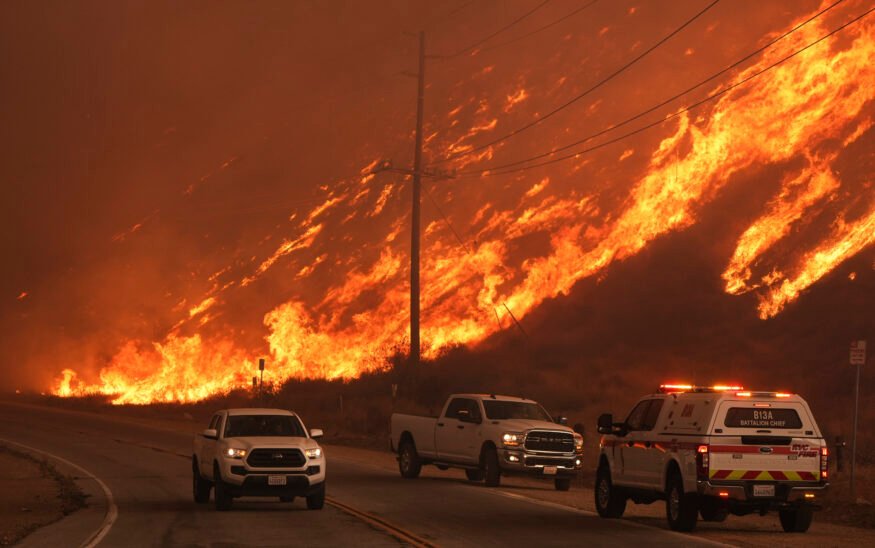
A couple who recently moved to Arizona from North Dakota learned the hard way that their rural property lacked fire protection when a shed caught fire this week. The fire occurred on their Mingus Mountain property, northeast of Prescott, and caused significant damage.
Yavapai County Sheriff’s deputies responded quickly, using fire extinguishers from patrol vehicles and shovels to contain hot spots around the burning shed. Kevin and Sue Hoerner said this was their first experience discovering their property falls outside any city or fire district coverage.
“We’re aware of that now,” Kevin Hoerner said, laughing. He explained that their property is one of thousands in Arizona considered “no man’s land,” areas without fire district boundaries or official protection, according to state forestry officials.
Tiffany Davila, with the Arizona Department of Forestry and Fire Management, said the state is aware of the issue. “We are looking into this right now. There’s about 13,000 properties just in Yavapai County,” she said.
The Hoerners said they had no idea fire protection was absent when they purchased the land. Kevin Hoerner said, “Either someone didn’t tell me or I didn’t even think to ask such a question. I’ll tell you, in North Dakota, there is no such thing.”
Arizona property owners in these areas may be able to annex into a nearby fire district or purchase a fire protection agreement with another provider. The Hoerners said they plan to explore those options next. They stressed they don’t blame anyone but themselves for not knowing beforehand.
“It’s just something that now we know,” Sue Hoerner said.
The shed fire caused an estimated $30,000 to $50,000 in damage. It destroyed propane tanks, lithium batteries for solar power, and a generator. The couple said they are grateful the fire did not spread to the surrounding forest or nearby properties.
The incident highlights the risks of living in rural areas of Arizona that are not covered by fire districts. Experts warn property buyers to carefully research fire protection and coverage before purchasing land in such regions.
With thousands of properties lacking fire district coverage, officials encourage residents to take proactive measures. Options include joining a local fire district, installing fire safety equipment, or arranging agreements with private fire protection providers.
For the Hoerners, the event was a wake-up call. It underscored the importance of understanding local regulations and emergency resources when moving to remote areas. Despite the loss, they remain positive and committed to safeguarding their property in the future.
Arizona Rural Fire Risk is a growing concern as more people move to remote locations. Fires can spread quickly, and response times may be slower in areas without official coverage, increasing the importance of preparedness and awareness.
The Hoerners’ experience serves as a cautionary tale for new residents in rural Arizona. Ensuring proper fire protection could prevent losses and protect both property and natural surroundings.