
Author: Andrew Rogers

Andrew Rogers
Andrew Rogers is a seasoned journalist and news analyst specializing in global affairs, politics, and finance. With a passion for investigative reporting, he delivers accurate, insightful stories that inform and engage readers worldwide.

Millions of Americans marched across every state on Saturday to protest the Trump administration, raising concerns about authoritarianism in the United States. Protesters carried banners, signs, and even inflatable costumes, including bananas, SpongeBob SquarePants, and frogs, a symbol of resistance that started in Portland, Oregon. The marches drew widespread attention as participants signed a giant banner featuring the US Constitution’s preamble and joined marching bands along city streets. Organizers described the turnout as a powerful display of democratic engagement and peaceful dissent. The rallies mark a shift from six months ago, when Democrats struggled to counter Republican control of the…
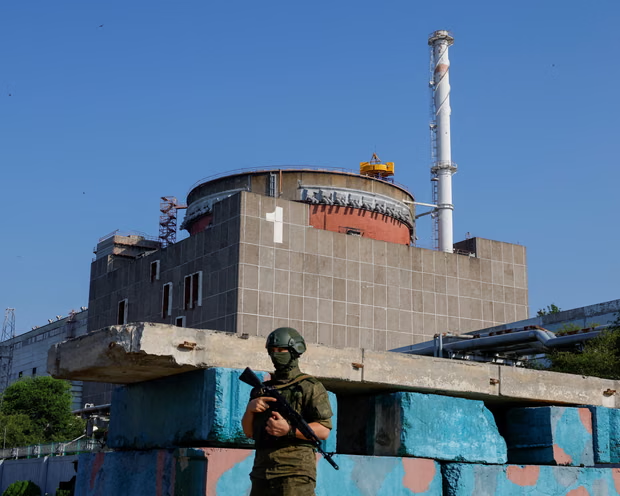
Repair work has started on damaged power lines to Ukraine’s Zaporizhzhia nuclear plant after the site experienced its longest outage since Russia invaded in March 2022. The UN nuclear watchdog said the outage, which began on September 23, cut off the plant’s connection to the national grid for the 10th time. The International Atomic Energy Agency (IAEA) confirmed that Russia and Ukraine set up local ceasefire zones to allow the repairs to proceed safely. Rafael Grossi, IAEA chief, said both sides cooperated to ensure the complex repair plan could move forward. “Restoring off-site power is crucial for nuclear safety and…
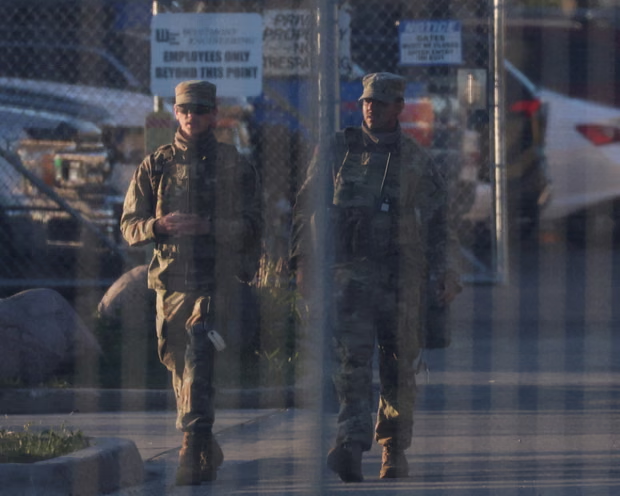
The Trump administration asked the US Supreme Court on Friday to allow the deployment of National Guard troops in Illinois. The request comes as the president seeks to expand the use of military forces in more Democratic-led cities. In an emergency filing, the Justice Department urged the court to overturn a lower court ruling that blocked several hundred National Guard troops from being sent to the Chicago area. The district judge questioned whether the administration’s reasons for sending troops were justified based on local conditions. A federal appeals court upheld the decision on Thursday, keeping the deployment on hold as…
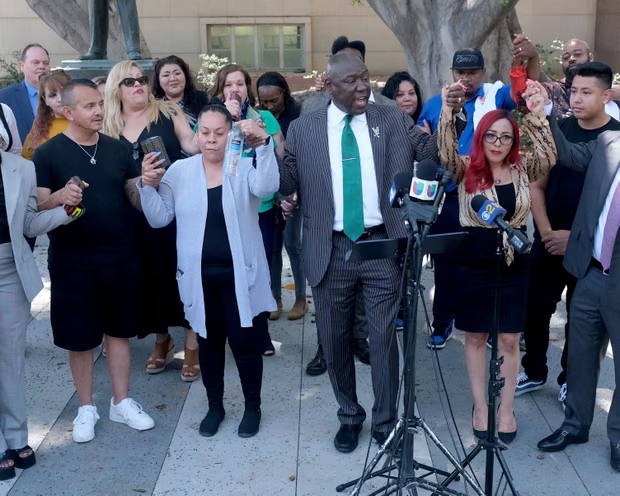
Los Angeles county has agreed to pay $828 million to settle more than 400 sexual abuse claims against county employees. This follows a historic $4 billion settlement approved in April, the largest of its kind in U.S. history. The April settlement involved roughly 11,000 claimants who alleged sexual abuse in juvenile facilities in Los Angeles over several decades. The new agreement is pending approval from the county board of supervisors and the county claims board. “Our settlements aim to compensate victims while safeguarding taxpayers from fraud,” said Kathryn Barger, chair of the Los Angeles County Board of Supervisors. County officials…
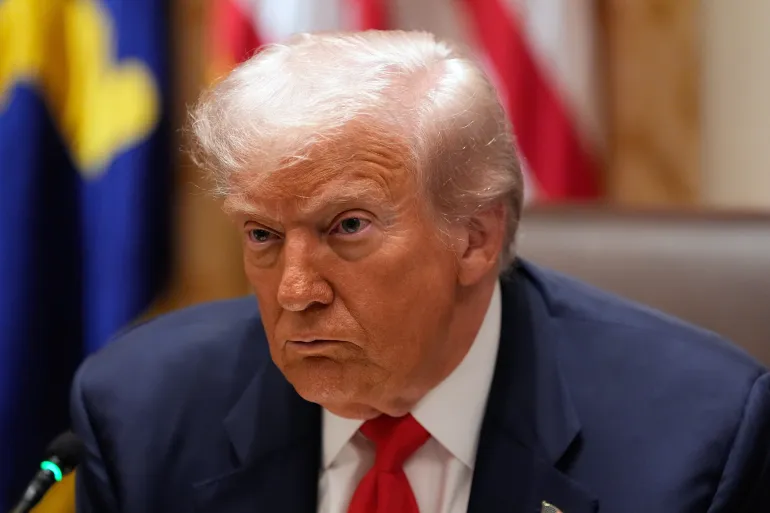
US President Donald Trump said Indian Prime Minister Narendra Modi has assured him that India will stop buying oil from Russia, signaling a potential shift in global energy trade. Trump added that he plans to encourage China to take similar steps as Washington seeks to curb Moscow’s oil revenues. India and China are the largest buyers of Russian seaborne crude, benefiting from discounted prices after Europe largely stopped purchasing Russian oil due to US and EU sanctions following Russia’s 2022 invasion of Ukraine. Trump has recently targeted India for its continued purchases of Russian oil, imposing tariffs on Indian exports…
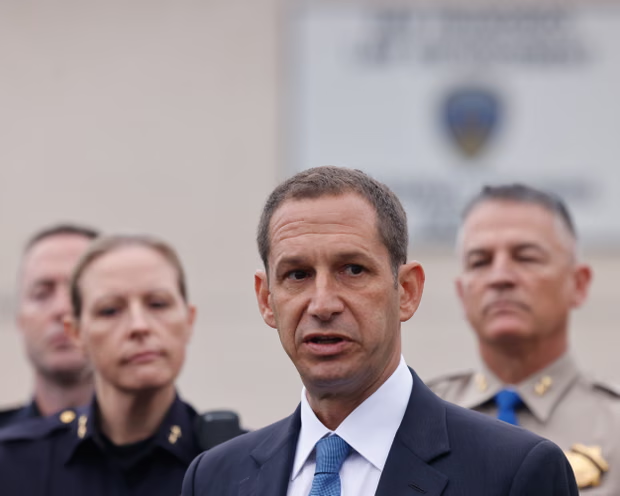
San Francisco city leaders have strongly rejected President Donald Trump’s threat to deploy federal troops, calling it an unnecessary and unwelcome move. Trump suggested the Bay Area city could face military intervention to address crime, repeating claims that the city has become unsafe. Speaking at the White House with FBI director Kash Patel, Trump said, “I’m going to be strongly recommending… that you start looking at San Francisco… one of our great cities 10 years ago, 15 years ago, and now it’s a mess… Every American deserves to live in a community where they’re not afraid of being mugged, murdered,…
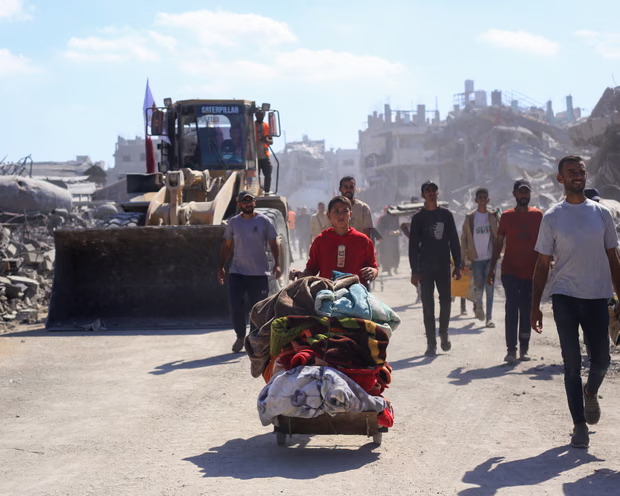
Hamas has confirmed it has returned all Israeli hostage bodies it can access, saying specialized equipment is needed to recover others from Gaza’s heavily damaged areas. The announcement comes amid warnings from Israel that fighting could resume if the ceasefire agreement is not fully respected. Two additional bodies were handed over on Wednesday, adding to the seven previously returned by Hamas. Israel also received one body it said was not a former hostage. The Ezzedine Al-Qassam Brigades, Hamas’s armed wing, stated that it had fulfilled its commitment by returning all living hostages and all accessible corpses. It added that retrieving…
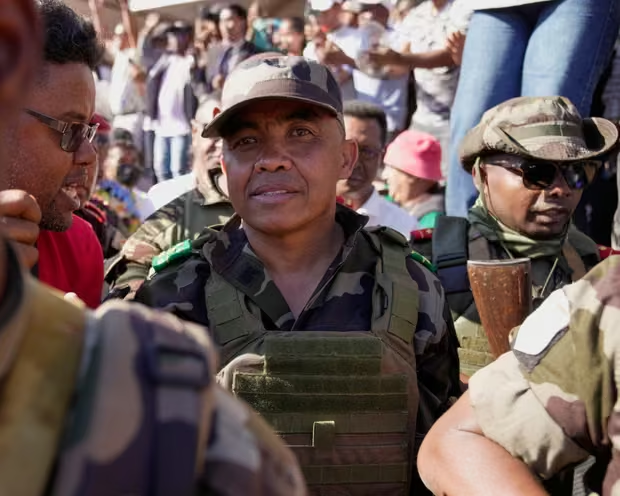
An elite military unit in Madagascar announced on Tuesday that it has seized power, following the impeachment of President Andry Rajoelina after weeks of anti-government protests. The takeover comes as the country grapples with political unrest and public demonstrations demanding reform. Rajoelina, who claimed in a Facebook Live video on Monday that he went into hiding after alleged assassination attempts, had resisted calls to resign. However, the Capsat military unit, which controls administrative and technical services within the armed forces, sided with the demonstrators over the weekend. The presidential office described the situation as an “attempted coup d’état” in a…
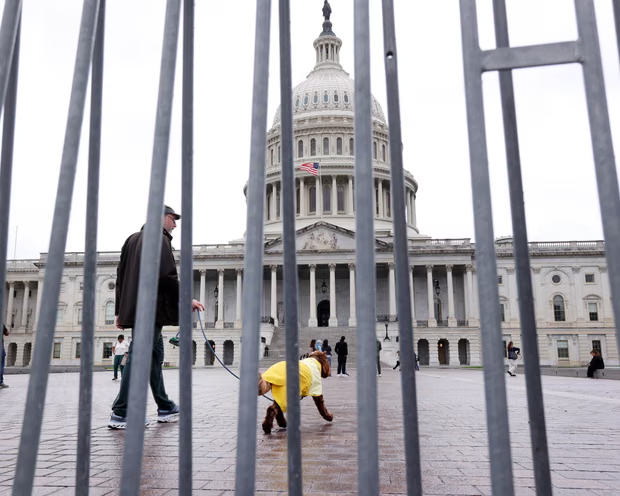
The US Senate on Tuesday again blocked a Republican plan aimed at ending the government shutdown that has now lasted two weeks. The eighth vote on a bill to fund government operations through November 21 failed 49-45, far short of the 60 votes needed to advance. No senators changed their positions from the previous vote, signaling a continued deadlock in Congress. The shutdown has already led to layoffs across multiple federal agencies. Both parties blamed each other for the impasse, with tensions rising over funding priorities and political strategy. Democratic leader Chuck Schumer criticized the Trump administration for approving a…
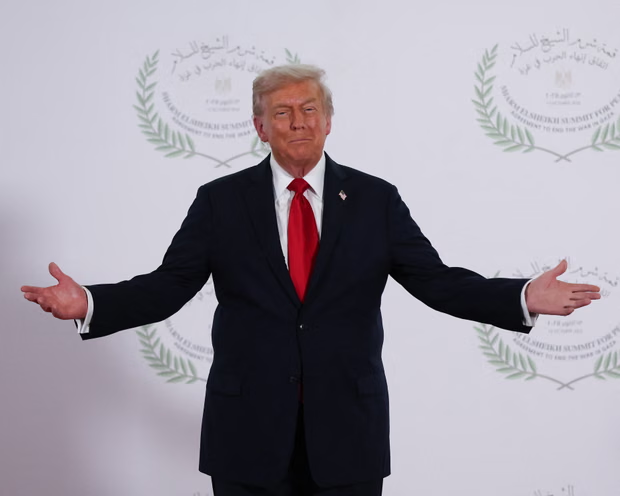
Donald Trump addressed the Israeli Knesset hours after the last Israeli hostages were freed from Gaza, calling it the “historic dawn of a new Middle East.” He described the Gaza conflict as a “long and painful nightmare” and declared that Israel had achieved all it could by force. “This is not only the end of war – this is the end of an age of terror and death,” Trump said, urging that Israel’s military victories be turned into lasting peace and prosperity for the entire region. Trump emphasized that his message was also for Arab states, promising that Israel would…