
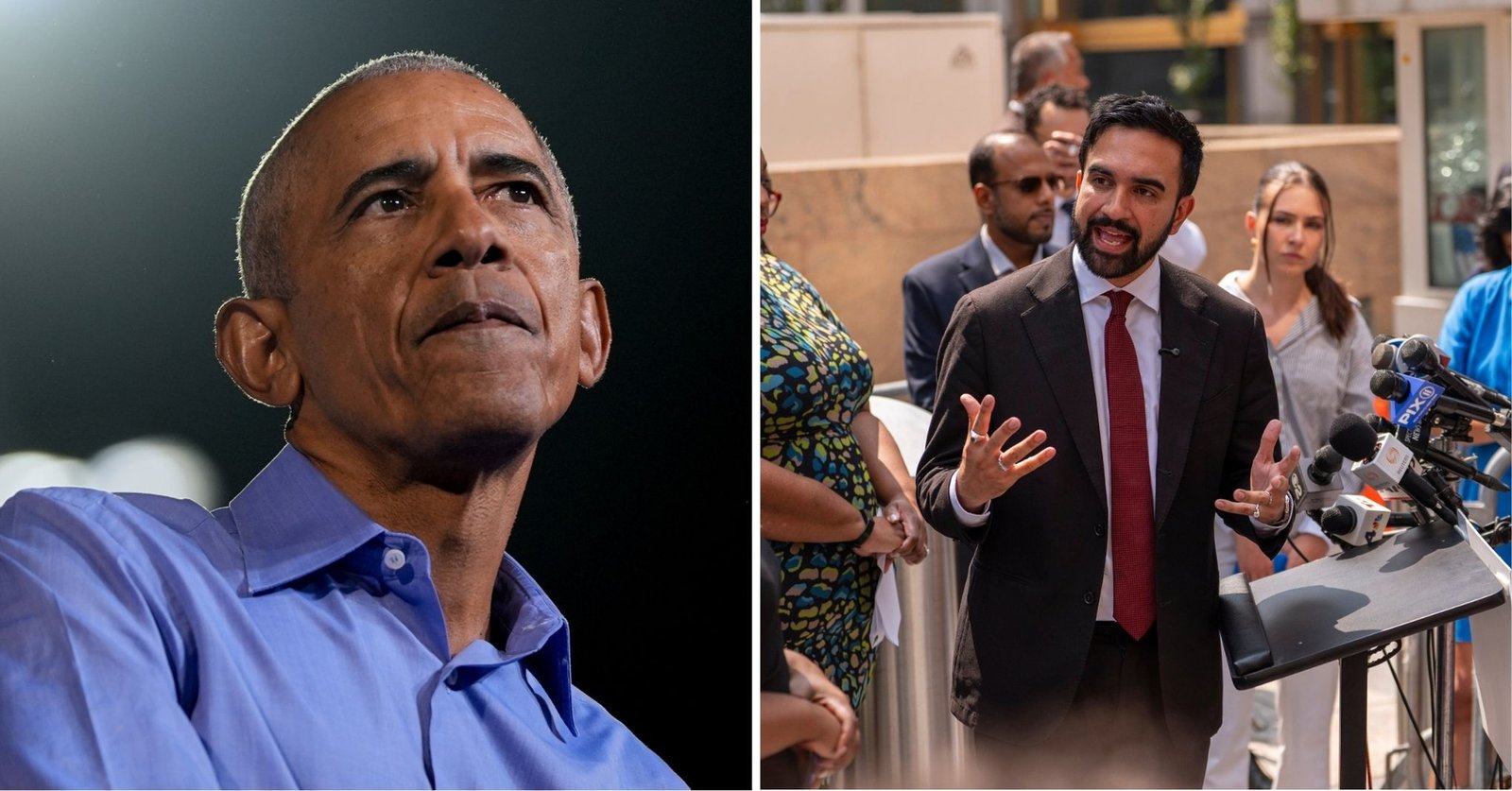
Former President Barack Obama reached out to New York mayoral frontrunner Zohran Mamdani on Saturday, offering personal support and advice but stopping short of a formal endorsement. The Barack Obama Zohran Mamdani call lasted about 30 minutes and drew attention across the political world for its rare mix of warmth and caution.
According to reports, Obama praised Mamdani’s campaign and told him he admired the energy and passion driving his run for mayor. The 34-year-old Democrat, who has attracted national attention for his progressive platform, reportedly welcomed the conversation as an important sign of confidence from the former president.
During the call, Obama described Mamdani’s campaign as impressive and said he would be available as a “sounding board” if the young politician takes office. He also discussed practical challenges that may arise in leading a large city, including managing new staff, balancing policy goals, and working with officials across government departments. People familiar with the discussion said Obama spoke from experience, offering calm and measured advice about how to stay focused while handling public expectations.
The call did not include an endorsement, but Obama’s outreach was seen as a strong gesture of encouragement. Political observers noted that while Obama has largely avoided major endorsements this election cycle, he has shown quiet support for emerging Democratic leaders who reflect his values of inclusion and pragmatic progress.
The conversation also touched on policy priorities. Reports said the two leaders discussed housing, affordability, and public safety—issues central to Mamdani’s campaign. Obama urged him to keep connecting with communities across the city and to build bridges between different political groups. For Mamdani, who identifies as a Democratic Socialist, the exchange with one of America’s most influential political figures may help broaden his appeal to moderate voters.
The Barack Obama Zohran Mamdani call also included a personal moment. Mamdani told Obama that he had drawn inspiration from Obama’s famous 2008 speech on race when preparing a recent address about Islamophobia. That speech, delivered during Obama’s first presidential campaign, remains one of his most praised public moments. Sources said Obama appreciated the remark and encouraged Mamdani to continue using empathy and inclusion as central parts of his message.
Although Obama’s conversation was private, reports suggest the two plan to meet in person in Washington, D.C., in the near future. The meeting would likely focus on governance, communication, and the realities of running a large administration.
Mamdani later expressed gratitude for the exchange. A spokesperson said the candidate valued Obama’s guidance and saw it as part of a shared effort to bring “a new kind of politics” to New York. Supporters of Mamdani welcomed the news, saying it reflected growing recognition of his campaign’s momentum among national leaders.
However, the connection between the two figures also brought renewed attention to Mamdani’s old online remarks. Years before his political rise, Mamdani had criticized Obama on social media, calling him “pretty damn evil” in a 2013 post referencing national security policies at the time. The resurfacing of those comments drew mixed reactions. Some political analysts said it showed how far Mamdani’s views had evolved, while others questioned the sincerity of his new praise.
Despite that past criticism, the phone call marks a notable moment for both Democrats. For Obama, it reflects his continued influence as a mentor within the party. For Mamdani, it signals a degree of acceptance from a leader once viewed as part of the establishment he sought to challenge.
As the city’s election approaches, the impact of the conversation remains uncertain. While Obama’s refusal to endorse leaves the race wide open, his willingness to advise may still carry political weight. The dialogue between generations of Democrats shows how the party’s future leaders are seeking lessons from those who have already shaped its history.
In the end, the Barack Obama Zohran Mamdani call stands as more than a courtesy chat—it’s a symbol of changing times in American politics, where idealism and experience meet in a quiet exchange that could influence the direction of the next generation of leadership.