

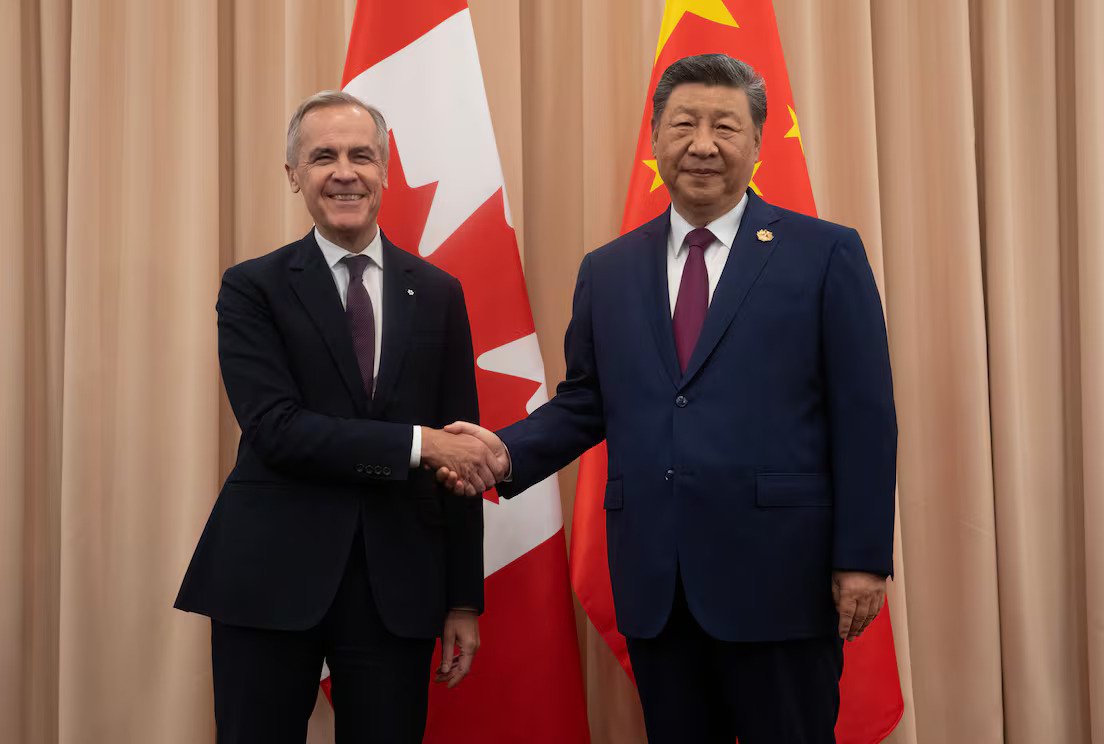
Prime Minister Mark Carney is visiting China this week to address long-standing trade tensions and explore ways to ease tariffs that have affected Canadian industries. His trip comes after years of strained relations, including the detention of two Canadians and retaliatory tariffs on electric vehicles and agriculture.
Canada’s 100 percent tariff on Chinese electric vehicles, mirroring U.S. measures, is a key topic. China has indicated it could lift its retaliatory duties if Canada reduces its tariffs. A Canadian official said progress is expected in Beijing, though a complete resolution is unlikely.
“We’re not going to see an immediate resolution,” said Vina Nadjibulla, vice-president of research and strategy at the Asia Pacific Foundation of Canada. “But we likely will see progress or signals on where they are heading.”
Carney’s four-day trip marks the first visit by a Canadian prime minister to Beijing since 2017. He aims to recalibrate Canada-China relations and diversify trade away from reliance on the United States. The visit is considered a milestone and a test of strategic diplomacy, with careful decisions needed on potential deals and risk management.
The prime minister is expected to discuss EV tariffs in coordination with Washington, as changes could affect the upcoming Canada-U.S.-Mexico Agreement negotiations. Canada could pursue selective tariffs based on Chinese government subsidies or allow production of EVs or batteries domestically, though such plans may face opposition from the auto industry.
Agricultural tariffs are also a major concern. China imposed levies on Canadian canola and other goods in retaliation for previous Canadian measures. Saskatchewan Premier Scott Moe is expected to join Carney for parts of the trip, highlighting the impact on farmers. The prime minister will also meet with President Xi Jinping and is expected to sign new trade agreements.
Beyond EVs and agriculture, Canada hopes to expand petroleum and LNG exports to China, especially as geopolitical factors disrupt traditional supply chains. The country is looking to secure new markets for crude oil and liquefied natural gas.
Observers warn that while re-engaging with China presents economic opportunities, it also carries risks. Dennis Molinaro, a former national security analyst, cautioned that Canada must implement safeguards against foreign interference before deepening diplomatic and trade ties. Positions like a foreign interference commissioner remain unfilled, leaving potential vulnerabilities.
Despite these concerns, some experts see Carney’s visit as a positive step. Michael Kovrig, who was detained in China for nearly three years, said maintaining open communication channels is essential for managing disputes. He noted that a total freeze in diplomatic relations can worsen conflicts.
Carney acknowledged China’s manufacturing overproduction and its push to sell goods abroad, noting that Canadian access could be both an opportunity and a challenge. After China, Carney plans to travel to Qatar to attract investment from the Middle East and then to Switzerland for the World Economic Forum, continuing Canada’s global trade outreach.
The visit represents a strategic effort by Canada to balance economic opportunity with national security concerns, signaling a cautious but proactive approach to rebuilding relations with Beijing while protecting domestic industries.