


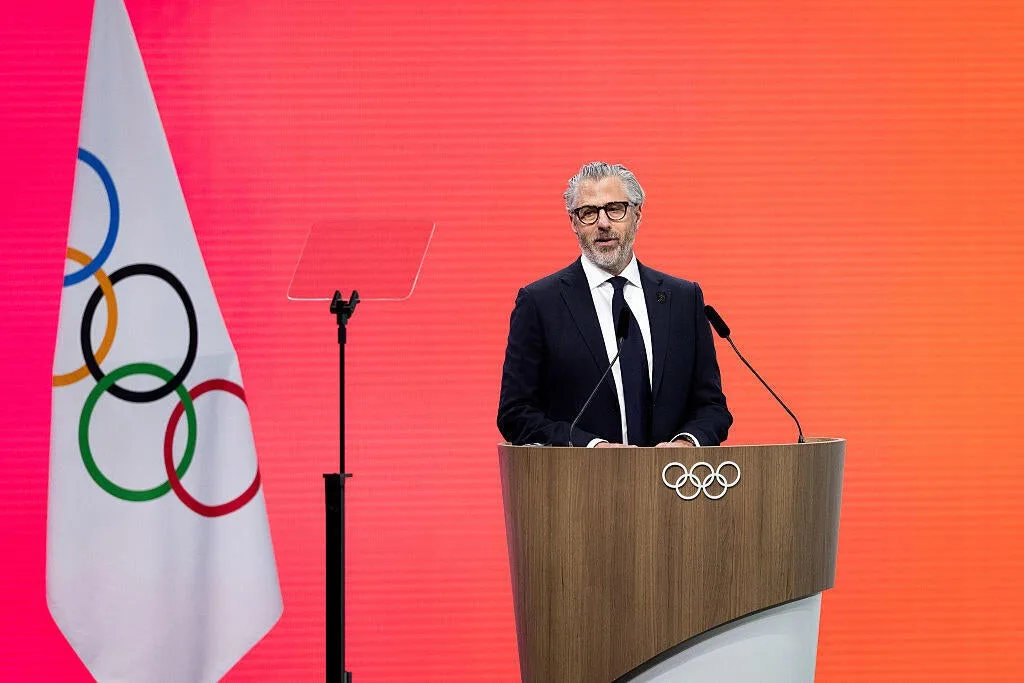
Casey Wasserman, chairman of the 2028 Los Angeles Olympics organizing committee, announced plans to sell his namesake talent agency following the release of emails linking him to Ghislaine Maxwell. The disclosure comes as government files related to convicted sex offender Jeffrey Epstein became public.
According to Daljoog News analysis, the move reflects Wasserman’s effort to shield both the agency and the LA28 Olympics from reputational risk, even though he has not been accused of any illegal activity. The situation underscores how historical associations with high-profile figures can affect careers decades later.
The announcement arrives amid heightened scrutiny of public figures connected, even tangentially, to Epstein’s network. Wasserman’s decision signals a broader reckoning within business and sports circles over accountability and public trust.
What Happened?
The recently released government documents revealed a series of flirtatious emails exchanged in 2003 between Wasserman and Maxwell, years before Maxwell’s conviction for aiding Epstein in recruiting and abusing victims. While the correspondence included inappropriate remarks, there is no indication that Wasserman participated in any criminal conduct.
In a memo sent to agency staff Friday evening, Wasserman explained that he had become a distraction to the company. He announced that Mike Watts would take over day-to-day operations as he focuses on delivering a “safe and successful” LA28 Olympics in 2028.
The announcement came shortly after the LA28 board’s executive committee reviewed Wasserman’s interactions with Epstein and Maxwell. An outside law firm conducted the review, which found that his relationship with the two did not exceed what has been publicly documented. The committee concluded that Wasserman should continue leading LA28.
Despite the board’s support, calls for his resignation have emerged from Los Angeles leaders. During a press conference at the Milano-Cortina Olympics, International Olympic Committee Vice President Nicole Hoevertsz expressed full confidence in Wasserman and his team. Mayor Karen Bass indicated she would defer to the board’s judgment.
Why This Matters
Wasserman’s agency is one of the world’s leading talent management firms, representing top pop artists and athletes. The release of the Maxwell emails has already prompted high-profile client departures, including singer Chappell Roan and retired U.S. women’s soccer star Abby Wambach.
For LA28, the controversy raises concerns about leadership stability in the years leading up to the Olympics. While Wasserman remains in position, the public scrutiny could affect sponsorships, partnerships, and overall confidence in the organizing committee.
The situation also highlights the enduring consequences of historical associations. Even limited, long-ago interactions with individuals later convicted of serious crimes can have a significant professional and reputational impact.
What Analysts or Officials Are Saying
Board members and legal advisors have emphasized that Wasserman’s involvement with Epstein and Maxwell was minimal and occurred decades before any criminal conduct came to light. They stress that he did not have a personal or business relationship with Epstein.
Wasserman himself has expressed regret for his emails with Maxwell, calling them a source of hardship for the company and its clients. He has repeatedly stated that his interactions were limited to a humanitarian flight to Africa in 2002, organized by the Clinton Foundation, and a handful of emails that he now deeply regrets.
Industry observers note that while Wasserman’s apology may stabilize some confidence, the decision to sell his agency reflects an acknowledgment that lingering attention on the Epstein files could continue to disrupt business operations.
Daljoog News Analysis
The episode underscores a broader tension between personal history and public responsibility, particularly for individuals in high-profile roles like Wasserman. His decision to step away from agency leadership demonstrates an effort to separate his personal legacy from the Olympic mission and preserve the integrity of LA28.
It also reflects the growing influence of public perception on corporate and organizational governance. Agencies managing high-profile talent face increased pressure to respond swiftly to controversies, even when no wrongdoing is alleged.
Wasserman’s case illustrates how decades-old interactions can resurface with profound consequences, especially when connected to figures like Epstein and Maxwell. The reputational ripple effects extend beyond individual careers to affect businesses, civic projects, and international events.
What Happens Next
The sale of the Wasserman agency is expected to proceed over the coming months, though no timeline has been announced. Mike Watts will maintain operational control during the transition, ensuring stability for clients and ongoing projects.
For LA28, the focus will remain on organizing the 2028 Olympic Games. While Wasserman retains his chairmanship, the controversy may influence board oversight, stakeholder confidence, and public engagement.
The broader talent management industry will be watching closely. The case sets a precedent for how historical, non-criminal associations with controversial figures can affect leadership decisions and corporate strategy.