


Humans have long wondered whether intelligent life exists beyond Earth, and if it does, how we might communicate with it. The vast distances between stars make direct contact unlikely, so any interaction would likely rely on long-distance messaging. A new thought experiment suggests that bees could provide a model for developing such communication.
Despite enormous differences in brains and behavior, honeybees and humans share some surprising cognitive abilities, including a capacity for basic mathematics. Researchers argue that these abilities point toward mathematics as a potential “universal language” that could one day bridge the gap between species—and perhaps even between worlds.
The idea that math could be a common language is not new. Galileo described the universe as a book “written in the language of mathematics.” Science fiction often explores this concept. In the film Contact, aliens send humans a repeating sequence of prime numbers. In Liu Cixin’s The Three-Body Problem, interstellar communication involves solving mathematical problems. Ted Chiang’s Story of Your Life, adapted into Arrival, portrays aliens with a unique perception of time who communicate through a mathematically grounded system.
Real-world attempts at universal communication have also relied on numbers. NASA’s Voyager probes carried the Golden Records, which include mathematical and physical information about Earth. The 1974 Arecibo radio message used binary numbers to communicate basic concepts like counting and atomic structure. More recently, researchers developed a binary language to introduce extraterrestrials to human mathematics, chemistry, and biology.
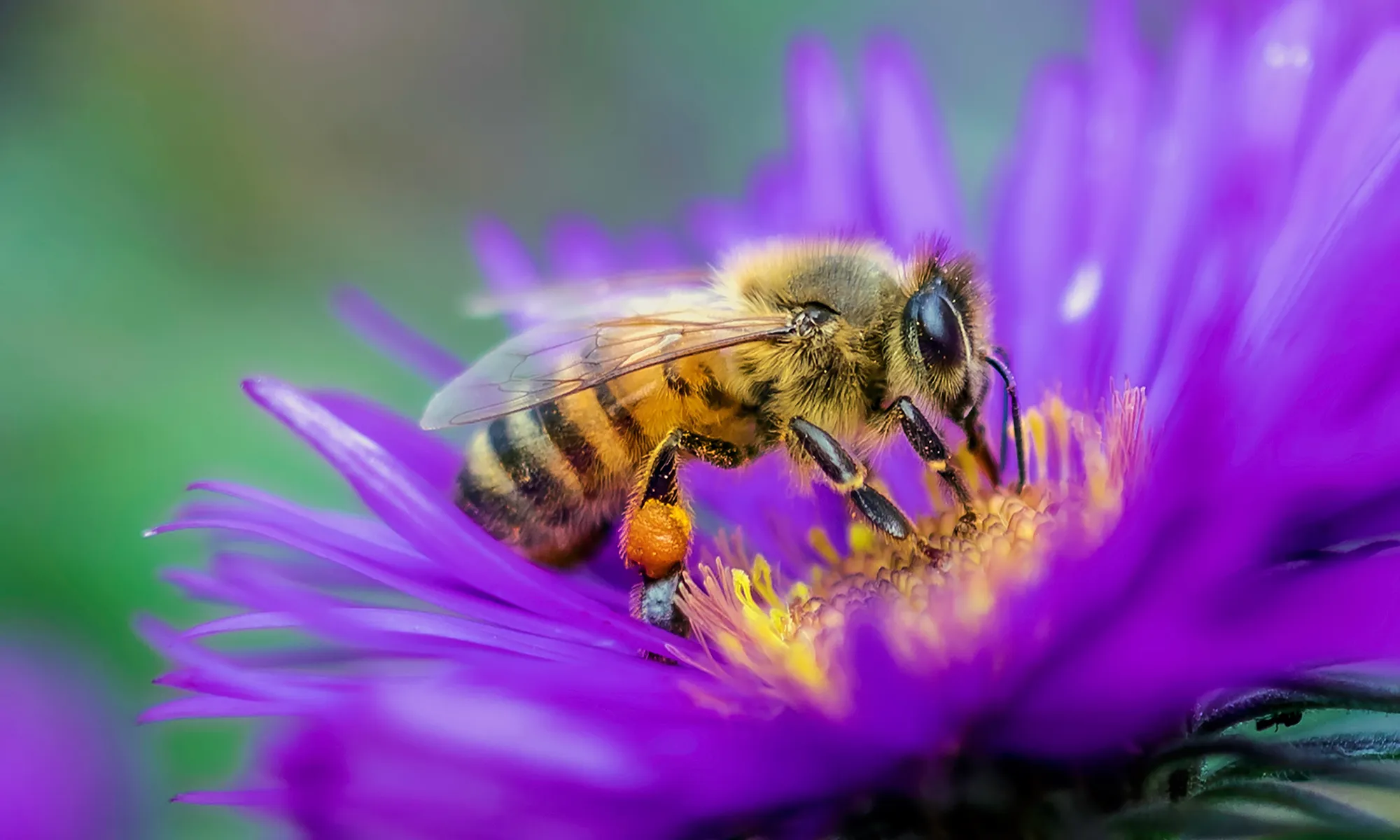
Honeybees may seem ordinary, but they provide a useful analogue for alien intelligence. Diverging from humans over 600 million years ago, bees developed their own complex communication and problem-solving systems. Their iconic waggle dance conveys detailed information about the location, direction, and quality of food sources.
Researchers conducted experiments between 2016 and 2024 to test bees’ mathematical abilities. Free-flying honeybees participated in outdoor tests using sugar water as a reward. Bees demonstrated the ability to perform simple addition and subtraction, categorize numbers as odd or even, understand the concept of zero, and link symbols to numbers—rudimentary math skills comparable to early human numeracy.
The ability of bees to grasp numerical concepts suggests that math may be a natural product of intelligence rather than a uniquely human construct. If two species with vastly different evolutionary paths can perform mathematics, it is plausible that intelligent extraterrestrial species could do so as well.
This raises intriguing questions about interstellar communication. Could mathematics form a universal foundation for language? Would alien species develop “dialects” of mathematics, similar to human languages? By studying bees and other non-human species, researchers hope to gain insight into how intelligence shapes mathematical thinking and, ultimately, how humans might communicate across the stars.
The study strengthens the argument that mathematics might one day serve as a bridge between civilizations separated by light-years, enabling dialogue with beings as cognitively sophisticated as humans—or perhaps even more so.