



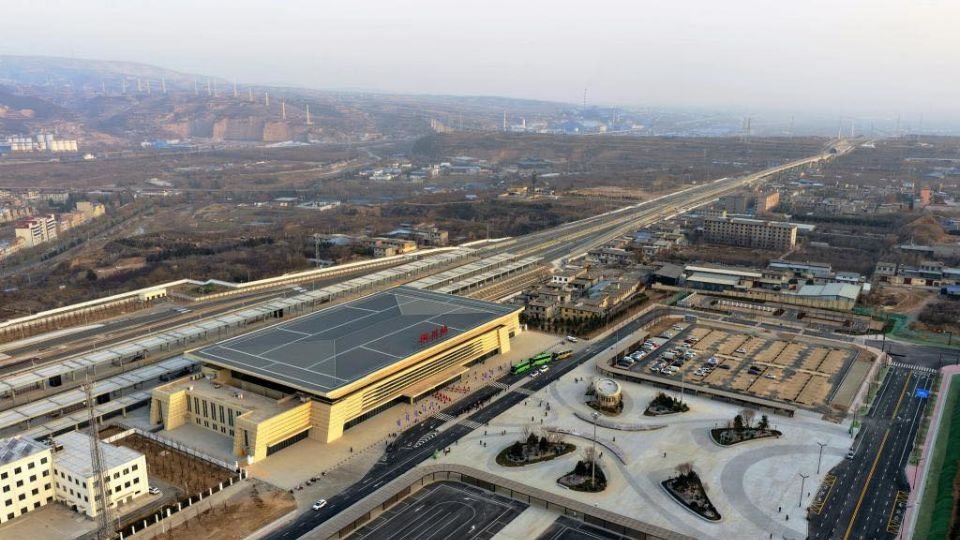
China’s high-speed rail network has officially surpassed 50,000 kilometers, a milestone that highlights the country’s rapid infrastructure expansion. Authorities celebrated the achievement on Friday with the opening of a new line connecting Xi’an and Yan’an in northwestern Shaanxi province.
The Xi’an–Yan’an high-speed route strengthens regional connectivity and provides faster travel across northwestern China. Passengers traveling between the two cities can now benefit from a shorter, smoother journey, reflecting the efficiency and convenience of China’s expanding rail system.
China’s high-speed rail program has grown rapidly over the past two decades, becoming the largest in the world. The network now spans major cities and regional hubs, promoting economic growth, tourism, and trade. Experts say the milestone demonstrates China’s continued focus on modern transport infrastructure.
The Xi’an–Yan’an line is part of China’s broader plan to improve transport links in less-developed regions, boosting local economies and providing new opportunities for communities along the route. By reducing travel times, the line also supports business, education, and cultural exchange between northern and western provinces.
China’s high-speed rail system has revolutionized domestic travel, allowing millions of passengers to move efficiently across vast distances. The network has become a key driver of urbanization and regional development, connecting rural areas with major metropolitan centers.
Officials stated that the new milestone reflects both engineering achievement and strategic planning. China has invested heavily in rail technology, modern stations, and operational management to ensure safety and high performance across its routes.
Analysts note that the network’s expansion continues to set a global benchmark for high-speed rail systems. Countries worldwide are studying China’s model to learn from its efficiency, technology, and scale.
The Xi’an–Yan’an line adds to a growing list of projects aimed at expanding the high-speed rail footprint into remote regions. This strategy not only strengthens domestic connectivity but also positions China as a global leader in advanced rail technology.
As the network grows, China aims to provide faster, greener, and more reliable transportation options. The high-speed rail system reduces dependence on road travel and short-haul flights, cutting emissions while enhancing mobility.
Travelers can expect further expansion in the coming years, with new lines connecting additional cities and improving access across all provinces. China’s achievement of 50,000 kilometers signals both a historical landmark and the next phase in nationwide high-speed rail development.
The milestone underscores China’s commitment to infrastructure innovation and its role in shaping modern transportation on a global scale. With each new line, the high-speed rail network strengthens national integration and continues to redefine the travel experience for millions of people.