



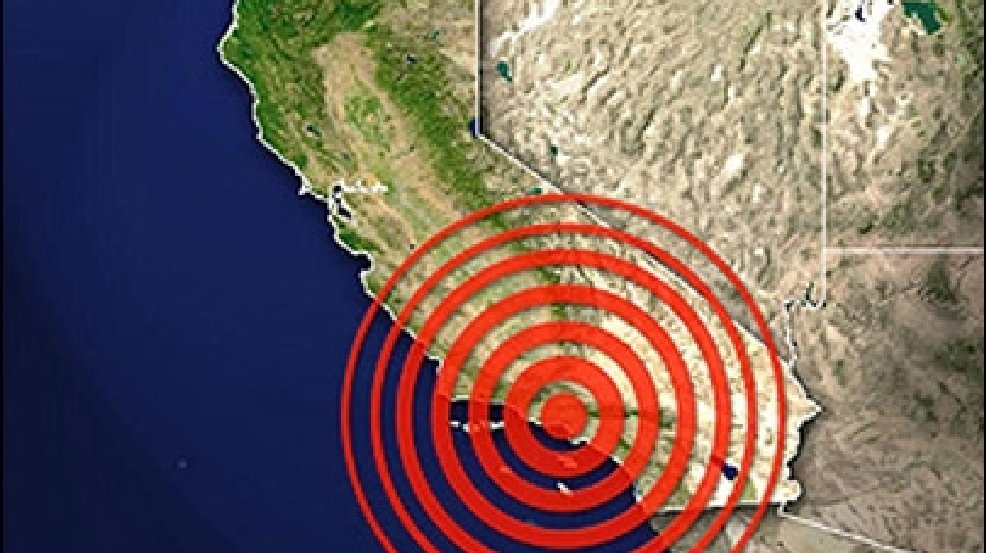
A Coachella Valley Earthquake with a magnitude of 4.9 shook parts of Southern California on January 19, according to federal seismic data. The quake struck at about 5:56 p.m. local time and was felt across a wide area. Many residents reported strong shaking, especially in cities near the epicenter.
The earthquake hit roughly 12 miles northeast of Indio. The Coachella Valley sits about 130 miles east of Los Angeles. Officials said the quake was shallow, with an estimated depth of about 1.8 miles beneath the surface. Shallow quakes often cause stronger shaking because they are closer to the ground.
Within about 30 minutes of the main quake, scientists recorded at least 17 aftershocks. Two of the strongest aftershocks measured magnitudes of 3.4 and 3.3. Smaller aftershocks may continue in the coming days. These events are common as the ground slowly adjusts after a larger quake.
Despite the strong shaking, early reports showed no major damage. Police in Palm Springs said they had not received any immediate reports of injuries or serious property damage. Emergency crews continued to monitor the situation as residents checked homes and buildings for cracks or other problems.
Earthquakes like this are a reminder of how common seismic activity is in California. The state sits on several large fault lines, including parts of the boundary between major tectonic plates. These plates move very slowly, but the pressure between them builds over time. When the pressure becomes too strong, it releases energy in the form of an earthquake.
The outer layer of the Earth is made up of the crust and the upper mantle. Together, they form the lithosphere. This layer is broken into large pieces known as tectonic plates. These plates slide past, push against, or pull away from one another. The edges where they meet are called faults. When movement along a fault suddenly occurs, seismic waves travel through the ground and cause shaking.
Many people are unsure what to do during an earthquake. Safety experts say actions depend on where you are at the moment shaking starts. If you are indoors, you should stay inside. Dropping to your hands and knees helps prevent falling. Cover your head and neck with your arms and take shelter under a sturdy table or desk if possible. If no shelter is nearby, move next to an interior wall and stay away from windows.
If an earthquake happens while you are in bed, turning face down and covering your head and neck with a pillow can offer some protection. Running outside during shaking is not advised, as falling debris can cause injuries. If you are outdoors, staying outside and moving away from buildings, trees, and power lines is the safest option.
Drivers should also take care during an earthquake. Experts advise slowing down and pulling over when it is safe. Staying inside the vehicle with the seat belt on is usually safer than getting out. Once the shaking stops, drivers should check for damage and avoid bridges, ramps, or roads that appear cracked or unstable.
California has a long history of powerful earthquakes. Some of the strongest events in recorded history caused widespread damage and loss of life. These past quakes show why preparation and building safety rules matter so much. Modern structures are designed to better withstand shaking, which helps reduce injuries and damage.
Scientists stress that earthquakes cannot be predicted. While experts can estimate the chance of future quakes over long periods, they cannot say exactly when one will happen. Maps show that large parts of California have a very high chance of experiencing strong shaking within the next 100 years. This means residents should always be prepared.
Some myths about earthquakes still circulate. One common belief is that California could break off and fall into the ocean. Scientists say this is not true. Earthquakes in the state mainly cause horizontal movement, not sudden land collapse. The coastline may slowly change over millions of years, but the land will not suddenly disappear.
The Coachella Valley Earthquake did not cause major damage, but it served as a clear reminder. Earthquakes are part of life in California. Being informed, prepared, and calm can make a real difference when the ground begins to shake.