


Winning the support of young men has become a central goal in US politics over the past year. Republicans have focused on consolidating President Donald Trump’s gains with this demographic, while Democrats, concerned about losing a generation of voters, have launched initiatives to engage men and boys.
Recent elections suggest momentum may be shifting toward Democrats. Candidates such as Abigail Spanberger in Virginia, Mikie Sherrill in New Jersey, and Zohran Mamdani in New York City improved the party’s performance among young men compared to previous years. Several 2028 Democratic presidential hopefuls also introduced policies aimed at addressing issues important to male voters.
Democratic National Committee Chair Ken Martin emphasized the party’s progress, stating, “I never want to hear again that the Democratic Party has a problem with young men,” following the November elections.
Despite these gains, political strategists caution that the battle for young male voters is far from over. A senior Republican strategist noted that while Trump’s support among key groups has slightly declined, the Republican ecosystem remains strong. Party leaders continue to focus on economic messaging and other policies to appeal to this demographic.
At the Symposium on Young American Men, a conference hosted by the conservative communications firm Lafayette Company, Senator Ruben Gallego, D-Ariz., encouraged Democrats to speak directly to male voters. “It’s OK to reach out to men,” he said. “Talk to men. Talk about men being men.”
Republicans, meanwhile, plan to highlight Democrats’ perceived disconnect with young men, while promoting economic improvements under Trump’s agenda. Tax provisions from Trump’s “Big Beautiful Bill,” including measures related to tipped wages, are being positioned as benefits for younger male workers.
Economic concerns are a major factor shaping young men’s voting patterns. The Bureau of Labor Statistics reported youth unemployment at 10.8% in July for ages 16 to 24. By November, unemployment for residents ages 20 to 24 remained high at 8.3%, the highest rate since 2021. Harvard’s spring Youth Poll indicated roughly 40% of under-30 voters were “barely getting by” financially.
Economic struggles have influenced voter behavior. Independent voter Christian G., 25, said disappointment with the economy led him to vote for Mikie Sherrill, even after previously supporting Trump. He noted, “I expected certain things to improve, and it did the exact opposite. Trust was lost over the year.”
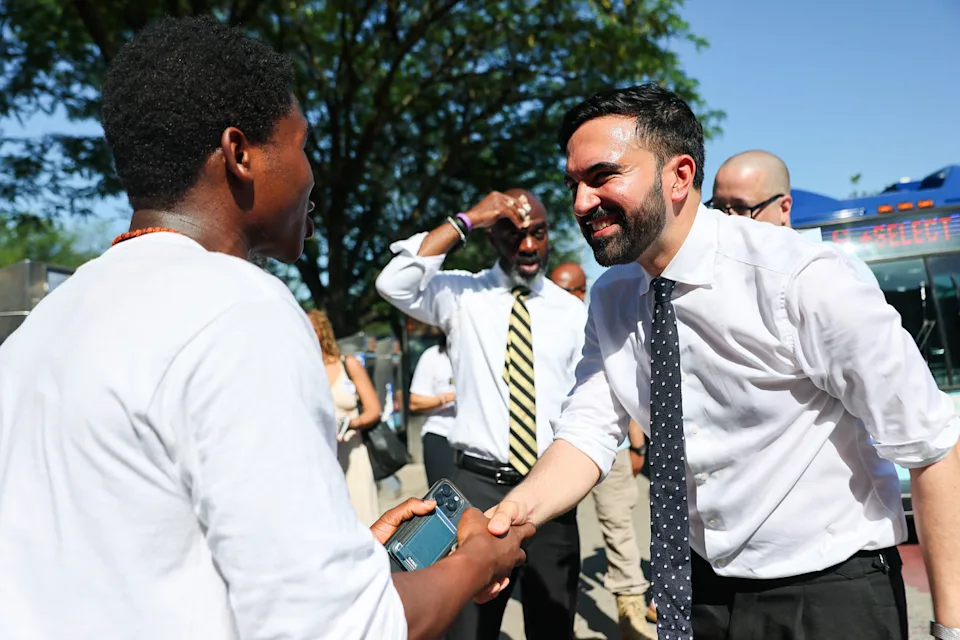
Democrats are exploring innovative ways to engage young men beyond traditional campaigns. Zohran Mamdani utilized podcast appearances, community events, and youth-oriented activities, such as soccer tournaments and scavenger hunts, to connect directly with young voters. Mamdani emphasized the importance of addressing affordability, which he sees as a key factor in both financial and social engagement for young men.
State leaders are also focusing on initiatives that are male-centric. Maryland Governor Wes Moore announced plans to hire more male teachers, while California Governor Gavin Newsom launched programs addressing male suicide and promoting youth engagement. Virginia Delegate Josh Thomas created the state’s first advisory board on boys’ and men’s issues.
Yet voter preferences can differ between national and local contests. Alex Lieberman of Brooklyn supported Mamdani but said he would vote for Trump in a presidential election. He praised Trump for fulfilling campaign promises and improving economic opportunities.
Republicans also note a shift in discourse. Conservative leaders report a decline in discussion around “toxic masculinity” and an increased focus on economic and social opportunities for young men. Some see diversity initiatives promoted by Democrats as a motivating factor for young male voters to support the Republican Party.
Looking ahead to the midterms and beyond, both parties recognize that appealing to young men will be decisive. Democrats aim to build on recent gains, while Republicans plan to mobilize this demographic by emphasizing economic benefits, social messaging, and the Trump agenda.
The battle for young men voters is shaping policy and campaign strategies across the country, reflecting their growing influence on elections and the broader political landscape. How parties engage this group in the next year could determine key outcomes in both local and national races.