
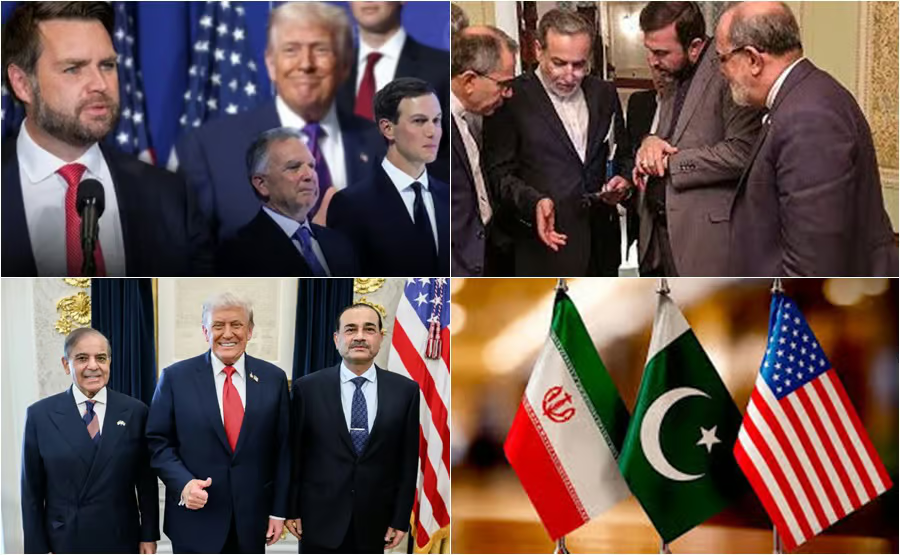
Iran and the United States are preparing for high-level ceasefire talks in Islamabad, marking a rare diplomatic moment after weeks of intense conflict. The meeting is expected to bring senior representatives from both sides face-to-face for the first time in nearly five decades.
According to Daljoog News analysis, the sudden push toward negotiations reflects a shift in battlefield realities, economic pressure, and political constraints facing both Washington and Tehran. The conflict has reached a point where continued escalation carries rising costs with uncertain gains.
The talks come at a critical time for the region and the global economy. With energy markets disrupted and tensions spreading across the Middle East, the outcome of these discussions could influence stability far beyond the immediate conflict zone.
What Happened?
Following a period of sustained military exchanges, Iran and the United States have agreed to enter ceasefire negotiations, with Islamabad serving as the venue. Pakistan is acting as a mediator, positioning itself at the center of a sensitive diplomatic effort.
The conflict saw both sides engage in direct and indirect strikes, raising fears of a broader regional war. Despite expectations in some quarters that Iran’s leadership structure could weaken quickly, Tehran maintained operational stability and continued coordinated responses.
Iran’s ability to hold strategic ground, particularly around the Strait of Hormuz, played a decisive role. Control over this critical maritime route disrupted shipping flows and affected global energy supply chains, increasing pressure on international markets.
At the same time, domestic and international dynamics began to shift. In the United States, political debate intensified over the costs and risks of continued military engagement. Globally, protests and diplomatic caution from European and NATO partners signaled a limited appetite for further escalation.
Why This Matters
The upcoming talks represent more than a pause in fighting. They reflect a recalibration of power dynamics in the Middle East, where military outcomes, economic leverage, and public sentiment are all shaping decisions.
Iran’s ability to sustain pressure in key strategic areas has challenged long-held assumptions about its vulnerabilities. This has forced a reassessment among policymakers in Washington and allied capitals.
The economic stakes are equally significant. Disruptions in the Strait of Hormuz have direct consequences for global oil supply, affecting prices, inflation, and economic stability worldwide. Prolonged instability could deepen these effects.
For diplomacy, the talks signal a rare opening. Direct engagement at this level has been largely absent for decades, making this moment particularly significant for future relations between the two countries.
What Analysts or Officials Are Saying
Security and geopolitical analysts suggest that the move toward negotiations is driven by a combination of military resilience and economic pressure. Iran’s sustained defense posture and strategic positioning have made a quick victory unlikely for its adversaries.
Experts also point to internal political dynamics in the United States. Public skepticism toward prolonged military involvement has increased, adding pressure on leadership to seek a diplomatic path.
International observers note that the lack of full support from European allies and NATO partners has further complicated the strategic environment for Washington. This has reinforced the need for a negotiated outcome.
Pakistani officials are being closely watched as mediators. Their ability to balance competing demands and facilitate compromise will be critical to the success of the talks.
Daljoog News Analysis
The decision to move toward ceasefire talks underscores a fundamental reality of modern conflict: military power alone rarely delivers decisive outcomes in complex geopolitical environments.
Iran’s strategy appears to have combined military resistance with economic leverage, particularly through its influence over key maritime routes. This approach has amplified its position beyond traditional battlefield metrics.
For the United States, the situation highlights the limits of unilateral action in a multipolar world. Without broad international backing, sustaining long-term military campaigns becomes increasingly difficult both politically and economically.
The choice of Islamabad as the venue also reflects shifting diplomatic landscapes. Regional players are taking more active roles in conflict resolution, signaling a gradual redistribution of influence in global diplomacy.
What Happens Next
The success of the Islamabad talks will depend on whether both sides can find common ground on key issues, including security guarantees, regional influence, and economic considerations.
Short-term outcomes may include a temporary ceasefire or confidence-building measures designed to reduce tensions. However, deeper structural disagreements are likely to remain.
Markets will be closely watching the negotiations. Any sign of progress could stabilize oil prices, while setbacks may trigger renewed volatility.
Diplomatically, this moment could open the door to further engagement or, if talks fail, lead to another cycle of escalation.