


Indian Prime Minister Narendra Modi arrived in Israel on Wednesday for a state visit, receiving a ceremonial red-carpet welcome at Ben Gurion Airport. He was greeted warmly by Israeli Prime Minister Benjamin Netanyahu and accorded a full Guard of Honor before the leaders traveled together to Jerusalem.
According to Daljoog News analysis, Modi’s visit underscores India’s growing strategic partnership with Israel, focusing on defense cooperation, artificial intelligence, and semiconductor trade. Yet his remarks in the Israeli parliament have sparked controversy at home and abroad for omitting references to the humanitarian crisis in Gaza.
The timing of Modi’s visit comes amid ongoing international debate over Israel’s military operations in Gaza, highlighting the delicate balance India is seeking between diplomatic engagement and global public perception.
What Happened?
Upon arriving in Israel, Modi was officially welcomed by Netanyahu with full ceremonial honors. The two leaders held private discussions in Jerusalem covering defense technology, AI, semiconductors, and other bilateral trade opportunities.
Later, Modi addressed the Israeli parliament, the Knesset. He expressed condolences to families affected by the October 7, 2023, Hamas attacks but notably did not mention the thousands of civilians, including children, killed in Gaza during Israel’s subsequent military operations.
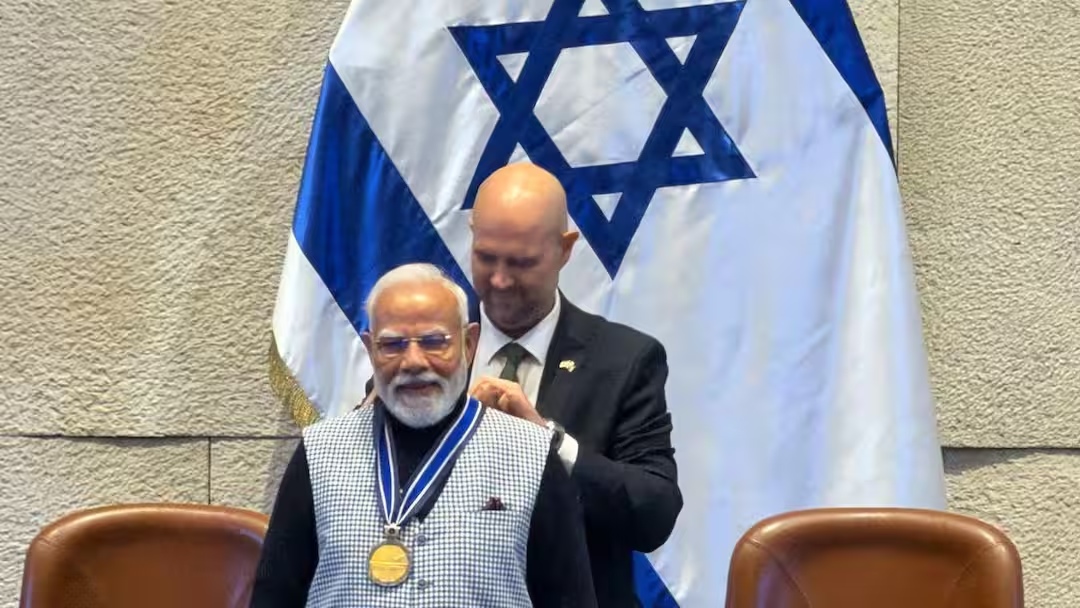
Following his speech, Modi was awarded the Knesset Speaker’s Medal, Israel’s highest parliamentary honor, becoming the first global leader to receive it. Netanyahu praised Modi’s “steadfast friendship” and India’s consistent support for Israel, describing it as a model of international partnership.
Why This Matters
Modi’s receipt of Israel’s highest honor signals a deepening India-Israel strategic relationship, especially in defense, technology, and trade sectors. At the same time, the omission of Gaza casualties from his speech has fueled criticism among human rights advocates and sections of the international community who view silence on civilian suffering as tacit political support.
India’s stance reflects a long-standing diplomatic balancing act: maintaining ties with Israel while avoiding strong condemnation that could strain relations with Arab and Muslim-majority nations, which view the Gaza crisis as a humanitarian emergency.
What Analysts or Officials Are Saying
Observers note that Modi’s speech and subsequent honor demonstrate India’s commitment to practical diplomacy focused on trade and security interests, rather than taking sides in humanitarian disputes. Analysts suggest the award may also reflect Israel’s desire to solidify India as a long-term strategic partner in South Asia.
Some foreign policy experts warn that Modi’s silence on Gaza could provoke domestic and international criticism, framing India as aligned with Israel regardless of civilian tolls. Others argue it reflects the broader global trend of prioritizing bilateral economic and defense partnerships over public statements on conflicts.
Daljoog News Analysis
India’s strategic engagement with Israel has grown steadily over the past decade, encompassing intelligence sharing, defense exports, and technology collaboration. Modi’s visit reinforces this trajectory, but the absence of any mention of Gaza in his Knesset speech exposes India to criticism over perceived moral compromise.
While India emphasizes diplomacy and national interest, human rights advocates argue that silence on civilian suffering can undermine India’s image as a principled actor in international affairs. Modi’s balancing act illustrates the tension between strategic pragmatism and humanitarian accountability on the global stage.
What Happens Next
Modi’s visit is expected to strengthen India-Israel defense and trade agreements, with potential new contracts in AI, semiconductors, and security equipment. However, the speech’s omissions could prompt domestic debate and international scrutiny, especially as media and civil society groups analyze India’s position on Gaza.