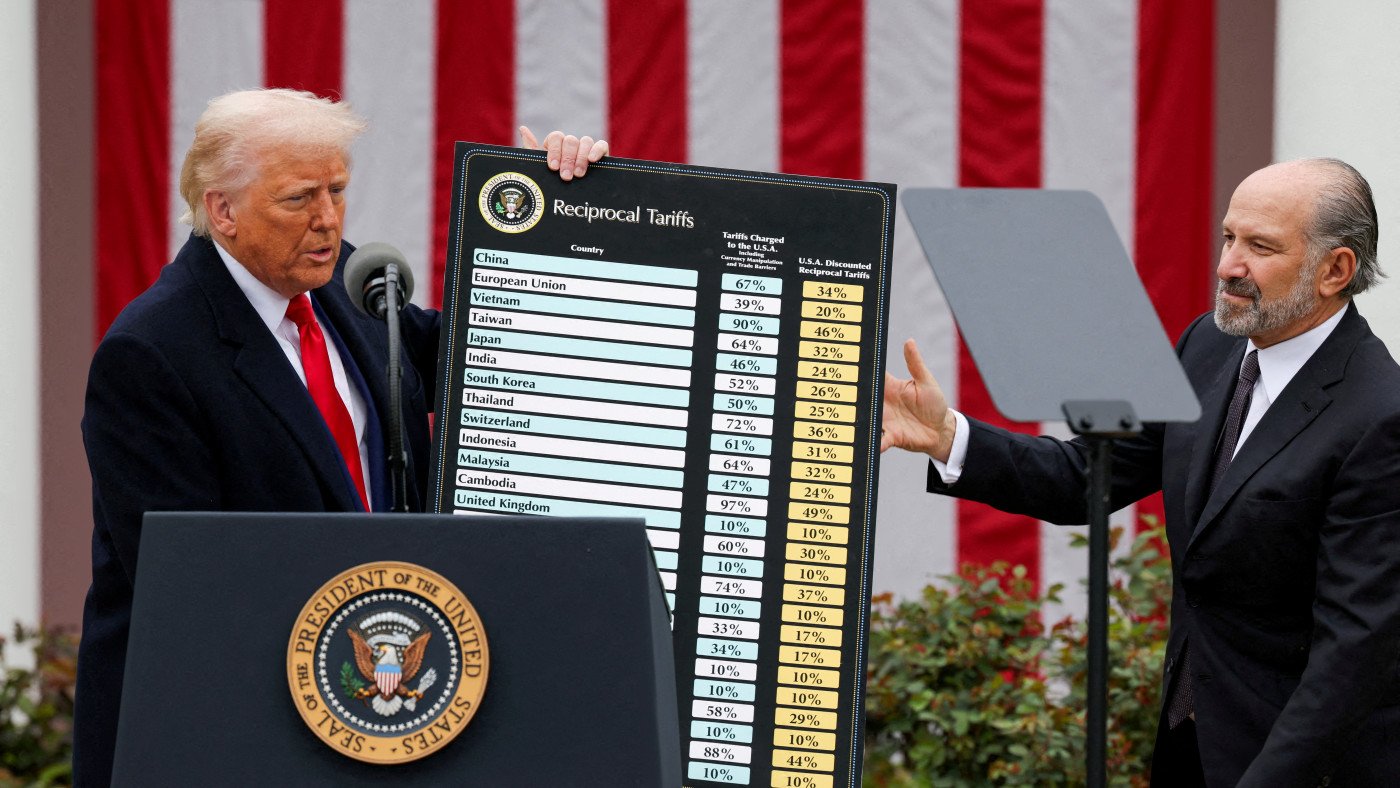



US President Donald Trump has reintroduced a 15 percent global tariff following a Supreme Court ruling that struck down his earlier use of trade law to impose broad duties on imported goods.
The Supreme Court’s February 20 decision invalidated Trump’s 1977 International Emergency Powers Act tariffs, citing legal overreach, though exemptions remain for steel, aluminum, wood, and automobiles under Section 232 of the Trade Expansion Act of 1962.
According to Daljoog News analysis, Trump’s latest move injects fresh uncertainty into international trade, challenging existing agreements and prompting renegotiations with key partners, including India, the United Kingdom, and Southeast Asian nations.
Trump first imposed widespread tariffs in 2025 using the 1977 law to reduce the US trade deficit, sparking global backlash. In response to the Supreme Court ruling, he leveraged Section 122 of the 1974 Trade Act to impose the new 15 percent tariff, effective February 24.
What Happened?
The new tariff is set to last a maximum of 150 days under Section 122 unless Congress approves an extension. This legal pathway marks a first for a US president and may face judicial challenges.
Countries that previously signed agreements to mitigate Trump’s earlier tariffs now face uncertainty. For instance, India had agreed to an 18 percent tariff under the earlier arrangements. Washington insists existing trade agreements remain valid, but experts warn that partners may resist complying fully due to reduced protections following the Supreme Court ruling.
The UK had earlier negotiated zero tariffs on steel and aluminum and a 10 percent duty on other goods, following Washington negotiations. Trump’s reinstated 15 percent tariff now threatens these arrangements, prompting the British government to seek urgent consultations with US authorities.
Why This Matters
The tariff changes affect global supply chains and trade planning. Countries that signed deals with the US to avoid Trump’s previous duties must reassess obligations, while nations that had not finalized agreements, like China, may gain temporary leverage.
Southeast Asian countries such as Malaysia, Cambodia, and Indonesia will maintain a 19 percent tariff, according to US Trade Representative James Greer. India, which agreed to an 18 percent duty, now faces renegotiations to align with the new 15 percent tariff framework.
European Union members and North American partners, including Canada and Mexico, are monitoring developments closely, with some already considering revisiting trade terms under USMCA provisions.
What Analysts or Officials Are Saying
International trade experts warn that the 15 percent tariff could destabilize markets if applied broadly. William Bain, head of trade policy at the British Chamber of Commerce, described it as potentially damaging for UK trade.
Legal experts note that Section 122 allows only a temporary imposition of duties, giving the US government 150 days to investigate other nations’ trade practices under Section 301. This process could lead to the reinstatement of prior reciprocal tariffs or adjustments in existing trade agreements.
China may gain minor benefits as US trade negotiations continue, especially ahead of President Xi Jinping’s planned talks in March. Meanwhile, US trade officials assert that the tariffs are intended to correct unfair practices and reduce the $900 billion trade deficit.
Daljoog News Analysis
Trump’s repeated use of tariffs demonstrates his willingness to leverage US trade law aggressively, regardless of court rulings or international reaction. The temporary nature of the 15 percent duty leaves open the possibility of adjustments, but it introduces immediate uncertainty for multinational companies and partner nations.
While some countries may comply to maintain relations, others could resist, potentially leading to renegotiations or legal challenges. The move underscores the fragility of US trade policy under Trump and the challenges of balancing domestic economic objectives with global trade obligations.
What Happens Next
The 15 percent tariff will remain in effect for 150 days unless extended by Congress. During this period, the US will investigate potential unfair trade practices under Section 301, assessing whether prior agreements need adjustment.
Countries may engage in renewed negotiations with the US to clarify tariff obligations. Firms importing goods will need to monitor changes closely, while international trade law experts predict potential legal disputes and revisions to existing agreements.
Overall, the move is likely to create short-term disruption in global trade, with ripple effects on markets, supply chains, and diplomatic relations, as nations adjust to the new tariff landscape.