



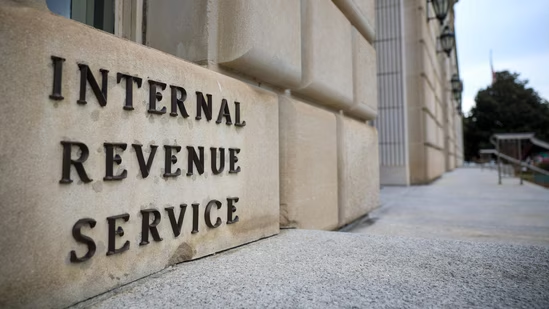
Taxpayers hoping to make progress on their returns during the long weekend will face a pause on Monday, February 16, 2026. The Internal Revenue Service will shut its offices and suspend phone support in observance of Presidents’ Day.
According to Daljoog News analysis, the closure comes at a sensitive point in the tax calendar, when millions of Americans are actively filing and seeking refunds. A one-day halt may appear minor, but it often creates a ripple effect in call volumes and service delays.
Presidents’ Day, observed on the third Monday of February, is among 11 federal holidays. Because the IRS is a federal agency, it follows the government holiday schedule. In 2026, the observance falls on February 16, even though George Washington’s birthday is February 22.
What Happened?
The IRS will close all walk-in offices and suspend its customer service phone lines for Presidents’ Day on Monday, February 16, 2026. Taxpayers will not be able to speak with a live representative or visit a Taxpayer Assistance Center on that day.
Normal operations resume on Tuesday, February 17. At that point, phone lines and offices will reopen under standard weekday hours.
Typically, IRS helplines operate Monday through Friday from 7 a.m. to 7 p.m. local time. Alaska and Hawaii residents follow Pacific Time for phone assistance. In Puerto Rico, helplines run from 8 a.m. to 8 p.m. local time.
While in-person and phone services pause, the agency’s online tools remain accessible. Taxpayers can still file electronically, check refund status, and review tax guidance through the IRS website during the holiday.
Why This Matters
The timing of the closure is important. Mid-February marks one of the most active stretches of tax season. Many early filers expect refunds, while others gather documents and seek clarification on deductions or credits.
A single-day shutdown can trigger longer wait times once lines reopen. Historically, the two weeks following Presidents’ Day generate heavy traffic. Callers may encounter hold times of 15 minutes or more, especially during peak morning and early afternoon hours.
For families relying on refunds for bills, tuition payments, or household expenses, even minor administrative slowdowns can add stress. The closure does not delay electronic filing systems, but it can slow problem resolution if errors or identity verification issues arise.
This dynamic reinforces a recurring tax-season reality: demand for live assistance far exceeds available staffing during high-volume periods.
What Analysts or Officials Are Saying
IRS officials routinely remind taxpayers that federal holidays affect service availability but not filing deadlines unless specifically stated. Presidents’ Day does not change the annual April filing deadline.
Tax professionals often advise clients to prepare documentation in advance to avoid unnecessary calls. Having a Social Security number or Individual Taxpayer Identification Number, filing status, a copy of last year’s return, and any recent IRS correspondence ready can significantly shorten phone interactions.
Industry analysts also point to the growing importance of digital self-service tools. The IRS has expanded its “Where’s My Refund?” tracker and online account features in recent years. These tools allow taxpayers to check refund progress without contacting a representative.
Still, experts caution that complex cases—such as amended returns, identity theft flags, or audit notices—often require direct communication with the agency.
Daljoog News Analysis
The Presidents’ Day closure highlights a broader issue facing the IRS: seasonal strain. Each year, early tax season places intense pressure on call centers and local offices. Even as the agency invests in modernization, service bottlenecks remain common.
In practical terms, the February 16 closure is routine. But in perception, it lands during a moment when taxpayers feel urgency. Many Americans expect rapid refunds due to electronic filing and direct deposit systems. Any interruption—however brief—can create frustration.
The reliance on online tools is not accidental. The IRS has steadily pushed digital engagement as a long-term strategy. From refund trackers to secure online accounts, the agency aims to reduce call volume and cut wait times.
Yet digital expansion does not fully replace human interaction. Tax law remains complex. Credits tied to income thresholds, filing status changes, and dependent claims can raise nuanced questions that automated systems cannot easily resolve.
For taxpayers, the lesson is simple: plan around federal holidays. Filing electronically before the long weekend avoids delays. Those who anticipate needing phone support should prepare for longer queues after reopening.
What Happens Next
The IRS reopens on Tuesday, February 17, 2026. Call volumes are expected to rise immediately following the holiday.
Taxpayers who require assistance should consider calling midweek and later in the day, when traffic may ease slightly. Early morning hours tend to see heavier demand.
Electronic filers can continue submitting returns throughout the holiday weekend. Refund status updates typically appear within 24 hours of e-filing, though processing times vary depending on return complexity and verification checks.
As tax season moves toward March and April, service demand traditionally remains high. Those who file early and use digital tools often experience smoother processing.