

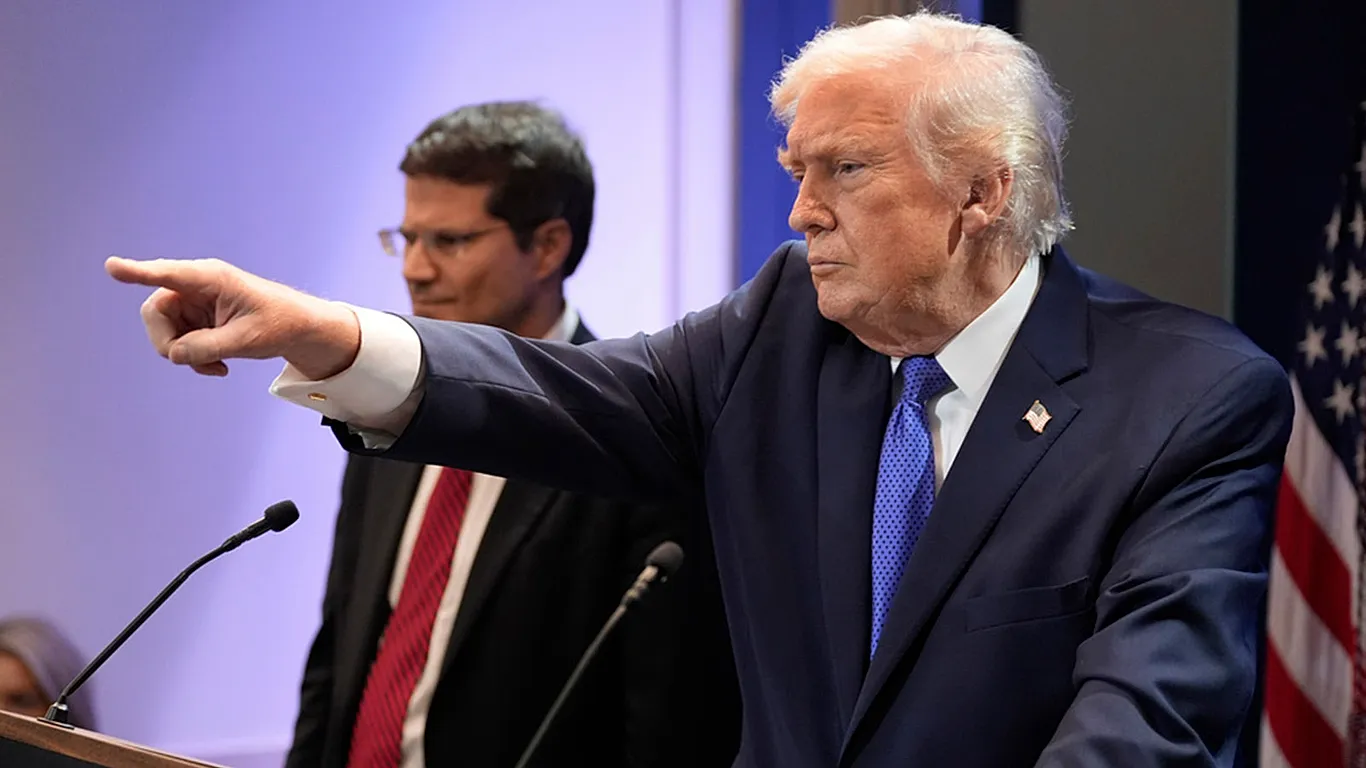
President Donald Trump on Friday night signed a proclamation imposing 10% tariffs on most imports to the United States, just hours after the Supreme Court invalidated a set of sweeping global tariffs previously issued under a separate legal authority.
According to Daljoog News analysis, the new tariffs are a rapid attempt to maintain Trump’s protectionist agenda and stabilize U.S. trade balances, even as the high court restricted the president’s powers under the International Emergency Economic Powers Act (IEEPA).
The move comes amid ongoing debates over trade policy and its economic consequences. Many economists warn that tariffs increase consumer costs and can disrupt supply chains, even as Trump’s administration promotes them as tools to revive domestic manufacturing and address trade deficits.
What Happened?
The White House fact sheet states that the 10% duties will take effect early Tuesday morning and last for 150 days. Certain goods are exempt, including key food imports, critical minerals, electronics, and cars. Imports from Canada and Mexico covered under the 2018 U.S.-Mexico-Canada Agreement (USMCA) are also excluded.
Trump announced the tariffs on his social media platform, calling it a “Global 10% Tariff on all Countries” and framing the move as nearly immediate. The action follows a Supreme Court ruling that the previous tariffs, issued under IEEPA, exceeded presidential authority.
The new tariffs rely instead on Section 122 of the Trade Act of 1974, which allows the president to impose duties up to 15% for 150 days to address “large and serious” balance-of-payment issues. This law provides a different legal foundation for broad import levies.
Trump also directed the U.S. Trade Representative to investigate “unreasonable and discriminatory” trade practices under Section 301 of the Trade Act. These investigations could result in additional tariffs targeting major trading partners on an accelerated timeline.
Why This Matters
The tariffs mark a significant shift in U.S. trade policy, potentially affecting global markets, supply chains, and international relations. Many trading partners had previously faced higher rates, including reciprocal tariffs on China, Canada, and Mexico, some of which were negotiated down in broader trade agreements.
Analysts note that while Trump frames tariffs as a tool to bolster U.S. manufacturing and reduce trade deficits, the immediate impact often falls on American consumers, who face higher prices on imported goods. Businesses reliant on foreign materials or components could also see operational costs rise.
What Analysts or Officials Are Saying
U.S. trade experts caution that reinstating broad tariffs could spark retaliatory measures from trading partners, escalating into disputes that affect exports, imports, and the global economy. Some economists argue that tariffs are more likely to shift economic burdens than to create long-term domestic growth.
Trump administration officials, including U.S. Trade Representative Jamieson Greer, emphasize that the Section 301 investigations are designed to correct unfair practices and will target most major trading partners. Critics warn that the aggressive approach could strain diplomatic and commercial relations worldwide.
Daljoog News Analysis
The new tariffs illustrate Trump’s commitment to aggressive trade policies, despite judicial setbacks. By pivoting from IEEPA to Section 122, the administration is signaling that it intends to maintain leverage over foreign partners and defend American industry.
However, the strategy carries risks. Tariffs could trigger retaliatory actions, slow economic recovery, and increase costs for U.S. consumers and businesses. The exemptions for certain goods suggest that the administration is attempting to balance economic and political considerations while maintaining a broadly protectionist posture.
In the long term, the success of the tariffs depends on whether foreign governments negotiate concessions or retaliate, and on how U.S. businesses and consumers absorb higher costs.
What Happens Next
The 10% tariffs take effect Tuesday, and businesses and trading partners will be monitoring compliance and enforcement closely. Section 301 investigations could follow rapidly, potentially resulting in further duties.
Observers will watch how global markets react, whether trading partners challenge the tariffs through negotiations or international trade bodies, and how U.S. consumers and businesses adapt. The situation represents a test of Trump’s trade agenda and its broader impact on the global economy.