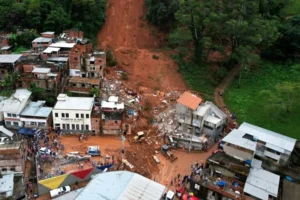

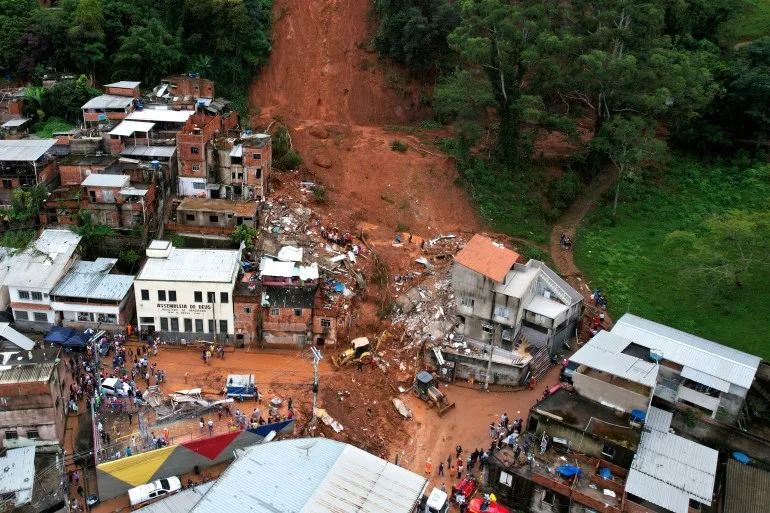
At least 64 people have died following landslides and flooding in Brazil’s eastern state of Minas Gerais, authorities said Friday. Rescue teams continue to search for survivors as more than 5,500 residents have been forced from their homes.
According to Daljoog News analysis, the disaster highlights Brazil’s ongoing vulnerability to extreme weather, with heavy rainfall exacerbating risks in densely populated areas. The current floods follow patterns scientists link to climate change, underscoring the urgent need for infrastructure improvements and disaster preparedness.
The hardest-hit cities include Juiz de Fora and Ubá, where homes and roads were washed away. Authorities have confirmed five people remain missing as emergency crews conduct rescue and recovery operations.
What Happened?
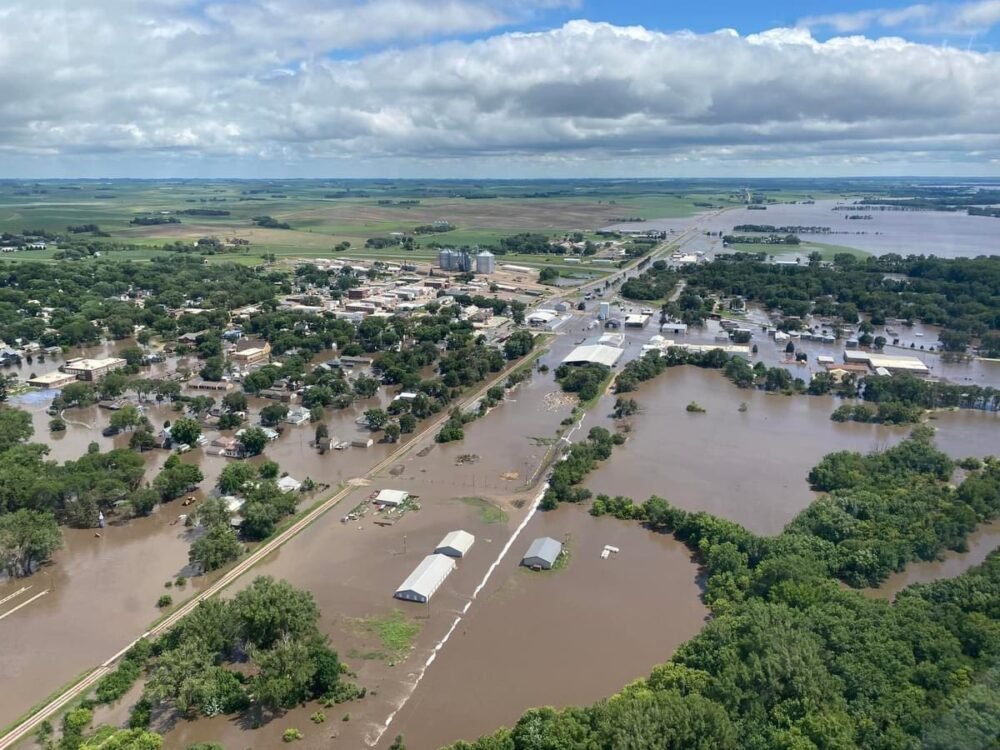
The flooding comes after several days of relentless rain in Minas Gerais. Rivers overflowed, hillsides collapsed, and communities were left underwater. Local fire departments reported multiple landslides and structural collapses, while video footage showed streets submerged in muddy water.
Brazil’s meteorology institute, Inmet, has warned of continued “great danger” in parts of Minas Gerais, as well as in neighboring states Rio and São Paulo. Residents have been urged to avoid hillsides, flood zones, and trees during storms due to risks of landslides and lightning strikes.
President Luiz Inacio Lula da Silva will visit Minas Gerais on Saturday to assess the damage and meet with local mayors. The federal government has authorized the release of approximately 3.4 million reais ($660,000) to support reconstruction and humanitarian assistance.
Why This Matters
Minas Gerais has long struggled with urban development in areas prone to flooding and landslides. In Juiz de Fora alone, about 540,000 residents live in locations identified as high-risk for water- and land-related disasters. The current tragedy underscores both the human and economic toll of inadequate infrastructure in vulnerable areas.
The floods also highlight a broader trend of increasingly severe weather events in Brazil, linked to climate change. Experts warn that without stronger planning and preventive measures, future storms could result in even higher casualties and displacement.
What Analysts or Officials Are Saying
Scientists and advocacy groups have stressed the connection between extreme weather and climate change. Greenpeace Brazil called for urgent measures to better prepare cities, stating that “disasters are also the result of political choices” and emphasizing the need for investments in urban planning and emergency infrastructure.
Government officials have mobilized emergency crews, while federal funds aim to support both immediate relief and longer-term reconstruction. President Lula’s scheduled flyovers and meetings with local leaders signal a hands-on approach to coordinating disaster response.
Daljoog News Analysis
Daljoog News observes that the human toll of the Minas Gerais floods reflects both natural and structural factors. Rapid urbanization in vulnerable zones, combined with increasingly unpredictable rainfall patterns, amplifies the risk to communities.
The federal and state response will be closely scrutinized, as the effectiveness of relief and reconstruction efforts will influence public trust and the resilience of affected areas. Long-term planning, including zoning, early warning systems, and flood control, is likely to remain central to reducing future casualties.
What Happens Next
Emergency teams will continue searching for missing residents, while authorities assess infrastructure damage and prioritize relocation for those in high-risk zones. The federal government’s financial support will fund temporary shelters, debris removal, and rebuilding of essential services.