


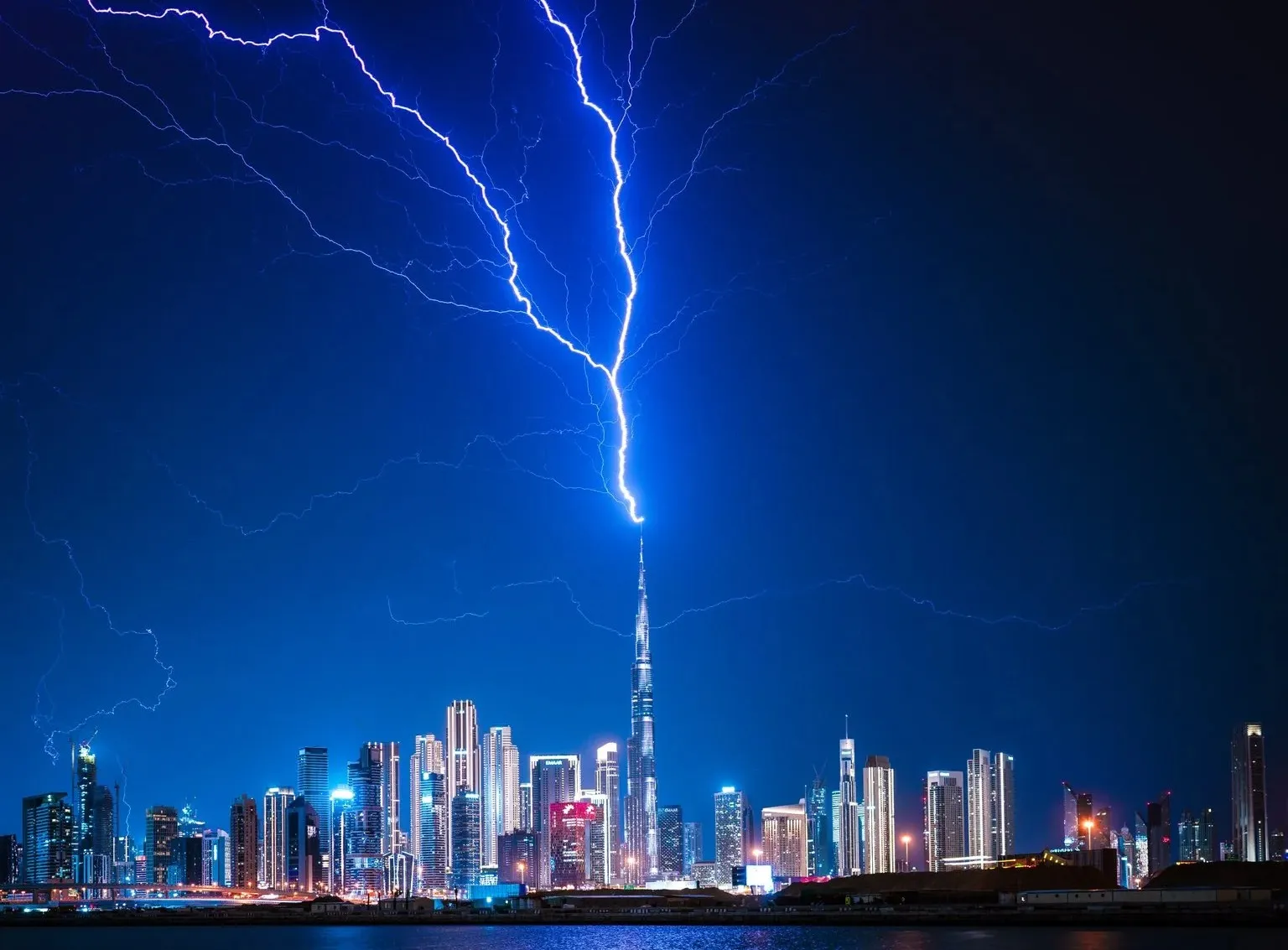
A dramatic lightning strike struck Dubai’s Burj Khalifa during a nighttime thunderstorm on Friday, sending a shockwave through social media as videos of the event went viral. The 163‑story skyscraper, the tallest building in the world, remained unharmed.
According to Daljoog News analysis, the incident highlights the effectiveness of modern engineering in high‑rise architecture, particularly the building’s advanced lightning protection systems. Despite being directly struck, the lightning safely traveled through the structure’s conductive rods into the ground.
The strike occurred amid widespread rainfall across the UAE, underlining how extreme weather can impact even the most iconic man‑made landmarks and the importance of robust urban planning in storm‑prone regions.
What Happened?
On Friday night, as heavy rain swept across Dubai, lightning struck the Burj Khalifa, which rises 772 feet above surrounding structures. The height of the tower made it a natural target for electrical discharge during the storm, according to local reports from NDTV.
Despite the intensity of the strike, no damage was reported. Videos circulating on social media show the bolt hitting the upper spire and radiating light down the skyscraper, thrilling viewers worldwide. The building’s lightning rods ensured that the electrical energy was safely diverted to the ground.
Owned by Emaar Properties, Burj Khalifa remains a major attraction for tourists and an emblem of Dubai’s engineering prowess. The tower is fully insured for $150 million to cover any potential damages from rare events such as lightning strikes.
Why This Matters
The lightning strike emphasizes the need for advanced safety measures in tall buildings, especially in regions where extreme weather is increasingly common due to climate change. Urban centers with high‑rise developments face unique risks from lightning, wind, and heavy rainfall.
For Dubai, the Burj Khalifa is not just an architectural landmark but also a symbol of economic and technological growth. Protecting such structures ensures public safety, tourism revenue, and investor confidence remain intact even during severe weather events.
What Analysts or Officials Are Saying
Experts note that tall structures like the Burj Khalifa are specifically designed to withstand lightning strikes. Lightning rods and conductive pathways allow electricity to flow harmlessly into the ground. Such systems are tested regularly to maintain effectiveness.
Meteorologists point out that Friday’s storm was part of a larger weather system affecting multiple areas of the UAE, including residential and commercial districts, emphasizing the need for preparedness and awareness among citizens and property managers.
Daljoog News Analysis
This event serves as a reminder of how natural forces can interact with urban environments. Burj Khalifa’s resilience illustrates the success of modern engineering in combining aesthetics with safety. While the spectacle of lightning hitting the world’s tallest building captures public imagination, the real story lies in the unseen systems protecting the structure.
Dubai’s approach—combining technological innovation, structural safety, and insurance protection—sets a model for other cities with ambitious skyscraper projects. In an era of unpredictable climate patterns, such measures are essential to safeguard both people and assets.
What Happens Next
Authorities are expected to continue monitoring weather and lightning patterns in Dubai, particularly as the region experiences seasonal storms. Tourists and residents are reminded to follow safety guidelines during extreme weather, even near the city’s most secure buildings.
Meanwhile, projects like Dubai’s first smart city—with integrated schools, hospitals, parks, and residential facilities—demonstrate the city’s ongoing commitment to safe, modern urban development. Innovations in architecture and urban planning will continue to be key as Dubai expands its skyline.