


Kenya’s Jomo Kenyatta International Airport has intercepted a shocking wildlife smuggling attempt involving over 2,000 live queen ants. A Chinese national, identified as Zhang Kekun, was arrested in connection with the case.
According to Daljoog News analysis, the seizure highlights the rising demand for exotic insects among collectors in Europe and Asia, as well as the growing risks posed to international biodiversity by illegal wildlife trade.
The ants, vital to soil health and ecological balance in Africa, were carefully concealed across luggage, illustrating the sophisticated methods traffickers use to bypass security.
What Happened?
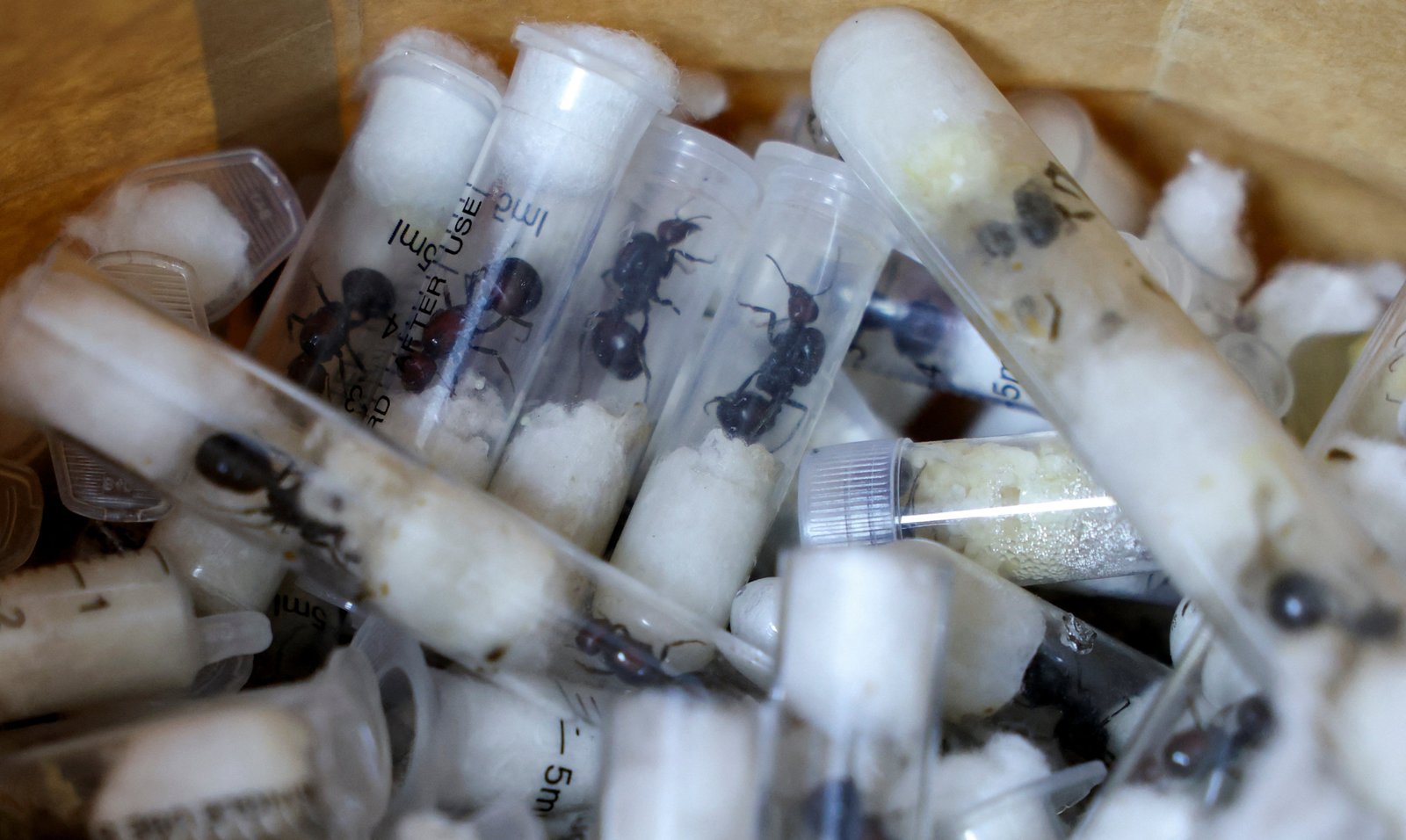
Airport security discovered the unusual cargo during a routine inspection. Authorities found a total of 2,248 live queen ants, meticulously packed for smuggling.
Of these, 1,948 were contained in specialized test tubes, while the remaining 300 were hidden inside tissue paper rolls. Investigators believe the intended destination was China and suspect the arrested individual may be part of a larger international trafficking network.
Kenyan police acted promptly, detaining Zhang Kekun and launching an investigation into possible accomplices. This is not the first time Kenya has intercepted such crimes; earlier in May, four individuals were convicted and fined for similar offenses.
The ants belong to the species Mesosoma cephalotes, commonly known as harvester ants, which play a critical role in maintaining soil health and preserving biodiversity.
Why This Matters
The smuggling of live queen ants poses serious ecological and legal risks. These insects are protected under international biodiversity conservation agreements due to their essential role in soil maintenance and ecosystem stability.
Illegal export or trade can disrupt local ecosystems, reduce soil fertility, and threaten other species that rely on a balanced environment.
Furthermore, the case underscores the growing trend of exotic insect collection in parts of Europe and Asia, where these species are increasingly sought after as pets or collectibles.
Enforcing regulations around such trade is crucial to prevent the spread of non-native species and to maintain global ecological balance.
What Analysts or Officials Are Saying
Environmental experts say that live queen ants are particularly vulnerable to trafficking because of their reproductive role in colonies. Removing them from their native habitats can destabilize entire ant populations.
Kenyan authorities have emphasized that the ants recovered in this seizure are legally protected and should not be traded internationally. Analysts note that sophisticated concealment techniques, like hiding ants in test tubes or tissue rolls, are increasingly common in wildlife trafficking.
Authorities also stress the importance of international cooperation to tackle wildlife crime and ensure that trafficking networks face legal consequences.
Daljoog News Analysis
This incident reflects the growing tension between global demand for exotic species and the need to protect biodiversity. While the exotic pet market is lucrative, the ecological consequences of illegal trade can be severe and long-lasting.
For Kenya, a country rich in biodiversity, strict enforcement measures are essential to safeguard both the environment and compliance with international conservation agreements.
The sophistication of this trafficking attempt also indicates that wildlife smugglers are becoming increasingly organized and innovative in bypassing detection measures.
Public awareness and vigilant airport security remain critical to preventing the export of protected species and maintaining ecological balance.
What Happens Next
Authorities are expected to continue investigations to uncover potential networks behind this smuggling operation.
The seized ants will remain under legal protection and may be returned to controlled habitats to restore ecological stability.
Kenya’s wildlife and customs agencies are likely to intensify surveillance at ports and airports, especially for items frequently targeted in trafficking attempts.
Global conservation groups may also use this case to advocate for stricter enforcement and awareness campaigns on illegal wildlife trade.