


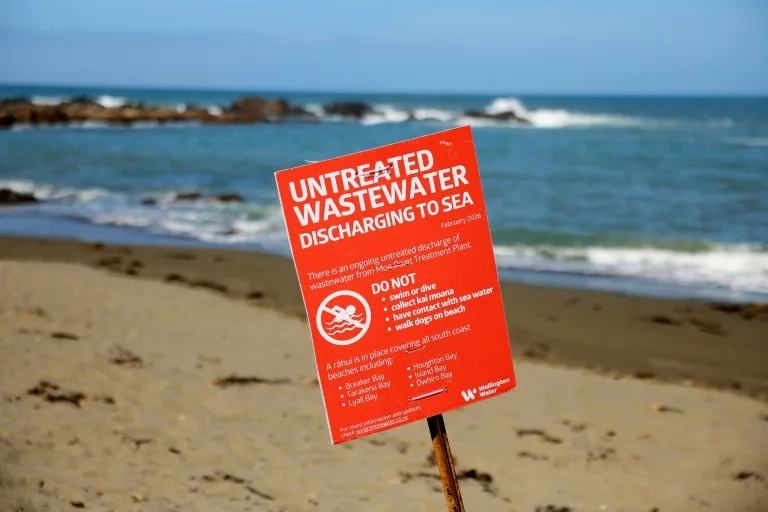
Wellington’s mayor, Andrew Little, took an unusual step Wednesday to calm public fears after raw sewage flowed from the city’s Moa Point treatment plant into the ocean, coating nearby homes with contaminated spray.
According to Daljoog News analysis, the mayor’s ocean swim is both a symbolic and practical gesture aimed at restoring confidence in public safety, highlighting the challenges municipal leaders face when infrastructure failures intersect with environmental and public health crises.
The incident follows nearly three weeks of raw sewage discharge, which began on February 4, affecting the south coast beaches and sending foul residue onto residential areas.
What Happened?
The Moa Point wastewater treatment plant experienced a breakdown that released millions of litres of untreated sewage into Wellington’s waters. Last week, a storm produced swells up to seven metres (23 feet), carrying contaminated sea spray onto homes and leaving a brown, slimy residue.
Residents described the fallout as “disgusting” and “slimy grime,” reporting that the residue was not from saltwater but sewage particles traveling along the coast. Wellington Water, the utility managing the facility, has called in Australian experts to investigate the cause, which remains unknown.
On Wednesday, Mayor Little donned swimming trunks and a rash guard before diving into the surf near Island Bay. He told the public that while some risk remains, monitoring suggests it is low and that citizens can decide whether to swim or fish.
The Wellington City Council had previously urged the public to avoid ocean activities due to contamination concerns. Little emphasized that a “major” repair is needed to fully restore plant operations and thanked residents and local businesses for their patience.
Why This Matters
The spill has significant environmental and public health implications. Raw sewage can carry bacteria and pathogens that threaten marine life, recreational water users, and coastal communities. The storm-induced spread onto homes further intensified public concern and media attention.
The event also raises questions about aging or poorly maintained infrastructure in urban centers and the challenges utilities face in preventing environmental hazards. It highlights the consequences of plant failures in areas where residents and businesses are tightly integrated with coastal ecosystems.
What Analysts or Officials Are Saying
Environmental experts note that even small amounts of sewage entering recreational waters can trigger health warnings, making immediate monitoring and public guidance essential. Wellington Water officials acknowledged ongoing odour concerns and stressed that cleaning and repairing the facility is a top priority.
Political analysts suggest that Mayor Little’s swim is a calculated move to demonstrate leadership, personal accountability, and reassurance, signaling that authorities are actively addressing the crisis while maintaining public trust.
Residents, meanwhile, remain cautious. Local reports emphasize that visual contamination and lingering odours have heightened skepticism about whether the water is truly safe.
Daljoog News Analysis
Daljoog News observes that the mayor’s direct action is unusual for civic leaders, reflecting both the scale of the contamination and the urgency of restoring confidence. Symbolic gestures can help manage public perception, but environmental remediation and infrastructure repair remain the most critical elements in regaining safety and trust.
The ongoing investigation into the Moa Point plant underscores the complexity of wastewater management in densely populated coastal cities. The combination of aging infrastructure, extreme weather, and public scrutiny creates a high-pressure environment for officials seeking to prevent long-term ecological damage and health risks.
What Happens Next
Wellington Water continues to work on cleaning the plant and diagnosing the breakdown. Mayor Little has pledged that the repair will be “major” and is expected to take some time before normal operations resume.
Authorities are likely to maintain water quality monitoring and public advisories until the situation stabilizes. Residents will be watching closely to see whether the measures are sufficient to protect health and restore confidence in local waterways.