
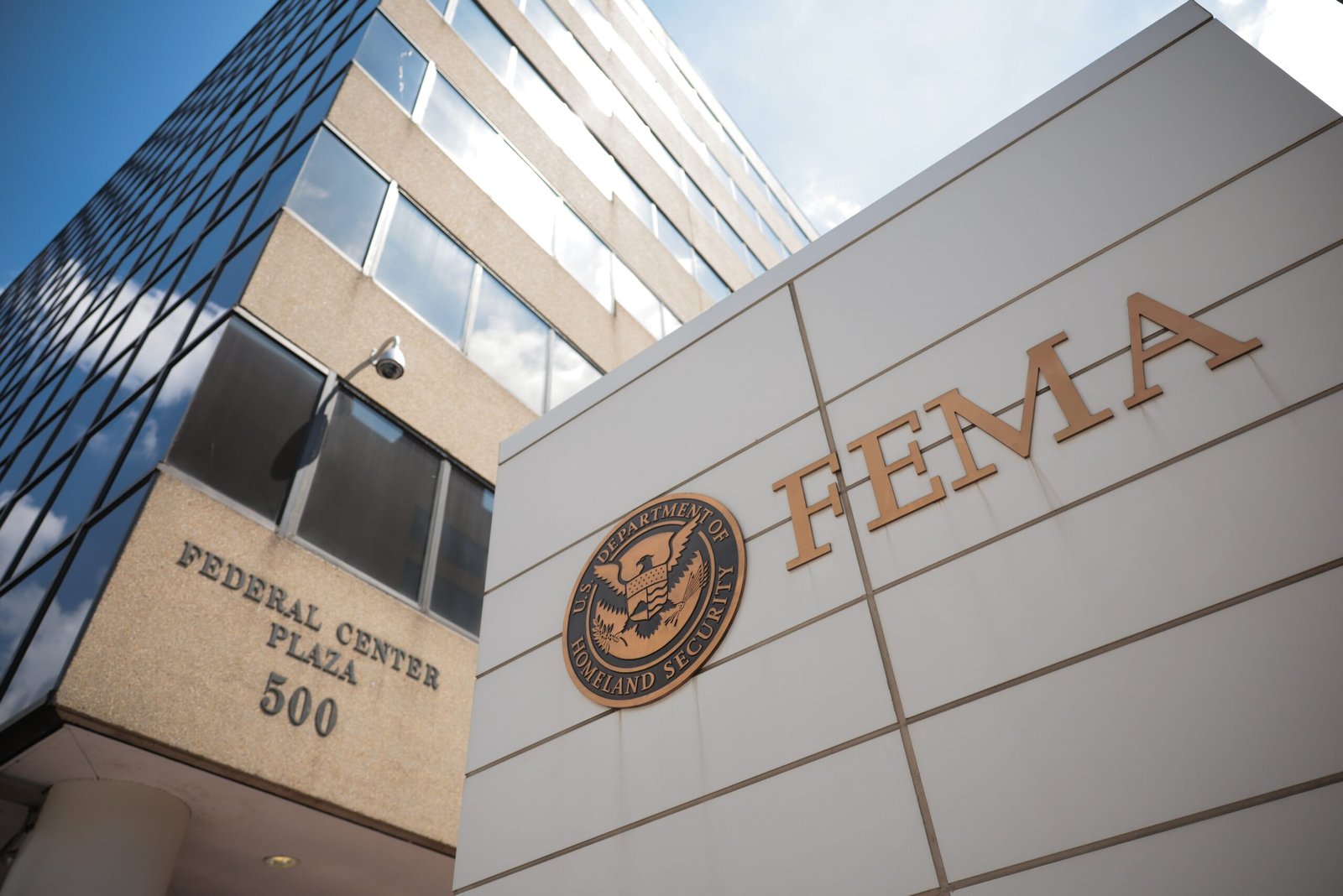
The Trump administration has ordered the Federal Emergency Management Agency to pause new disaster deployments while the Department of Homeland Security remains shut down, according to internal agency communications.
According to Daljoog News analysis, the move introduces operational strain at a time when multiple regions are still recovering from severe weather events and infrastructure crises.
The directive affects hundreds of FEMA personnel who were preparing to deploy across the United States, even though the agency’s Disaster Relief Fund remains funded and legally available.
What Happened?
The Department of Homeland Security, which oversees FEMA, issued an order halting most new travel and deployment activities during the shutdown.
An internal message circulated to agency leadership stated that DHS had directed FEMA to stop all travel effective Wednesday. Any new assignments now require direct approval from DHS leadership.
More than 300 FEMA responders who were preparing for field assignments were told to stand down. Some were at training facilities awaiting deployment orders when the directive arrived.
Personnel already embedded in long-term recovery missions will remain in place. However, no new responders can rotate in to relieve them without explicit authorization from DHS.
The Disaster Relief Fund, FEMA’s primary vehicle for financing recovery operations, is not impacted by the DHS funding lapse. Congressional appropriations had left roughly $7 billion available in the fund as of December, according to agency sources.
Despite that funding cushion, DHS officials argue the travel restrictions are required to comply with federal law governing operations during a shutdown.
Why This Matters
The travel freeze comes as communities in several states continue rebuilding from major disasters, including the long recovery from Hurricane Helene in the southern United States.
Damage validation teams play a critical role in unlocking federal aid. Without field personnel to inspect and confirm losses, projects can stall and financial assistance approvals may be delayed.
Disaster Recovery Centers also depend on staff presence. In states like Washington and Alaska, FEMA personnel help survivors navigate applications, documentation requirements, and reimbursement processes.
While DHS maintains that active disaster operations are not canceled, the additional layer of approval introduces administrative friction.
Government shutdowns already disrupt payroll and morale. Operational pauses tied to disaster recovery add a practical dimension that could affect real-world outcomes for survivors awaiting assistance.
The restrictions also arrive amid heightened scrutiny of FEMA’s management and spending practices.
What Analysts or Officials Are Saying
DHS released a statement attributed to a FEMA spokesperson asserting that disaster-related travel is not fully canceled, but some non-essential activities are being scaled back.
Officials argue the restrictions ensure compliance with shutdown-related legal requirements.
However, former FEMA officials and current agency staff express concern that the freeze sends the wrong signal.
Some insiders suggest the measure appears designed to highlight shutdown consequences rather than reflect funding realities, since the Disaster Relief Fund remains intact.
Critics within the agency argue that micromanagement from DHS leadership has increased in recent months. A prior rule introduced by Homeland Security Secretary Kristi Noem requires her personal approval for expenditures exceeding $100,000. That policy has reportedly created backlogs in funding approvals.
The situation has also intersected with President Donald Trump’s public remarks regarding a major sewage spill affecting the Potomac River area.
Trump stated that FEMA would play a key role in coordinating the federal response. Yet agency officials indicate FEMA has so far deployed limited resources to the incident.
Washington, D.C. Mayor Muriel Bowser formally requested a major disaster declaration to unlock federal support. Meanwhile, Maryland Governor Wes Moore publicly criticized the administration’s handling of the issue.
Daljoog News Analysis
The FEMA deployment pause reflects the broader political tensions surrounding the DHS shutdown.
On paper, the Disaster Relief Fund provides financial insulation. In practice, administrative controls can still slow response capacity.
Daljoog News assesses that the central question is not funding availability but operational flexibility.
Disaster response depends on speed. Even short delays in damage assessment, staffing rotations, or recovery center operations can ripple outward, particularly in rural or underserved communities.
At the same time, DHS leadership may view tighter controls as necessary oversight during a shutdown environment. Federal law restricts certain activities during funding lapses, and agencies often adopt cautious interpretations to avoid violations.
The political overlay is unavoidable. The sewage spill dispute, coupled with public exchanges between federal and state officials, illustrates how disaster response can quickly become entangled in partisan conflict.
If the shutdown persists, pressure will grow from governors, members of Congress, and emergency management professionals seeking clearer operational guidelines.
The administration must now balance fiscal discipline, legal compliance, and the visible needs of disaster survivors.
What Happens Next
The duration of the DHS shutdown will determine how disruptive the travel freeze becomes.
If funding is restored soon, FEMA could resume normal deployment cycles with minimal long-term impact.
If the lapse extends, staffing shortages may intensify. Personnel already in the field could face extended assignments without rotation relief.
Requests for disaster declarations tied to ongoing crises, including the Potomac River sewage incident, may further test intergovernmental coordination.
Congressional negotiations over DHS funding remain central. Lawmakers on both sides are under pressure to resolve the impasse before operational strain deepens.
For now, FEMA’s mission continues under tighter oversight. Whether the pause becomes a temporary adjustment or a broader constraint on federal disaster response will depend on both political resolution and administrative flexibility in the days ahead.