

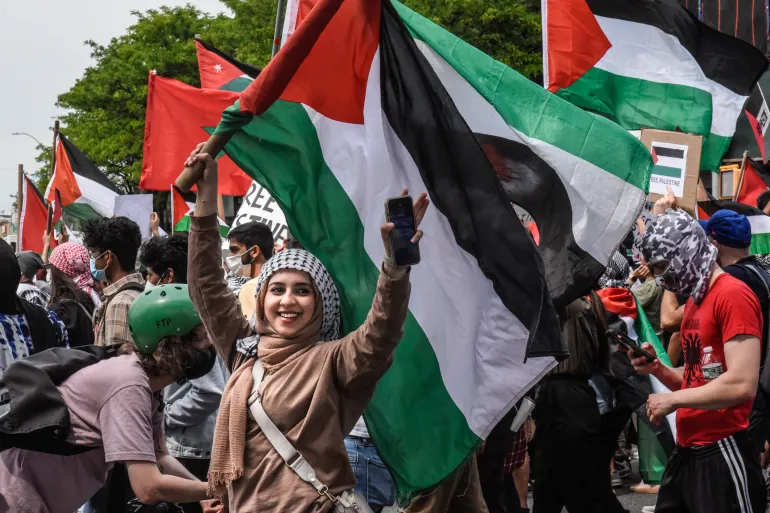
Millions of people worldwide are joining the Palestinian freedom movement, signaling an unprecedented shift in global public opinion. From Western capitals and university campuses to Gaza’s territorial waters, protests have drawn widespread support.
This surge is largely fueled by Palestinian journalists and storytellers who risk their lives to document the ongoing crisis. Their firsthand accounts of the war in Gaza have exposed the human cost of the conflict and highlighted alleged violations and attacks on civilians. Many media outlets have begun using clear terms like “occupation,” “siege,” and “settlement,” moving away from euphemisms that previously softened the narrative.
Analysts note that Israel’s influence over global media narratives is diminishing. For decades, Israel maintained strong public relations strategies to present itself as a democratic state. However, the global solidarity movement has challenged this image, making it harder to control public perception.
The movement has gone beyond protests and boycotts of Israeli and pro-Israeli businesses. It has influenced diplomatic actions as well. Several Western countries have recognized Palestine as a state, reflecting the growing cultural and political shift in public opinion. Stadiums, social media, and even voices that once supported Israel have begun to reflect this change.
Activists emphasize that this momentum is crucial and must be maintained. They highlight the role of art and storytelling from Gaza, where children and local creators contribute to the global narrative of solidarity. These efforts remind the world that the struggle for justice and independence continues, even with intermittent ceasefires.
Experts describe these developments as a form of narrative warfare. The goal is to maintain global attention and prevent support from being minimized or pushed out of view. Activists stress the need to build on the progress of the last two years, transforming awareness into tangible political influence capable of holding Israel accountable.
The impact of the Palestinian freedom movement may take time to measure, but activists remain determined. They call for global leaders to harness this solidarity into policies and actions that support Palestinian rights and independence.
The International Day of Solidarity with the Palestinian people serves as a reminder of the ongoing struggle. Palestinians continue to rely on global support to advance their cause. Sustained activism, international attention, and political pressure are all key to achieving meaningful change.
The movement’s strength lies in its ability to unite diverse voices worldwide. It demonstrates that grassroots advocacy, media documentation, and public pressure can reshape global narratives. By keeping the spotlight on Palestine, activists aim to create lasting political influence and ensure the world does not turn away from the pursuit of justice.
This global surge in support marks a pivotal moment for the Palestinian people. The movement continues to grow, reinforcing the call for accountability, freedom, and recognition on the international stage.