Guatemala has declared a 30-day state of emergency following a surge in gang violence that left nine police officers dead.
The unrest erupted after inmates at three prisons took 45 guards and a psychiatrist hostage on Saturday, demanding transfers of gang leaders to less restrictive facilities. Police and army forces stormed the prisons on Sunday, regaining control. Eight officers were killed during the clashes, and a ninth died from injuries on Monday.
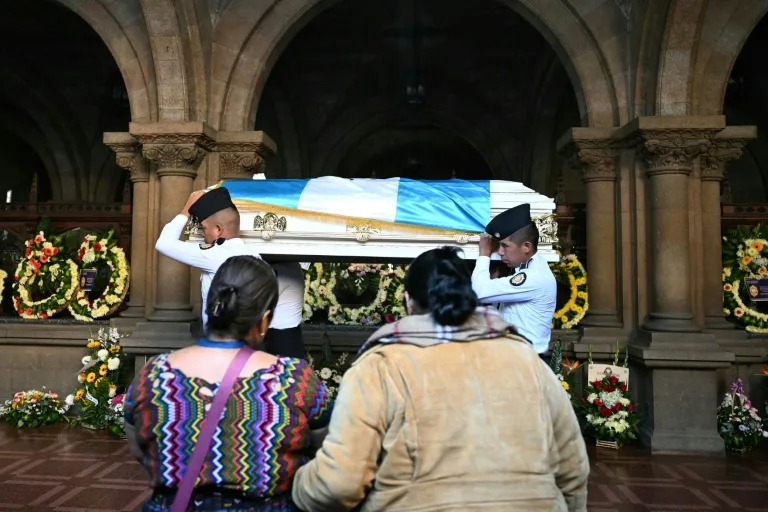
President Bernardo Arevalo oversaw a memorial at the interior ministry for the slain officers. Streets in the capital were largely empty, and schools, courts, and universities remained closed. Many residents expressed fear and anger over the escalating violence.
Suspected members of the notorious Barrio 18 gang carried out attacks against police following the prison raids. Authorities captured Aldo Dupie, also known as “El Lobo” (The Wolf), the alleged leader of Barrio 18. Gang members responded by targeting police stations and patrols across Guatemala City.
Residents compared Guatemala’s situation with El Salvador, praising President Nayib Bukele’s tough stance on gangs. An octogenarian in the historic center said, “A criminal caught, a criminal killed, because there’s no other way. It’s like a tree; if you don’t pull out the roots, it will sprout again.” Shopkeeper Alejandra Donis added that Bukele’s policies have made El Salvador safer and more tourist-friendly.
Barrio 18 and the rival gang Mara Salvatrucha (MS-13) are responsible for much of Central America’s drug trafficking and organized crime. Both groups are considered terrorist organizations by the U.S. government.
Since mid-2025, Guatemalan gangs have staged multiple prison uprisings to secure better conditions for their leaders. In October, 20 Barrio 18 leaders escaped from prison; only six were recaptured, and one was killed. The government requested FBI assistance to locate the remaining escapees.
The state of emergency allows the police and army to take stronger action against organized crime, though troops remained in barracks on Monday awaiting orders. Officials said the crackdown aims to restore security and prevent further gang retaliation.
Across Latin America, gang networks continue to operate criminal enterprises from behind bars, often with the help of corrupt officials, making enforcement a continuing challenge.
Guatemalans hope the emergency measures will curb the violence and signal that the government is taking strong action against gangs that have long destabilized the country.