

Hamas has confirmed it has returned all Israeli hostage bodies it can access, saying specialized equipment is needed to recover others from Gaza’s heavily damaged areas. The announcement comes amid warnings from Israel that fighting could resume if the ceasefire agreement is not fully respected.
Two additional bodies were handed over on Wednesday, adding to the seven previously returned by Hamas. Israel also received one body it said was not a former hostage.
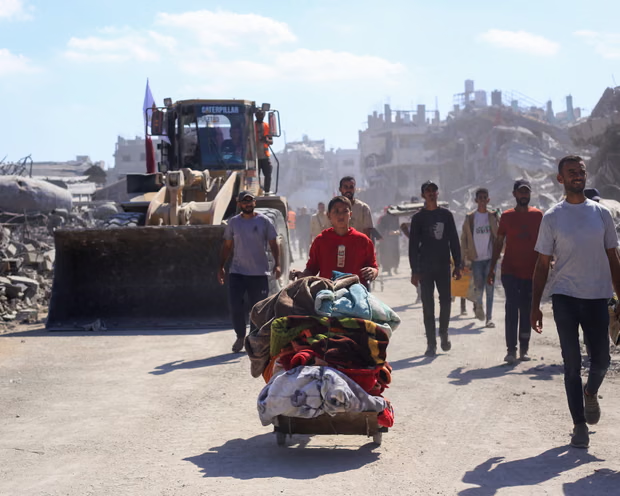
The Ezzedine Al-Qassam Brigades, Hamas’s armed wing, stated that it had fulfilled its commitment by returning all living hostages and all accessible corpses. It added that retrieving the remaining bodies would require extensive effort and specialized recovery equipment due to the destruction in Gaza.
Under a ceasefire deal brokered by US President Donald Trump, Hamas has already released 20 surviving hostages in exchange for nearly 2,000 Palestinian prisoners freed from Israeli jails.
Israel’s defence minister warned that the country could resume military operations if Hamas fails to comply with the remaining terms of the agreement. “If Hamas refuses to comply with the agreement, Israel, in coordination with the United States, will resume fighting and act to achieve a total defeat of Hamas, to change the reality in Gaza and achieve all the objectives of the war,” the minister’s office said.
Trump also suggested Israeli forces could return to Gaza if Hamas does not uphold the ceasefire deal. “Israel will return to those streets as soon as I say the word. If Israel could go in and knock the crap out of them, they’d do that,” Trump said in a phone call with CNN.
US and other international advisers confirmed that Hamas aims to stick to its pledge regarding the return of hostage bodies. Retrieving the remains is challenging due to the destruction in Gaza, officials said. They noted that initial returns of just a few bodies caused frustration, but Hamas delivered additional remains promptly following the release of intelligence.
Turkey, another key mediator, is reportedly planning to provide experts to help with body recovery in Gaza. Meanwhile, aid trucks carrying food and fuel, accompanied by United Nations teams, entered Gaza via the Kerem Shalom crossing. Plans were underway to open the Rafah border crossing, although Israel warned it could limit aid if the return of bodies is delayed.
The situation highlights political tensions in Israel, with far-right minister Itamar Ben-Gvir criticizing aid deliveries as a “disgrace” and accusing Hamas of lying about returning hostages’ bodies. Aid organizations and the UN continue to call for the opening of additional crossings to allow thousands of trucks with essential supplies into Gaza.
Tom Fletcher, the UN’s senior relief coordinator, urged Israel to ensure a “massive surge of humanitarian aid” into Gaza. He emphasized that withholding aid should not be used as a bargaining tool, stressing the legal obligation to support civilians.
Thousands of tonnes of aid, including food and medical supplies, remain ready in Egypt and other stockpiles. Gaza relies heavily on the Rafah crossing as it is the only access point not controlled by Israel.
The ceasefire also requires Israel to return 360 Palestinian bodies. Reports from hospitals in Gaza indicate that many of the returned bodies showed signs of execution, including blindfolds, bound hands, and headshots. Dr. Ahmed al-Farra from Khan Younis noted that nearly all of the bodies appeared executed, with gunshots between the eyes.
The ongoing dispute over the return of bodies, along with unresolved issues, threatens the stability of the ceasefire. Israel has demanded that Hamas disarm and relinquish power, which Hamas has refused. Tensions continue as Israel conducts a security crackdown in Gaza, including public executions and clashes with local clans.
The return of hostage bodies, while partially completed, remains a delicate issue with significant humanitarian, political, and security implications for both sides.