



If your body feels exhausted but your mind refuses to shut down at night, gentle yoga before bed could be the solution. Bedtime yoga combines slow movements and mindful breathing to calm the nervous system and help you transition into rest.
According to Daljoog News analysis, incorporating just 10 to 15 minutes of evening yoga can reduce stress hormones, slow heart rate, and signal to your body that it’s safe to relax. This creates a bridge between the day’s chaos and the stillness needed for restorative sleep.
The practice is especially relevant today, as many adults struggle with racing thoughts, insomnia, and stress-related sleep disruptions. By focusing on gentle stretches and breath awareness, bedtime yoga addresses both the physical and mental barriers to sleep.
What Happened?
Experts note that not all yoga poses are ideal for winding down. Energizing movements like downward dog or vinyasa flows can actually increase alertness. Instead, poses such as reclined twists, passive hip openers, and supported inversions are more effective for evening routines. These poses release tension in the hips, back, and shoulders while centering the mind.
Yoga professionals emphasize that props like blocks, straps, and blankets can make poses safer and more comfortable. These tools allow practitioners to ease into positions without strain, helping the body benefit fully from restorative stretches. Beginners or individuals with physical limitations are encouraged to listen to their bodies and avoid forcing any pose.
Why This Matters
Chronic stress or a “racing mind” at night keeps the body in fight-or-flight mode, making it harder to fall asleep. Bedtime yoga helps shift the nervous system into rest-and-digest mode, lowering stress hormone levels and creating a physiological environment conducive to sleep. Over time, regular practice can improve sleep quality, reduce nighttime awakenings, and promote overall well-being.
Unlike medication, yoga is a non-invasive way to prepare the body and mind for sleep. It also strengthens body awareness, improves posture, and eases tension accumulated from daily sitting or repetitive movements, all of which contribute to more restorative rest.
What Analysts or Officials Are Saying
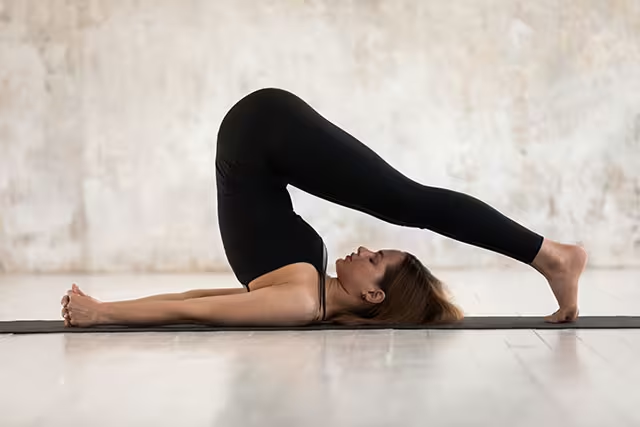
Yoga teachers highlight that mindfulness is a key component of sleep-focused practice. Jem Mantiri, RYT 500, notes that slow movement combined with deep breathing signals the body to shift gears. Brent Laffoon, founder of the Association of Yoga Professionals, recommends poses like supta baddha konasana (reclining bound angle), supta kapotasana (reclined pigeon), viparita karani (legs up the wall), and halasana (plow pose) for evening relaxation.
Experts also caution that some poses may require modification or support, particularly for beginners or those with tight muscles. Using yoga blocks or blankets can reduce strain and make restorative stretches more effective. Vania Garcia, a registered yoga teacher in Berlin, emphasizes that yoga is about meeting the body where it is and approaching practice with kindness and self-respect.
Daljoog News Analysis
Bedtime yoga offers a gentle, practical solution for improving sleep without relying solely on medication. By integrating slow stretches and mindful breathing, individuals can reduce mental chatter, release physical tension, and prime the nervous system for rest.
The benefits are particularly significant in today’s fast-paced environment, where screen time, stress, and sedentary habits disrupt natural sleep patterns. A short, consistent bedtime yoga practice can help people reclaim control over their sleep while supporting overall physical and mental health.
What Happens Next
A simple evening routine can start with neck and shoulder rolls, cat-cow stretches, and a few minutes in child’s pose. Practitioners can then move into poses like reclined bound angle, reclined pigeon, legs up the wall, or supported plow pose to release tension and calm the mind. Short sessions of 10–15 minutes are sufficient to signal the body to relax, though longer sessions may provide additional benefits.
Regular practice paired with mindful breathing can improve sleep quality over time. While yoga is not a replacement for medical treatment, it complements sleep hygiene, supplements, or therapies for insomnia and stress. Individuals with persistent sleep challenges or anxiety should consult a healthcare professional while using yoga as part of a holistic approach to better rest.