



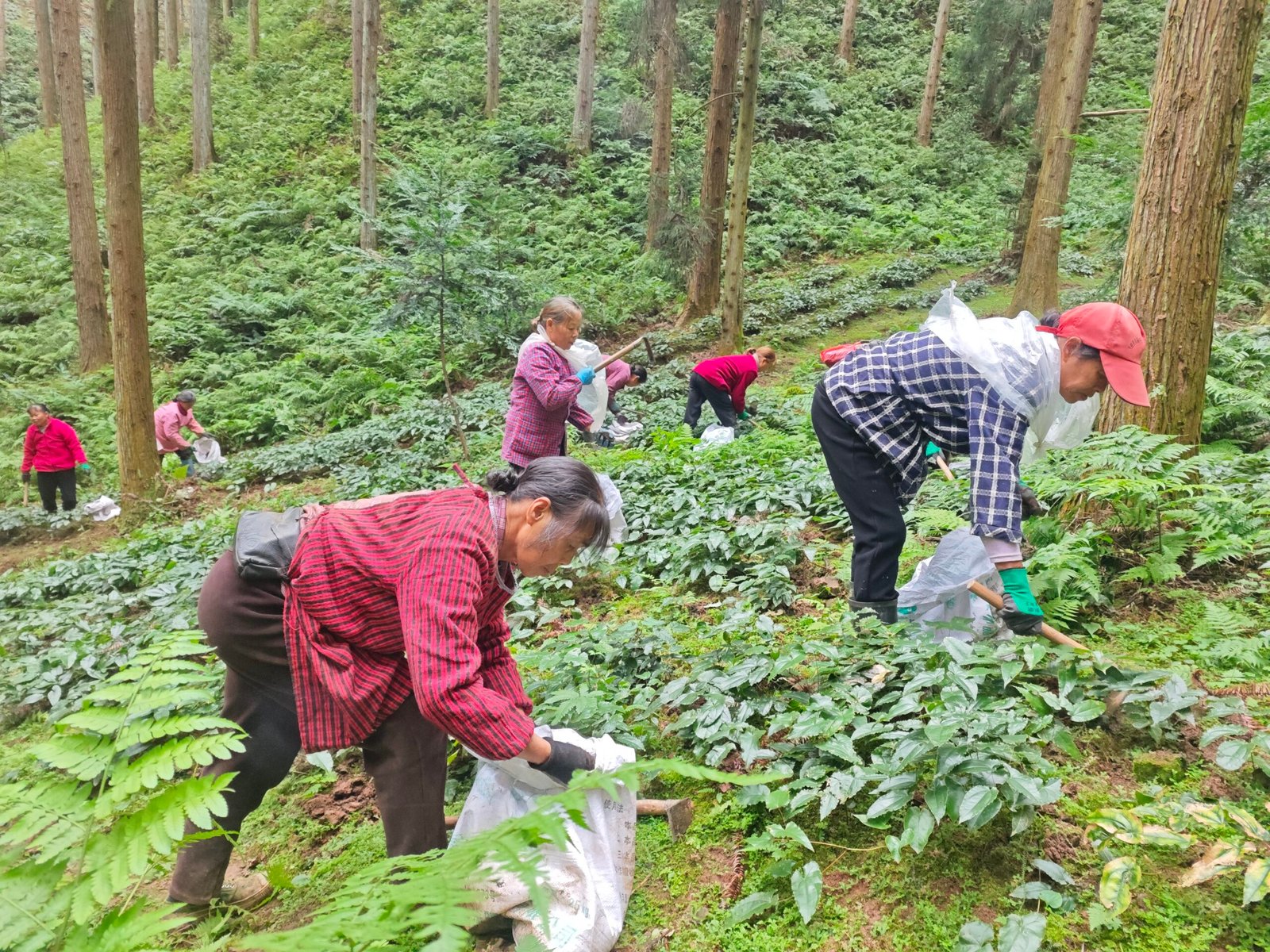
Hunan province is seeing rapid growth in its forest-based non-timber industry, turning local bamboo and medicinal herb resources into a major economic driver. The sector has created jobs, increased incomes, and transformed rural livelihoods.
Yang Peiru’s bamboo shoots processing company in Huitong County exemplifies this trend. His factory processes 10,000 metric tons of preserved bamboo shoots each year. With a 60-strong team, demand often exceeds production capacity, requiring temporary workers for peak periods.
Local government policies have played a key role in supporting this growth. Since last year, ten new bamboo shoot processing companies have been established in Huitong. Authorities provide subsidies, facilitate land leases, and help secure loans based on forestry rights, encouraging entrepreneurs like Yang to invest in local industries.
Yang’s company, Hunan Lyudi High-tech Agriculture and Forestry Development Co, benefits from subsidies of 120 yuan ($17) per square meter for its 10,000-square-meter factory. He has leased over 3,300 hectares of bamboo from local farmers and secured a 10-million-yuan bank loan using forestry rights as collateral. These loans typically feature high credit limits, long repayment periods, and low interest rates.
Investment from the loan allowed the factory to increase its daily production capacity tenfold. Automated packaging lines, sterilization systems, a quick-freeze production line, and a 10,000-cubic-meter cold storage facility have all been added. Since its official sales launch in June 2021, the company’s revenue has steadily grown, projected to reach 80 million yuan this year.
Most factory employees are residents, earning more than 4,000 yuan a month. Farmers leasing bamboo land also benefit, earning additional income from harvesting, transportation, and mature bamboo cutting. During the bamboo shoot harvesting season, the company hires 600 to 700 workers to meet production demands.
Villagers like Song Xiaofeng have seen their incomes rise dramatically. Her family once earned barely 1,000 yuan annually from a hectare of bamboo forest. Leasing their land and working at the factory now provides her with 4,000 to 4,500 yuan monthly, while also allowing time to care for her family.
Infrastructure improvements have also supported the industry. Huitong county has invested 20 million yuan to pave 700 kilometers of mountain roads, with an additional 200 kilometers planned. These roads reduce bamboo transportation costs by roughly 30 percent.
The forest-based industry extends beyond bamboo. Villagers also lease land for medicinal herbs such as epimedium, known for its anti-carcinogenic properties. Su Zexiang from Xuanshui village earns about 10,000 yuan annually planting and weeding epimedium for a local company, while the 16-hectare greenhouse base is projected to produce 10 million seedlings worth 20 million yuan.
Other herbs like poria, Siberian Solomon’s seal, and Sarcandra glabra further strengthen the non-timber forest economy in Hunan. Collectively, the sector generates 67 billion yuan in annual revenue, uses 2.4 million hectares of forest land, and employs over three million people, raising average incomes by more than 2,800 yuan per year.
Looking ahead, Yang plans to expand operations by installing two additional packaging lines, creating demand for another 30 to 40 workers. The growth of Hunan’s forest industry demonstrates how policy support, investment in infrastructure, and innovative forestry financing can transform natural resources into sustainable local development.
Hunan’s success highlights the potential of forest-based industries to boost rural economies, improve livelihoods, and make the most of China’s natural resources. The province’s model could inspire similar initiatives in other regions, promoting both economic growth and ecological preservation.