
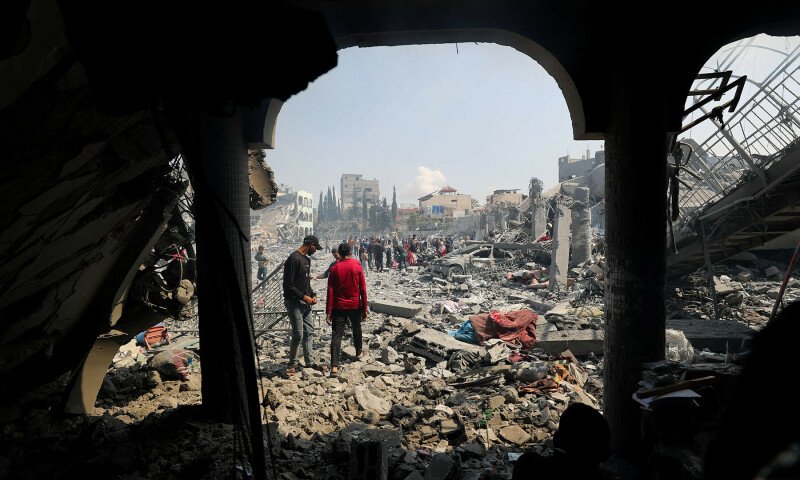
An Israeli airstrike hit a tent sheltering journalists near Nasser Hospital in Khan Younis, southern Gaza, killing one journalist and injuring several others, according to reports by Al Jazeera and other Palestinian media outlets. The attack occurred amid ongoing conflict in the region, raising urgent concerns about the safety of press members reporting from the war zone.
Journalist Killed Identified as Helmi al-Faqawi
The Qud News Network named the journalist killed in the strike as Helmi al-Faqawi. He was reportedly inside the tent when the strike occurred, and his death was confirmed by several media sources, including Al Jazeera.
Helmi was known for covering critical events in Gaza under dangerous conditions. His death adds to the growing toll of media professionals killed while reporting in conflict zones.
Several Journalists Injured in the Strike
The airstrike also seriously injured Ahmed Mansour, who suffered severe burns. A photograph circulated on social media shows him surrounded by flames inside the tent, moments after the attack.
Among those injured were:
- Hassan Eslaih
- Ahmad Al-Agha
- Mohammad Fayek
- Abdallah Al-Attar
- Ihab Al-Bardini
- Mahmoud Awad, an Al Jazeera photographer
Many of the wounded are receiving treatment at nearby hospitals. The extent of their injuries varies, but several are in critical condition, according to initial medical assessments.
Attack Raises Alarming Questions About Press Safety
The tent was clearly marked as a press area, multiple sources confirm. This incident raises further concerns about the protection of journalists in war zones. International laws, including the Geneva Conventions, emphasize the need to protect civilians and journalists during armed conflict.
The Committee to Protect Journalists (CPJ) has repeatedly warned about the rising dangers faced by reporters in Gaza. In its latest statement, CPJ called on all parties to ensure journalists are not targeted or harmed during military operations.
“Journalists must never be a target. This attack is part of a dangerous pattern,” said a CPJ representative.
Background: Ongoing Conflict in Gaza
The Israeli military has continued its operations in southern Gaza, particularly around Khan Younis, amid efforts to dismantle Hamas infrastructure. The situation has left thousands dead and displaced even more.
Nasser Hospital has become a focal point for civilians and emergency responders. Many journalists have set up makeshift press tents nearby to report on the humanitarian crisis unfolding on the ground.
Israel has not issued a statement on the specific attack, but it maintains that all strikes target military assets and are conducted with care to avoid civilian casualties. However, mounting evidence suggests that journalists and medical facilities are increasingly caught in the crossfire.
Global Reactions and Calls for Investigation
Human rights groups and press freedom organizations have condemned the attack. The International Federation of Journalists (IFJ) is calling for an independent investigation to determine whether this strike violated international humanitarian law.
The United Nations has also urged all combatants to respect the neutrality of journalists and to uphold their responsibilities under international treaties.
“We demand accountability and protection for all journalists reporting from conflict zones,” said a UN spokesperson during a press briefing in Geneva.
Press Under Fire: A Growing Crisis
This is not the first time journalists have come under fire in Gaza. Over the past few months, multiple journalists have been injured or killed while covering the war. In most cases, media workers were clearly identified and not engaged in any combat activity.
A recent report from Reporters Without Borders (RSF) notes that more than 90 journalists have been killed globally in conflict zones since early 2023. Gaza remains one of the deadliest places in the world for journalists.
The killing of Helmi al-Faqawi and the injury of his colleagues near Nasser Hospital underscores the urgent need to protect journalists in conflict zones. As the war in Gaza continues, the international community must take firm steps to safeguard those working to bring the truth to light.