



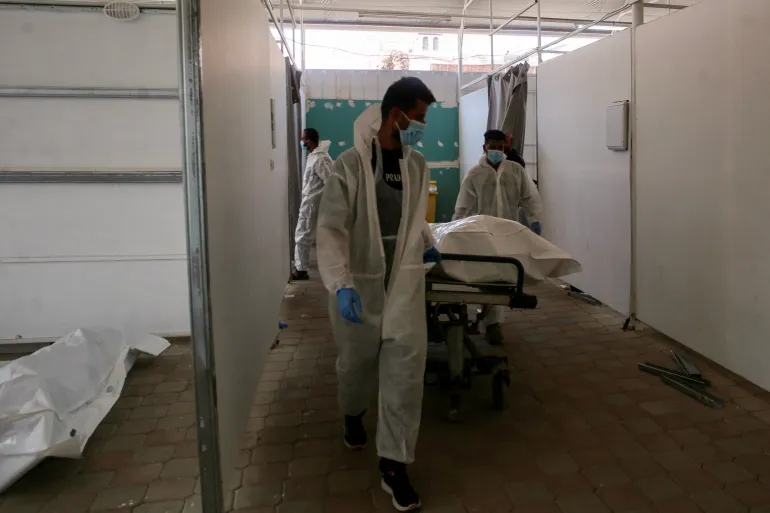
Israel has returned 30 bodies of Palestinians who were held in Israeli detention, some showing signs of torture, while airstrikes continued in Gaza despite a fragile ceasefire.
The remains were transferred via the International Committee of the Red Cross and arrived in Khan Younis in southern Gaza on Friday. Israeli attacks have killed at least three Palestinians on the same day. One man was killed and his brother wounded by gunfire in the Shujayea neighborhood of Gaza City. Another was killed in shelling in the Jabalia refugee camp, while a third died from wounds sustained in earlier attacks. Civil defense teams also recovered a body from rubble in the az-Zahra neighborhood.
The latest handover of bodies is part of the prisoner and captive exchange deal reached in early October. Palestinian authorities said the transfer brings the total number of bodies returned to 225. Medical teams are identifying the remains, documenting them, and notifying families. In prior handovers, many bodies showed signs of torture, including being blindfolded, handcuffed, burned, or missing limbs or teeth.
Israel holds thousands of Palestinians in prison, many without formal charges, and reports of torture have increased since the outbreak of the conflict in Gaza. Under the US-brokered ceasefire, Hamas released 20 living captives in exchange for Israel freeing nearly 2,000 Palestinian prisoners. Israeli forces also partially withdrew from urban areas in Gaza.
Despite the ceasefire that took effect on October 10, Israeli strikes have continued. From Tuesday to Wednesday, the Gaza Health Ministry reported 104 deaths, including 46 children and 20 women. The Red Cross said it transferred three unidentified Palestinian remains to Israel, but it was unclear if they were deceased captives. An Israeli military source said the bodies were sent to a forensic lab for identification.
Hamas has returned the remains of 17 Israeli captives so far, and the group has pledged to return all 28 in exchange for Palestinian bodies. Red Cross teams and Hamas’s Qassam Brigades continue searching through rubble to locate missing captives, as thousands of Palestinians killed in the conflict remain buried.
Humanitarian conditions in Gaza remain dire. While Israel allowed some aid trucks into the Strip on Friday, access is still limited. Aid workers report that Palestinians are struggling to receive essential supplies, including food and shelter materials. The ongoing blockade has worsened the humanitarian crisis, with famine declared in northern Gaza earlier this year.
International attention is focused on maintaining the ceasefire. Turkish Foreign Minister Hakan Fidan said that foreign ministers will meet on Monday to discuss the next steps for Gaza, including forming a stabilization task force. Former Israeli minister Yossi Beilin expressed confidence that Prime Minister Benjamin Netanyahu would continue to honor the ceasefire commitment to the United States.
The Israeli military faces scrutiny over rights abuses during the conflict. Yifat Tomer-Yerushalmi, the army’s top lawyer, was dismissed following a leaked video showing alleged sexual assault of a Palestinian detainee. Rights groups say mistreatment of Palestinian prisoners has been widespread, though Israeli authorities deny systematic abuse and claim investigations are ongoing.
The return of Palestinian bodies underscores the ongoing human cost of the conflict, as both sides continue to navigate a tense ceasefire while addressing the humanitarian needs of Gaza’s population.