

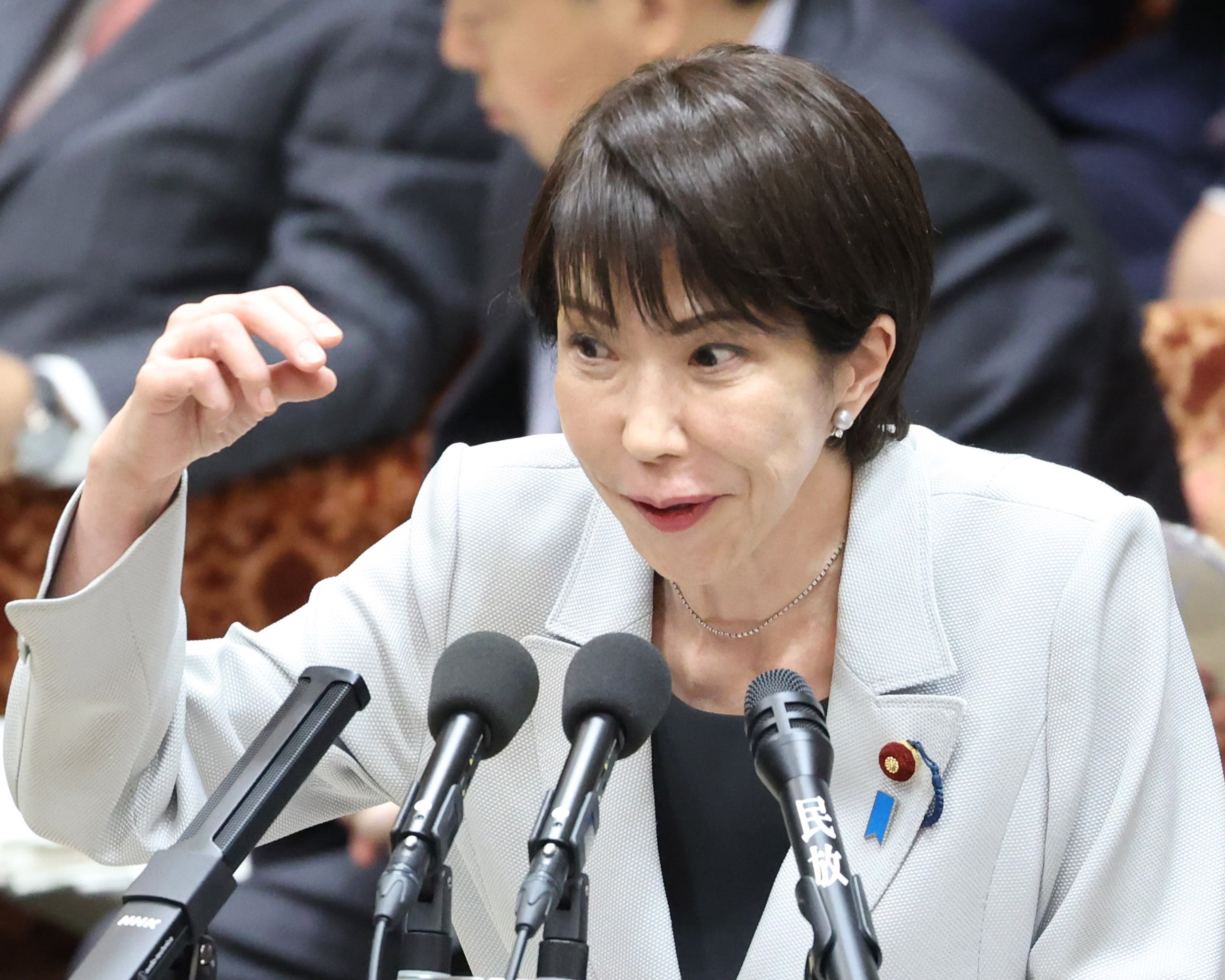
Japan and China are in a growing dispute after Tokyo signaled possible military action in a Taiwan conflict. Prime Minister Sanae Takaichi said an attack on Taiwan could trigger the deployment of Japan’s self-defence forces if the situation threatened the nation’s survival.
Takaichi, Japan’s first female prime minister and a conservative with hawkish views on China, told a parliamentary committee that Tokyo must “anticipate a worst-case scenario” in the Taiwan Strait. She emphasized that any emergency involving warships or the use of force could constitute a threat to Japan’s survival.
Beijing reacted angrily to Takaichi’s remarks. The Chinese consul general in Osaka, Xue Jian, posted on X, referencing Takaichi’s comments, saying, “We have no choice but cut off that dirty neck that has been lunged at us without hesitation. Are you ready?” The post was later removed after Tokyo protested, calling it “extremely inappropriate.”
Japan’s senior government spokesperson, Minoru Kihara, confirmed the protest and noted that multiple other inappropriate remarks had been made by Xue. Tokyo continues to stress caution while addressing security issues involving Taiwan.
The dispute comes shortly after Takaichi met Chinese leader Xi Jinping at the APEC summit in South Korea. The two leaders had pledged to maintain “constructive and stable” relations, highlighting the contrast between diplomatic gestures and public statements.
Japan faces a complex position regarding Taiwan, which lies about 100 kilometers from its westernmost island, Yonaguni, in the East China Sea. Japan’s postwar constitution restricts the use of force to settle international disputes. However, a 2015 law allows the country to exercise collective self-defence in certain circumstances, even if Japan itself is not directly attacked. This could involve supporting US-led military actions in the region.
China views Taiwan as part of its territory and has not ruled out using force to achieve “reunification.” Lin Jian, a spokesperson for China’s foreign ministry, called Takaichi’s remarks “wrongful and dangerous” and urged Japan to stop sending signals supporting Taiwan independence.
Taiwan’s government has also weighed in. Karen Kuo, a spokesperson for Taiwan’s presidential office, said the threatening statements from Chinese officials “clearly exceed diplomatic etiquette” and are taken seriously by Taipei.
The US has expressed concern as well. George Glass, the US ambassador to Japan, criticized the Chinese diplomat’s comments, saying, “The mask slips – again,” and added that the remarks threatened Takaichi and the Japanese people.
This latest tension follows a series of disputes between Tokyo and Beijing. Last week, Beijing condemned Takaichi for meeting a senior adviser to Taiwan’s president, Lai Ching-te, during APEC and posting photos of the encounter online. These incidents reflect ongoing friction over Taiwan’s security and Japan’s potential role in regional defense.
Analysts note that Japan’s strategic calculations are shaped by its proximity to Taiwan and its alliance with the United States. While the nation continues to pursue stable diplomatic relations with China, it is increasingly vocal about its right to protect national security and respond to regional threats.
The Japan-China row highlights the fragile balance in East Asia, where territorial and security concerns intersect with diplomacy. With tensions rising over Taiwan, both countries face pressure to manage disputes without escalating into military conflict, while regional allies closely watch Tokyo’s policy decisions.