


Marylanders believe congressional maps are unfair, but they have bigger concerns.
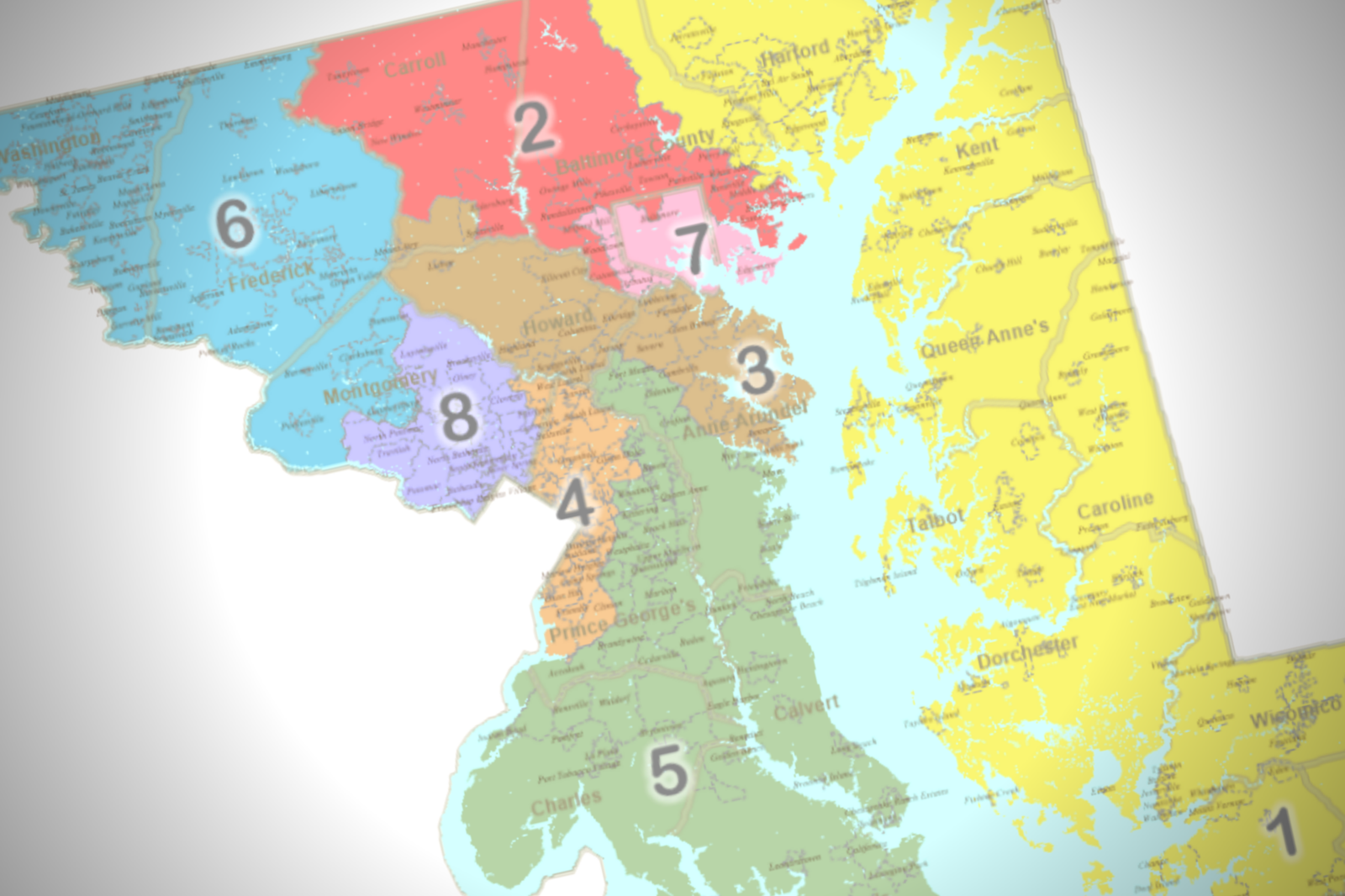
Governor Wes Moore (D) is waiting on an advisory commission to decide if Maryland will redraw congressional districts mid-cycle. A recent poll by the University of Maryland, Baltimore County (UMBC) offers insight into public opinion.
The poll found 81% of Marylanders think drawing districts to favor one party is a major problem for democracy. Still, most residents have higher priorities than redistricting.
The survey shows a strong preference for removing politicians from the redistricting process. Nearly two-thirds of respondents said an independent, nonpartisan commission should handle the task. Only 12% supported letting elected officials draw the lines.
Former Governor Larry Hogan (R) proposed such a commission during his terms. In 2021, he appointed a panel to draft maps, but the Democratic-controlled General Assembly replaced it with its own plan. That map was later struck down in court.
The UMBC poll surveyed 801 adults, including 769 registered voters, from December 2 to December 6. The margin of error is plus or minus 3.5%.
Many Marylanders agree with Moore that current maps are unfair. The poll found 41% said the maps are unfair, 28% said they are fair, and 29% were unsure. Among those who thought maps were unfair, 33% said they favor Democrats, while 8% said Republicans benefit most.
Public attention to redistricting is limited. Only 30% said they paid a lot of attention, 29% “some” attention, 18% a little, and 17% none at all. Among those aware, opinions are mixed: 40% oppose it, 20% reluctantly accept it, 7% support it despite concerns, and 24% fully support redrawing the maps.
Mileah Kromer, director of the poll, said many Marylanders have “nuanced opinions” and are not strongly committed to either side. The low priority of redistricting makes it harder to influence opinions.
Economic and daily-life concerns top Marylanders’ priorities. Twenty-five percent focus on the economy, jobs, and cost of living. Taxes and government spending follow at 23%. Only 15% prioritized government leadership or democracy issues.
Health care, public education, and crime reduction ranked highest as issues state leaders should prioritize, with 73% or more rating each as “high priority.” Taxes, housing costs, and energy expenses were also top concerns, each with over 60% support.
Transportation issues mattered less: 42% rated roads and highways as high priority, and 34% did so for public transportation. Redrawing congressional districts came last, with just 27% saying it is a top priority.
The poll shows that while Marylanders recognize partisan maps as a problem, they are more focused on everyday issues. State leaders may need to balance redistricting efforts with policies that address the public’s immediate concerns.