



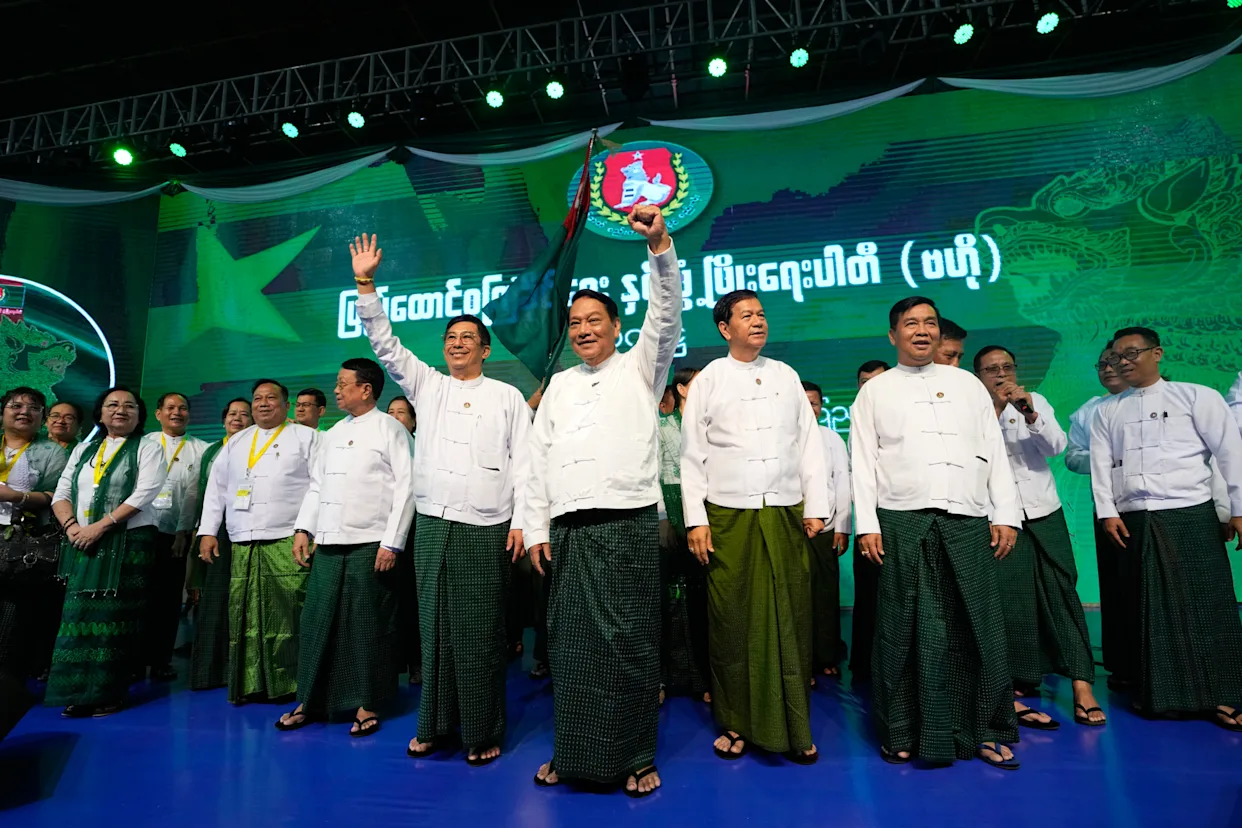
Myanmar’s military-backed party has taken an early lead in the first phase of the country’s three-part general election, according to partial results released by the military-appointed Union Election Commission (UEC).
The Union Solidarity and Development Party (USDP) secured 38 seats in the 330-seat Pyithu Hluttaw lower house, though many results from the Dec. 28 vote are still pending. USDP leader Khin Yi, a former general and police chief aligned with military ruler Senior General Min Aung Hlaing, was confirmed as the winning representative from Naypyitaw, taking 49,006 of 68,681 votes cast.
A senior USDP official told reporters that the party has already claimed 88 of the 102 seats contested in the first phase, including 29 constituencies where it ran unopposed. The party also reportedly won about 85% of contested regional legislature seats, though complete results will only be available after the second and third phases.
The military government reported that more than 6 million people, about 52% of eligible voters in the first phase, cast ballots. Voting is being held in three stages due to ongoing armed conflicts, with the next rounds scheduled for Jan. 11 and Jan. 25. Around 65 townships, mainly in conflict zones, will not participate.
Critics argue that the elections are designed to legitimize military rule rather than reflect the will of the people. Major parties, including the National League for Democracy (NLD), were barred from participating, and dissent has been suppressed. Opposition groups have urged voters to boycott the polls, calling them neither free nor fair.
The USDP’s early success is expected to give the party a strong advantage in parliament. Myanmar’s legislature has 664 seats in total, with the military automatically receiving 25% of each house under the constitution. The party holding a combined majority in parliament can select the new president, who appoints the Cabinet and forms the government.
The elections mark the first major national vote since the military overthrew the elected government of Aung San Suu Kyi in February 2021. The NLD won a landslide victory in the 2020 election but was later dissolved in 2023, along with 39 other parties, after refusing to register under new military rules. The takeover has fueled widespread popular opposition, which has escalated into a civil war in parts of the country.
While over 4,800 candidates from 57 parties are competing nationwide, only six parties have the potential to gain meaningful political power, with the USDP as the dominant contender. Observers warn that the election process, conducted amid conflict and boycotts, may further deepen Myanmar’s political instability.
The results of the remaining phases will be closely watched for indications of how the military-backed government intends to consolidate control and whether international actors will recognize the legitimacy of the new parliament.