



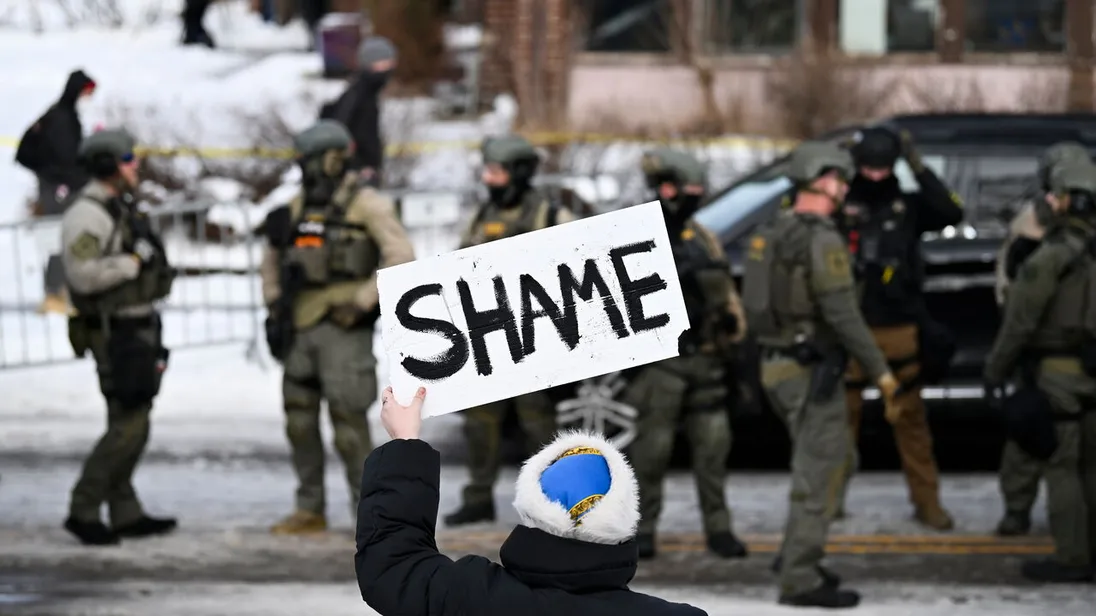
Flashbangs and tear gas echoed through downtown Minneapolis on Tuesday evening as protests continued near a major federal building. The unrest follows the fatal shooting of 37-year-old Renee Nicole Macklin Good by a federal immigration officer earlier this month. The incident has triggered public outrage, political clashes, and a wave of resignations inside the justice system.
Fencing was installed around the federal building hours before protests began. Demonstrators gathered quickly. Law enforcement responded with crowd-control tools as tensions rose. Officers and protesters have clashed repeatedly in recent days, especially when federal agents moved beyond secured areas.
Federal officials say the shooting happened after Good, who was driving a vehicle, tried to run over officers during an enforcement action. State officials dispute that account. Minnesota leaders have largely supported protesters and questioned the use of force. They argue the incident reflects deeper problems with federal immigration operations in the state.
In response, Minnesota filed a lawsuit against federal authorities. The suit seeks to stop the large deployment of immigration officers and remove thousands already operating in the state. Officials say the surge has made communities less safe and has inflamed public anger. They also want a judge to issue an emergency order to pause the operation.
The protests have continued each night. When demonstrators approach the federal building, officers respond with pepper spray, tear gas, and flash devices. Several arrests have been made. In one case, a protester was detained after damaging vehicles entering and leaving the area. Earlier in the day, another woman was pulled from her car after officers said she blocked their work.
The situation has also caused turmoil inside the Department of Justice. Six federal prosecutors in Minnesota resigned in protest over how the case was handled. Among them was a senior prosecutor involved in major fraud cases. The resignations followed a push to investigate the victim’s wife rather than focus on the shooting itself.
Four more prosecutors from the civil rights division also stepped down. They objected to the decision not to open a civil rights investigation into the shooting. The departures highlight sharp internal disagreements over accountability and oversight.
Federal officials say threats against officers have increased. A senior border official claimed there were reports of a possible assassination plot against him by anti-immigration activists. He said officers are on high alert but will continue their work. Officials also reported a rise in assaults against federal agents during recent operations.
Political leaders weighed in as well. President Donald Trump and Vice President JD Vance blamed Democratic leadership in Minnesota for the unrest. They argued that resistance to federal law enforcement created chaos. They defended immigration agents, saying their mission targets serious criminals and protects public safety.
Federal agencies echoed that message online. They said sanctuary policies allow dangerous individuals to remain free. Officials claimed hundreds of criminal offenders were released due to local cooperation limits. They urged the state governor to honor detention requests and work with federal authorities.
According to federal data, about 2,400 immigration officers are now active in Minnesota, with more expected. Since the start of the operation five weeks ago, more than 2,000 arrests have been made. Officials say many cases involve fraud and serious crimes, though local leaders dispute that focus.
Minneapolis leaders pushed back. The city’s mayor said if fraud exists, authorities should target those responsible, not entire neighborhoods. He said aggressive tactics harm trust and punish innocent residents. Illinois officials raised similar concerns and filed their own lawsuit over enforcement actions in Chicago.
Public opinion remains divided. Surveys show many residents believe the fatal shooting was not justified. As protests continue, the state faces mounting legal, political, and social pressure. The Minnesota ICE shooting fallout has become a national flashpoint over immigration enforcement, accountability, and the use of force.