



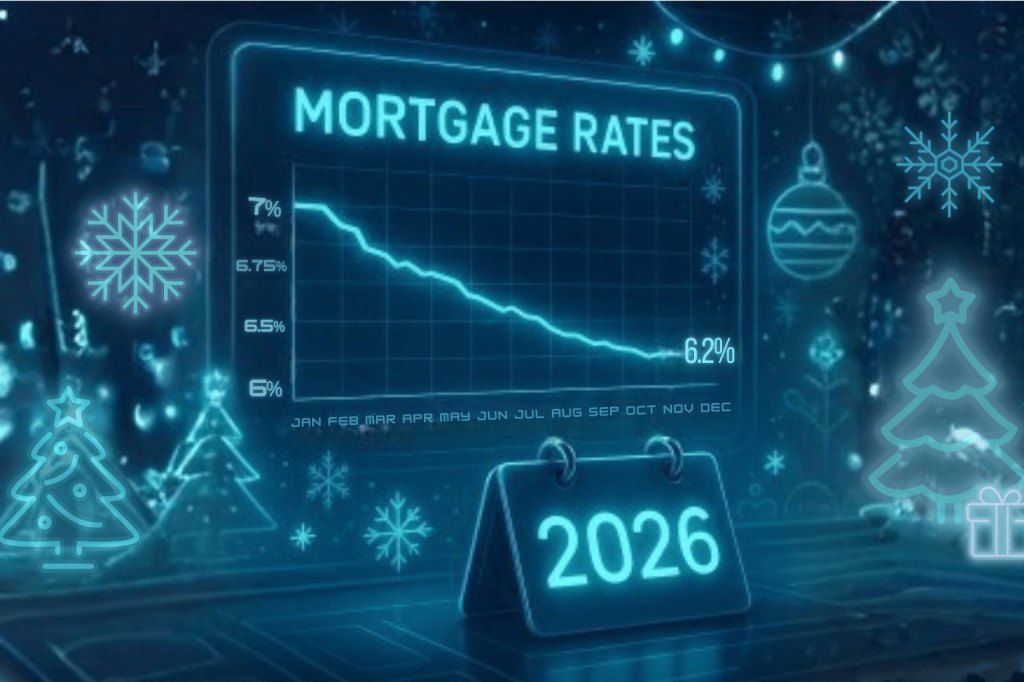
Mortgage rates have barely moved in recent months, and experts say they are likely to stay near current levels for the near future.
Since mid-September, rates have remained in a narrow range of 6.2% to 6.3%, near the year-to-date lows. This has encouraged some homebuying and refinancing in the fall, but rates are still high enough to price many buyers out of the market.
The unusual economic situation is a key reason for this stability. The labor market is showing signs of weakness, but inflation remains above target. Government shutdown disruptions also delayed or canceled many economic reports, making it harder to predict where rates might go.
“The shutdown just blurred everything,” said Hector Amendola, president of Panorama Mortgage Group in Las Vegas. “Everyone is waiting for January numbers to see the trend and what might happen next.”
Mortgage rates are influenced by several factors, including Federal Reserve actions, government bond yields, and demand for mortgage-backed securities. Generally, rates are lower when the labor market is weak and inflation is low, and higher when the economy is stronger.
The Federal Reserve has been cutting benchmark interest rates recently as the labor market slows. But inflation has stayed above the Fed’s 2% target. Members of the Fed’s rate-setting committee remain divided on future moves, adding to the uncertainty.
Most economists expect only minor changes in mortgage rates next year. The Mortgage Bankers Association predicts rates will remain in a 6% to 6.5% range “over the next few years.” Economists at Realtor.com and Redfin expect rates to average 6.3% in 2026. The National Association of Realtors and Fannie Mae see a slight dip, possibly to around 6% by year-end.
“I don’t think they’re going to drop much unless a major economic event occurs,” said Melissa Abramovich, a loan officer at A+ Mortgage Services in Muskego, Wisconsin.
The Fed’s decisions affect mortgage rates only indirectly. Often, rates begin to fall before the Fed officially cuts interest rates. For example, mortgage rates drifted from the high 6% range to the low 6% range over the summer, but barely moved when the Fed delivered three rate cuts in September, October, and December.
Stable rates have kept the housing market in a holding pattern. Lower rates this fall boosted homebuying and refinancing somewhat, but affordability remains a major issue. Home sales are still projected to end 2025 at a 30-year low.
Dan Frio, a mortgage adviser at PBT Bancorp in Naperville, Illinois, says future rates will be “data-dependent.” He is watching inflation, the job market, government debt purchases, and legal challenges to trade policies.
Signs that inflation may be easing could push rates slightly lower, possibly into the high 5% range early next year. After years of rates above 6%, even a rate just under 6% could spark significant activity from buyers and refinancers.
“When you have a published rate at 5.99%, the light switch goes on,” Frio said. “It’s crazy.”
For now, homeowners and prospective buyers must weigh affordability against the stable, yet still high, mortgage rates. Most experts agree that unless the economy changes dramatically, rates will remain near 6.2%, keeping many buyers cautious and the housing market slow.