



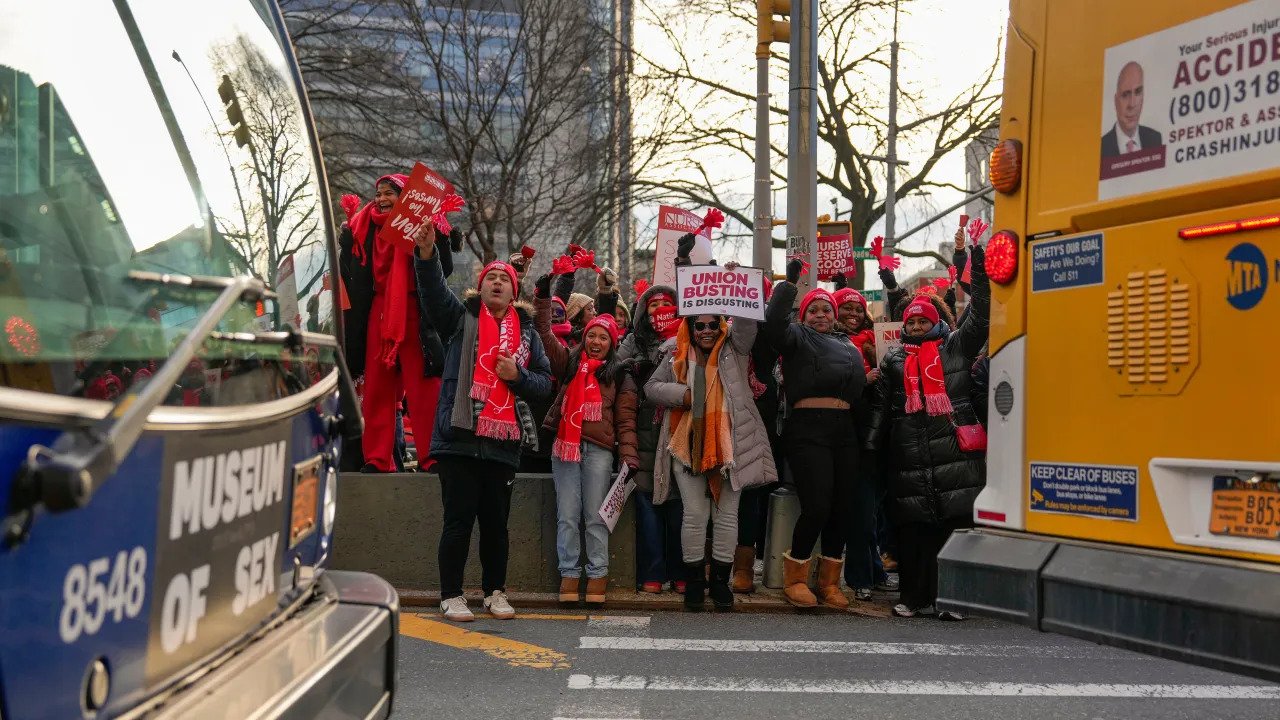
The New York Nurse Strike sees nearly 15,000 nurses walk out, demanding safe staffing, better benefits, and stronger workplace safety.
The New York Nurse Strike began early Monday as nearly 15,000 nurses walked off the job across several major hospital systems in New York City. The action followed months of failed contract talks between nurses and hospital management. It is the largest nurses’ strike ever recorded in the city.
The walkout affected hospitals run by three large private health systems. Nurses said they had no choice after talks stalled on key issues. These included patient staffing levels, healthcare benefits, and protection from workplace violence. Union leaders said progress during negotiations was slow and did not address core concerns.
Nurses said safe staffing is their top demand. They warned that too few nurses on duty puts patients at risk and increases burnout. Many said they often care for too many patients at once. This, they said, leads to delays in care and higher stress for staff.
Healthcare benefits were another major issue. Nurses claimed hospital leaders plan to reduce or remove health coverage options. They said this would force workers to pay more for care while working long hours in demanding roles. Union officials called the idea unfair and harmful.
Workplace safety also played a key role in the strike. Nurses said violent incidents inside hospitals have increased in recent years. They want stronger safety measures at entrances and inside facilities. Many said they no longer feel safe at work, especially during night shifts.
The strike comes during a busy flu season. Hospitals across the city have reported high numbers of patients with respiratory illness in recent weeks. Emergency rooms have been crowded, and beds have filled quickly. Health experts said staffing needs are often higher during these periods.
Despite this, nurses said the timing reflects urgency. They believe conditions will not improve without pressure. Many said they worked through past crises and feel stretched thin. Some said they skipped breaks or worked extra shifts to cover shortages.
New York state law requires hospitals to create staffing plans with minimum nurse-to-patient ratios in certain units. These rules were strengthened after the early months of the pandemic. Nurses say those standards are now at risk. They claim some hospitals are trying to weaken or bypass them.
A similar strike took place in 2023. That action lasted three days and ended with agreements to enforce staffing rules across hospital units. Nurses now say those gains are being reversed. They believe stronger contracts are needed to protect both workers and patients.
Hospital leaders said they remain open to talks. One system said it offered wage increases and one-time payments. Union leaders said those offers do not solve long-term issues. They said lump-sum payments do not protect staffing or benefits in the future.
Public reaction to the New York Nurse Strike has been strong. Many residents expressed support for nurses on picket lines. Some said nurses earned public trust during the pandemic and deserve better treatment. Elected officials also visited picketers and spoke about the importance of fair contracts.
City and state leaders called for a quick resolution. Officials said patient access to care must remain a top priority. At the same time, they said nurses play a critical role in the health system and deserve respect. Talks between both sides are expected to continue.
The strike has become a major test for city leadership. It comes early in the current mayor’s term and during a key political period at the state level. Labor groups are watching closely to see how leaders respond.
As the New York Nurse Strike continues, hospitals are using temporary staff to keep services running. Nurses said they are ready to stay out until progress is made. They said their goal is not disruption, but safer care and fair treatment.
The outcome of the strike could shape future labor talks in healthcare. For now, thousands of nurses remain united, calling for change they say is long overdue.